
Gocheok vs KSPO vs INSPIRE: How to Choose K-pop Concert Seats
Choose among Gocheok, KSPO, and INSPIRE by event-specific sightlines, floor-versus-tier trade-offs, and a return plan that survives the encore.
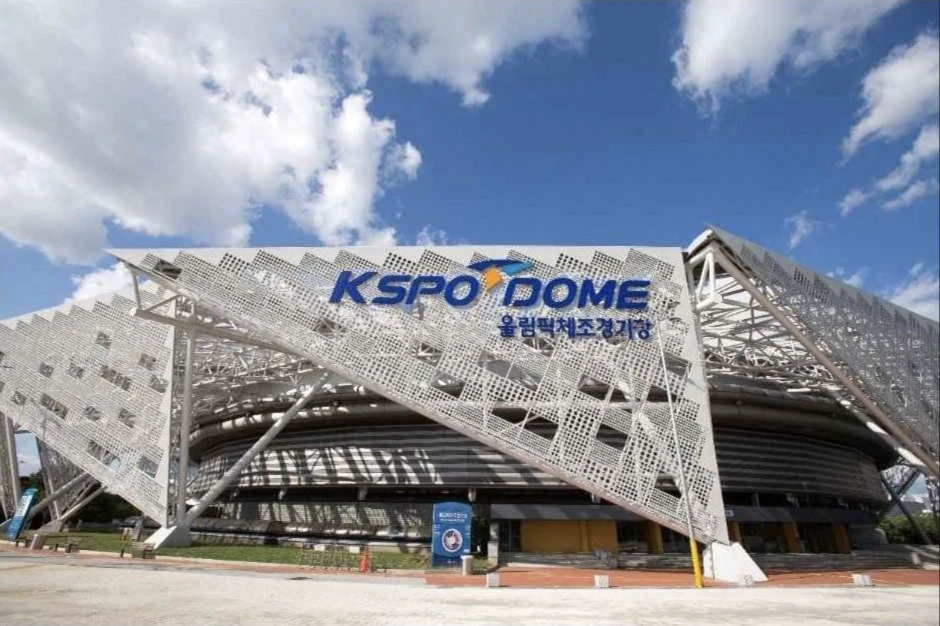
The venue name does not tell you which K-pop concert seat is best. At Gocheok Sky Dome, KSPO DOME, and INSPIRE Arena, the winning choice changes with the exact event chart: main-stage direction, thrust length, satellite stages, camera platforms, mixing desk, speaker towers, and seats withheld for production.
Use this order: open the seller's chart for your performance, remove every seat with an unacceptable sightline risk, compare what remains by your priority, then prove that you can get home after the encore. A closer dot on a generic venue map is not automatically a better concert.
The 60-second answer
- Full choreography and screens: Start with centered front-to-middle rows of a raised tier. Reconsider if the event notice names a railing, camera platform, overhang, or difficult screen angle.
- Facial detail and interaction: Start with a genuinely close floor block or a side tier beside a used thrust. Reconsider for flat-floor obstruction, an extreme side angle, or limited artist time on the extension.
- Shorter viewer: Start with the front portion of a raised tier. Check for a tall safety rail or a standing audience in the row ahead.
- Tighter budget: Start with the front of a centered upper block. Reconsider if the arena axis is very long, the screens are small, or a production tower enters the sightline.
- Simplest trip home: Pair the seat with a verified rail or event-shuttle plan. Account for the encore, slow section egress, queues, and any final connection you cannot miss.
No row or section is universally best. A show with a long center thrust can turn a normally distant block into a strong seat; an end-stage show can make the same block feel remote.
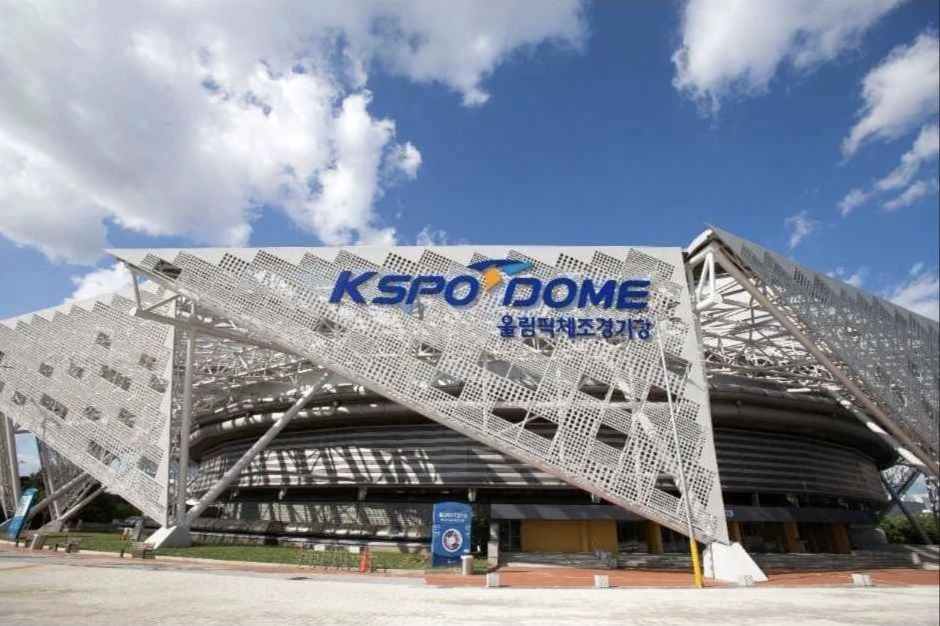
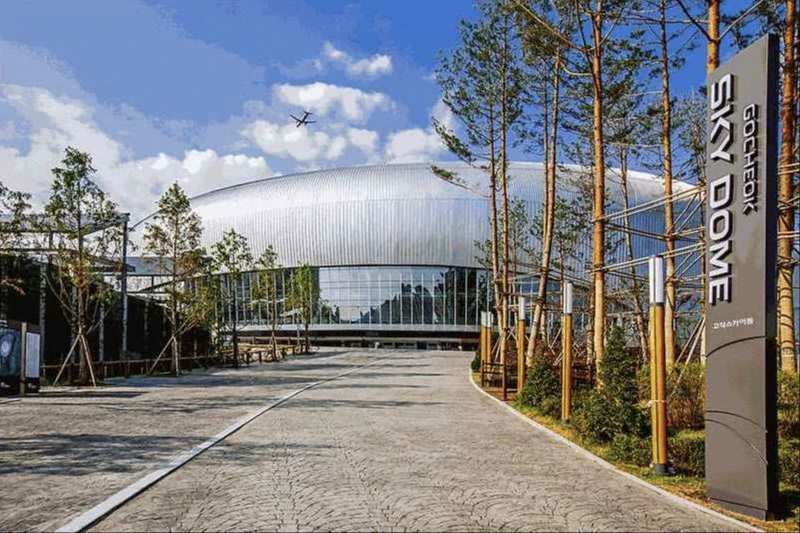
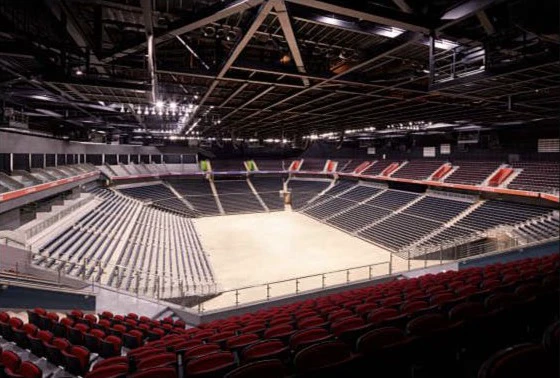
The photographs explain the baseline geometry, not your concert's final view. KSPO has a compact multipurpose bowl, Gocheok retains the long dimensions of a baseball dome, and INSPIRE was designed around indoor performances. Production equipment can still change the useful part of every room.
What each venue changes about the decision
KSPO DOME: the balanced default, but still show-specific
KSPO's official venue page lists a 15,000-seat capacity and retractable seating. Its comparatively compact bowl often makes a centered raised tier a sensible all-round starting point: you can read formations and screens without accepting the visibility lottery of a rear floor.
- Bias toward: centered tier seats when you want the complete production; a close floor block only when the event chart places it beside the main action.
- Check carefully: first-row rails, sound or camera positions, a side block facing the back of the main screen, and whether “floor” is seated or standing.
- Transport reality: Olympic Park Station is served by Lines 5 and 9. The official Olympic Park transport guide recommends public transport for major events because parking becomes difficult. Do not infer your last train from the scheduled show end; add encore and exit time.
KSPO's compactness is relative, not a promise of close facial detail. A third-tier seat can still depend on the screens, and an extreme side seat can sacrifice part of the screen or stage design.
Gocheok Sky Dome: protect angle before chasing proximity
Gocheok was built as a baseball stadium. The operator's current facility page lists 16,601 fixed seats and explicitly says the count varies with event operation; VISITKOREA describes concert configurations reaching about 18,000. Neither number is your event's sellable inventory.
- Bias toward: a centered raised view for lighting, formations, and the whole scale; a close lower or floor block only after confirming stage direction and production zones.
- Check carefully: outfield distance, extreme side angles, temporary towers on the floor, and whether the nearest stage element will actually be used often.
- Transport reality: the official Gocheok transport page directs riders to Guil Station Exit 2 on Line 1, around five minutes on foot. A sold-out exit concentrates thousands of people on the same approach, so build in queue time and keep an alternate transfer route.
At Gocheok, a centered upper seat can be better value than a cheaper extreme side if you want the full show. Accept that facial detail from a distant tier will mostly come from the screens.
INSPIRE Arena: strong indoor geometry, hardest return plan
VISITKOREA describes INSPIRE as Korea's first dedicated concert arena with a 15,000-seat capacity. That improves the baseline performance environment, but it does not remove show-specific obstructions. A touring production can still add speaker stacks, cameras, control positions, or a main screen that is difficult from the side.
- Bias toward: centered tiers for the safest whole-show view; a close side or floor block when the exact chart shows a usable stage extension.
- Check carefully: the event's actual floor layout, the side-screen angle, and whether a package label changes what is included rather than the physical view.
- Transport reality: INSPIRE is on Yeongjongdo near Incheon Airport, not on Seoul's subway network. Check the resort's live getting-here page and the event notice separately. A general airport or resort shuttle is not a guaranteed post-concert ride, and its timetable can change.
For INSPIRE, solve the return before ticket payment: event shuttle, confirmed resort shuttle plus a viable airport connection, prearranged vehicle, or a room. “I will find a taxi after the show” is not a complete plan for a large simultaneous exit.
The April 2026 VISITKOREA venue guide provides the current scale and venue context for all three. Capacity is useful for comparing rooms, but the ticket seller's live chart controls the seats actually offered.
Read the event chart in six passes
1. Lock the performance direction
Find the front of the main stage and the direction artists face most often. Then mark the thrust, B-stage or satellite stage. Do not assume that the top of the seller's graphic is “front”; read its labels.
Save the current chart and timestamp. Sellers may release production-held seats or revise restrictions after equipment positions are finalized. A newly released seat is not automatically clear-view—read the exact category and notice again.
2. Mark every production zone
Locate the mixing desk, camera platforms, speaker or lighting towers, aisles used by moving equipment, and any blank rectangle on the floor. If a symbol is unexplained, treat it as a question, not empty space.
“Restricted view,” “limited view,” “side view,” and “production release” are not interchangeable promises. Keep the seller's original wording and decide whether the discount compensates for that specific uncertainty. Never erase the qualifier when comparing resale listings.
3. Decide what you want to see
- For formations, lighting, and screen storytelling, start near the room's centerline in a raised tier.
- For facial detail or interaction, proximity matters only if the artists use that part of the stage and your view is not blocked.
- For sound, the room's central zone is a safer planning starting point than an extreme side or deep overhang, but touring-system deployment remains decisive.
A phone-camera zoom is not the same as an unobstructed live view. Choose for the experience you want without assuming every moment can be captured closely.
4. Treat flat floor as a separate risk class
Floor is not a synonym for premium sightline. People, raised phones, light sticks, cameras, and towers all sit between a rear-floor viewer and the stage. The risk grows with distance and can matter more for shorter fans.
A front raised row often produces a more stable view than an expensive rear-floor seat. Before choosing it, check the rail height and whether the event permits the tier audience to stand. Before choosing floor, confirm whether it is assigned seating or standing and whether queue order affects position.
5. Price the compromises of a side seat
A side section can be physically close and emotionally intense. It can also hide the rear LED wall, compress choreography, expose backstage movement, or put a speaker array between you and the main stage.
Choose it when closeness is the priority and the event chart confirms the used stage area remains visible. Avoid describing it as “better” without naming what you give up.
6. Run the journey-home test
Work backward from the final connection, not the printed start time. Add:
- the advertised duration only as a starting estimate;
- encore and closing comments;
- the time to leave your row, stairs, concourse, and gate;
- merchandise or cloakroom collection;
- station, shuttle, taxi, or car-park queues;
- the final transfer from the arrival point to your hotel.
At KSPO and Gocheok, rail access reduces special planning but does not eliminate last-train risk. At INSPIRE, a workable event-specific return matters enough to outweigh a modest seat upgrade.
Best starting choice by traveler
Shorter fan: front portion of a raised tier, after checking the rail and standing policy. Choose floor only when the block is truly close or elevated by the production.
First K-pop concert: a centered raised seat. It is the clearest way to understand choreography, screen content, fan-light effects, and the complete stage.
Interaction-first fan: a block beside a confirmed thrust or satellite stage, after checking how much of the main screen and stage you lose.
Budget traveler: front rows of a centered upper block before the cheapest extreme-side seat. Compare the full trip cost, including a possible late taxi or INSPIRE hotel.
Traveler with a fixed hotel check-in or early flight: choose the venue and return plan first. A slightly weaker seat with a credible exit is the better travel decision.
Accessibility needs: use the event seller's accessible-seat procedure and venue notice, not a generic chart. Confirm companion seating, entrance, lift route, and arrival cutoff directly because these can be event-specific.
Ticket-day checklist
- Exact event chart saved, with main-stage direction identified
- Floor confirmed as seated or standing
- Every restricted-view and production-release qualifier read in the original language
- Rail, overhang, camera, sound, and screen risks checked
- Package benefits separated from physical seat quality
- Official cancellation, identity, transfer, and resale rules understood
- Entry gate and accessibility route checked where relevant
- Encore, egress, and queue buffer added to the return plan
- Last train or shuttle checked for the event date, not copied from an old fan post
- Backup route priced before payment
Fan photos and community seat reports are useful for scale, railing height, and recurring issues. They cannot prove your view because the stage and production change. Use them only after the official event chart and seller qualifiers have narrowed the choice.
Details were rechecked on August 12, 2026. Venue capacities, transit access, parking guidance, and resort shuttle information can change; the event seller and current venue notices control on the day.
Sources and image credits
- VISITKOREA 2026 K-pop concert venue guide — current official tourism context and approximate concert scale for KSPO, Gocheok, and INSPIRE; updated April 1, 2026
- Gocheok Sky Dome transportation — official Line 1, Guil Station Exit 2, walking, and public-transport guidance
- Gocheok Sky Dome facility and rental page — official 16,601 fixed-seat figure with event-operation qualifier
- KSPO DOME official venue page — official 15,000-seat capacity, retractable seating, transit, and venue layout context
- Olympic Park transport and parking guide — official public-transport recommendation and event parking context
- INSPIRE official getting-here guide — live resort transport and shuttle information; event-specific notices remain controlling
- Delivery Spot cover image — KSPO DOME exterior, credited to KSPO DOME
- KSPO DOME exterior image — venue exterior, credited to KSPO DOME
- Gocheok Sky Dome exterior image — venue exterior, credited to Seoul Facilities Corporation
- INSPIRE Arena interior image — arena interior, credited to INSPIRE Korea; selected from the venue's official Naver Place gallery
Last updated


