
What to Order at a Korean Traditional Teahouse: Four Drinks Explained
Choose yuja for sweet citrus, daechu for mellow jujube, omija for tart refreshment or ssanghwa for strong herbs, with practical ordering and ingredient checks.
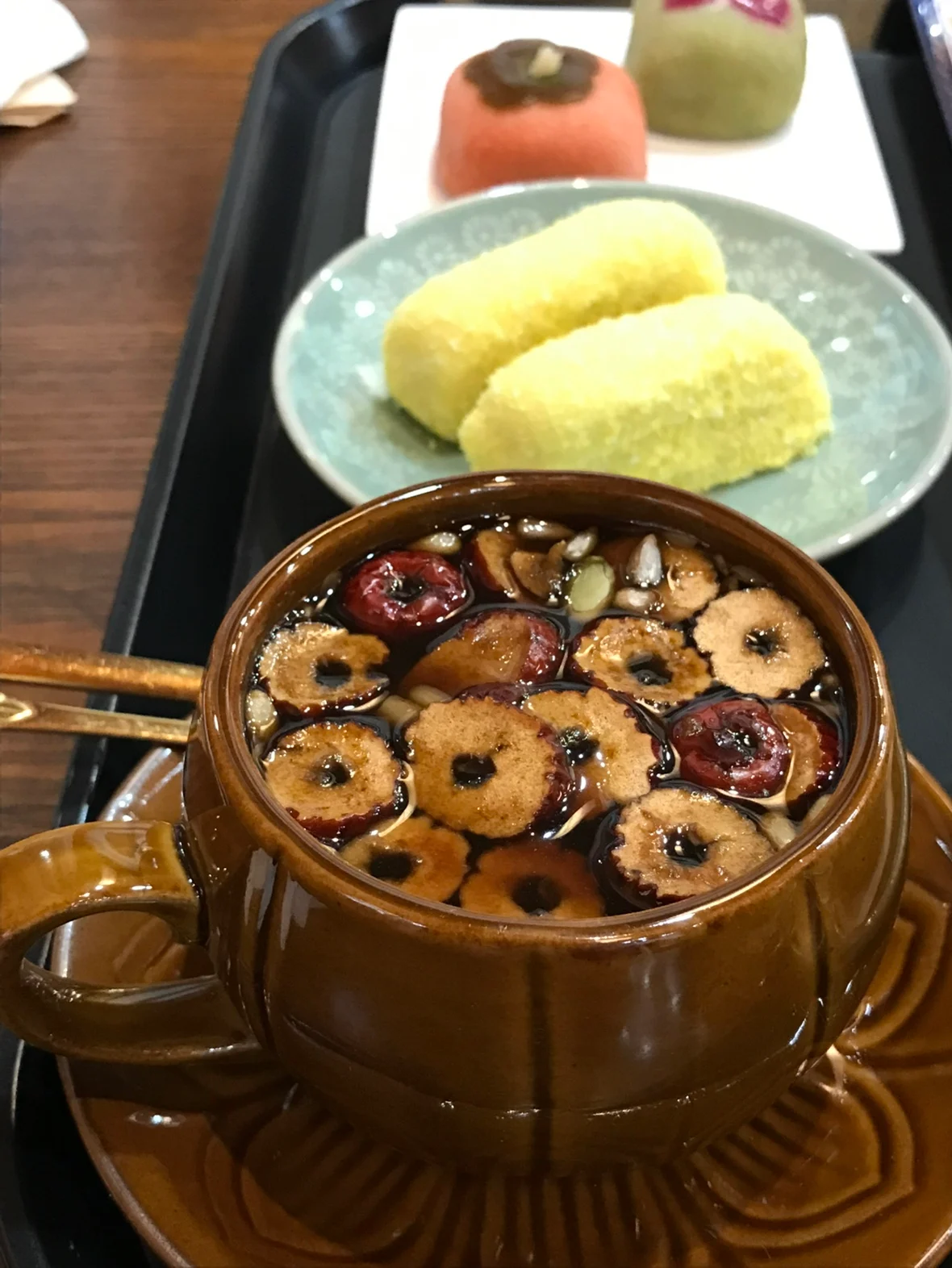
Start with flavor. Yuja-cha is the easiest sweet-citrus order, daechu-cha is mellow and substantial, omija-cha is tart and refreshing, and ssanghwa-cha is the dark herbal choice. In a Korean teahouse, cha does not always mean tea leaves steeped in water; fruit preserves, simmered fruit and herbal decoctions share the same menu category.
Pick your first cup
- Bright, sweet and familiar: yuja-cha (유자차)
- Warm, round and softly fruity: daechu-cha (대추차), or jujube tea
- Ruby-red and tangy: omija-cha (오미자차)
- Bitter-edged, spiced and herbal: ssanghwa-cha (쌍화차)
Temperature changes the experience. Yuja and omija are easy to enjoy iced; daechu and ssanghwa suit a slower hot drink. Sweetness can vary greatly because a café may use house-made preserve, commercial concentrate or pre-mixed syrup.
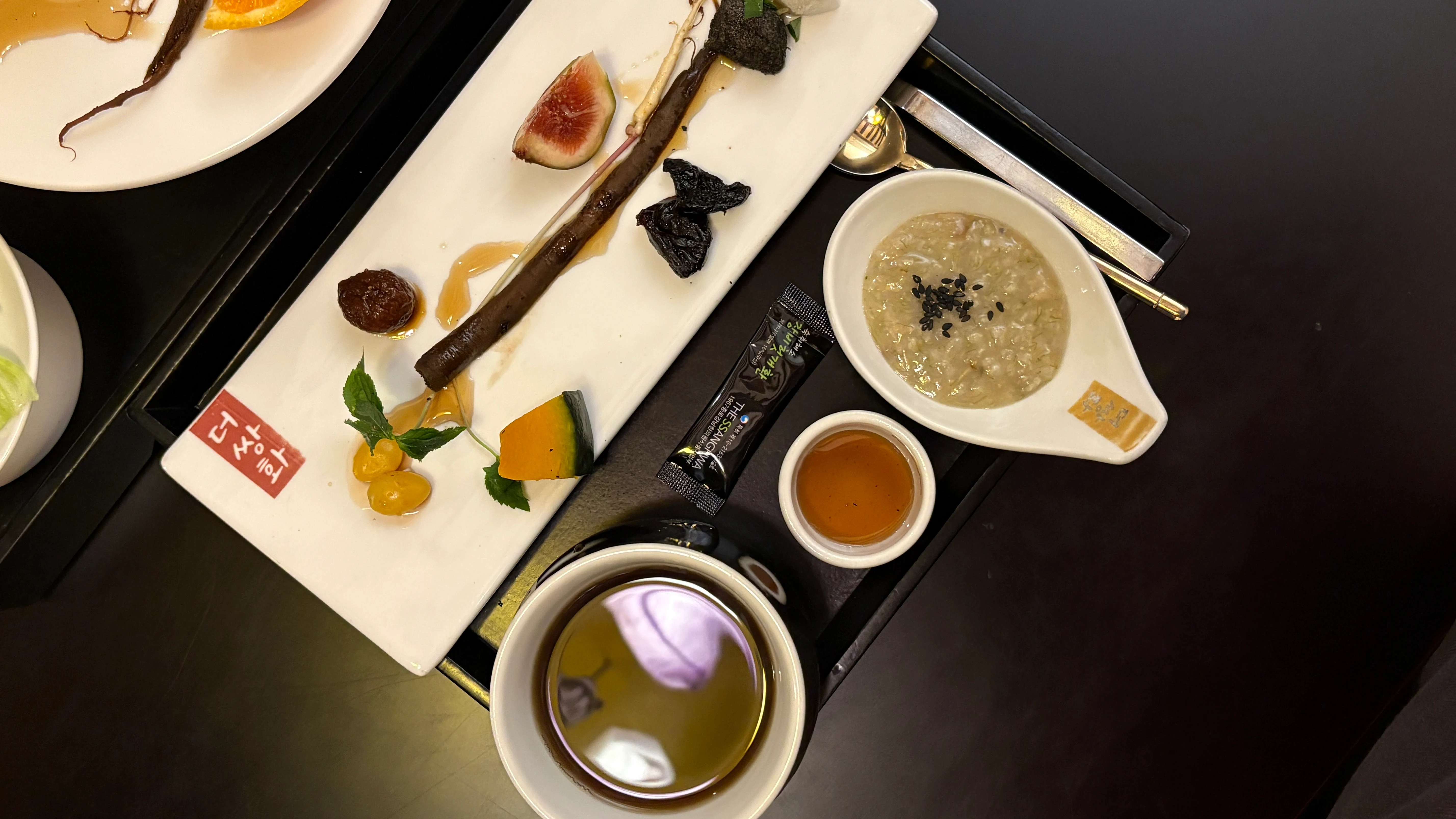
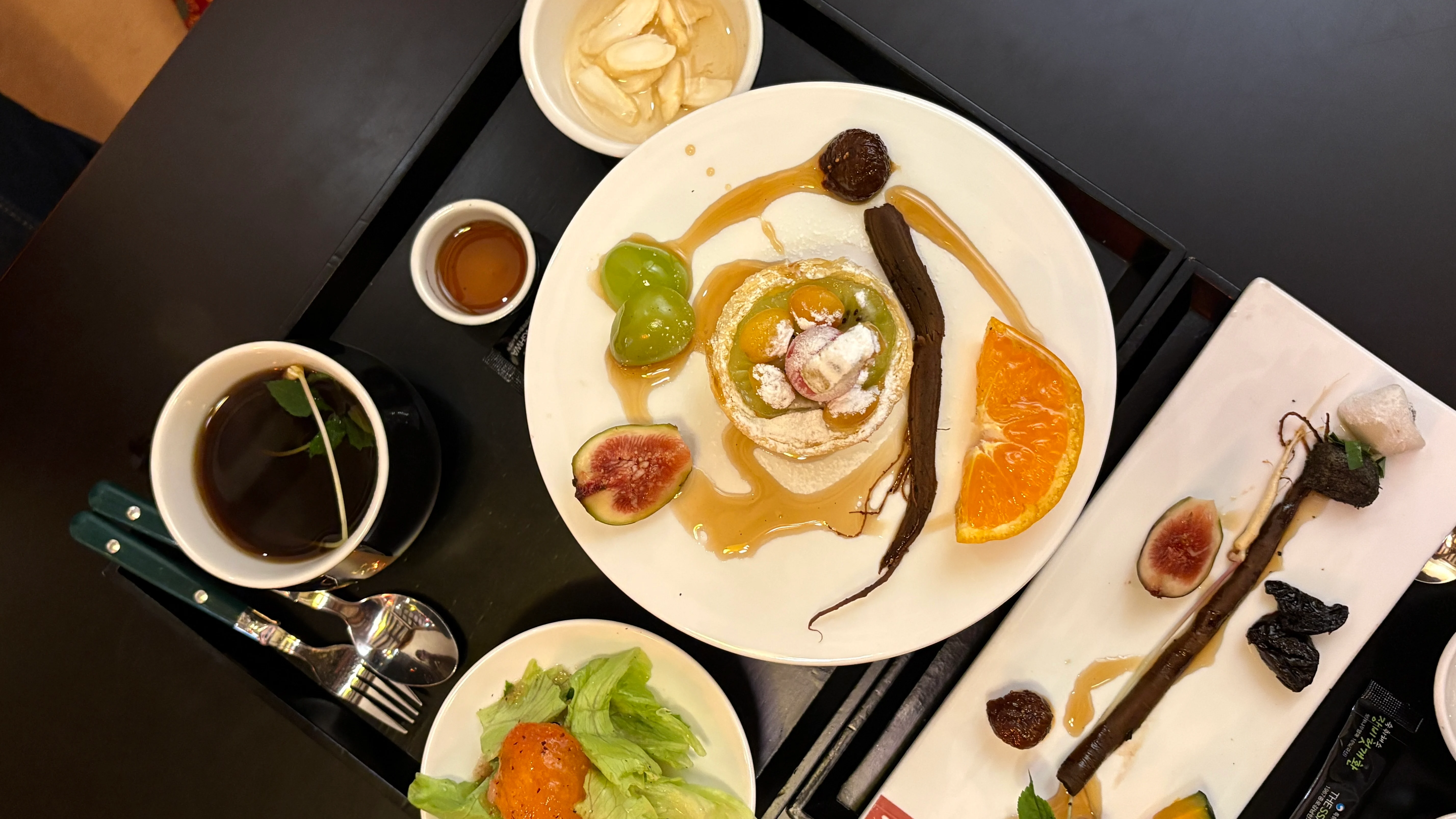
A drink may arrive alone or as part of a tray with porridge, fruit, rice cake or small sweets. Ask what the price includes before adding dessert. The Korea Tourism Organization's 2024 feature on hanbang cafés shows how broad these sets can be, but its named menus, hours and wellness claims are venue-specific and the page warns that details may have changed since November 2024.
Yuja-cha: sweet citrus and visible peel
Yuja is an aromatic East Asian citrus, often rendered in English as citron or yuzu. Yuja-cha is usually made by diluting yuja-cheong, a preserve of fruit, peel and sugar or honey. Think drinkable citrus marmalade: floral aroma, clear sweetness and a light bitterness from the peel.
Choose it if you like lemon-and-honey drinks or orange marmalade. It is a weaker match if you dislike visible peel or very sweet café drinks. Asking for less concentrate or extra hot water may help, although a shop can decline when the drink has already been mixed.
Useful order: 따뜻한 유자차 한 잔 주세요 — One hot yuja tea, please.
Daechu-cha: mellow, dark and filling
Daechu-cha uses dried jujubes, also called red dates. The official VISITKOREA jujube-tea entry describes dried fruit simmered on low heat for more than an hour, sometimes with pear or ginger; honey may be added. A café version can range from a clear brown infusion to a thick cup with fruit pulp.
Do not expect fresh-fruit acidity. The flavor is round, softly sweet and slightly earthy, which makes it a good cold-weather order when you want something more substantial than a clear infusion. Floating jujube slices are edible, but finishing every garnish is optional.
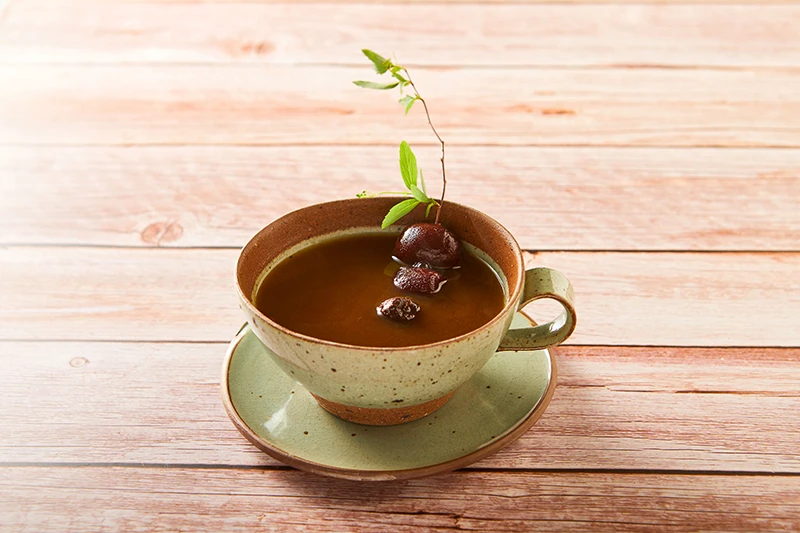
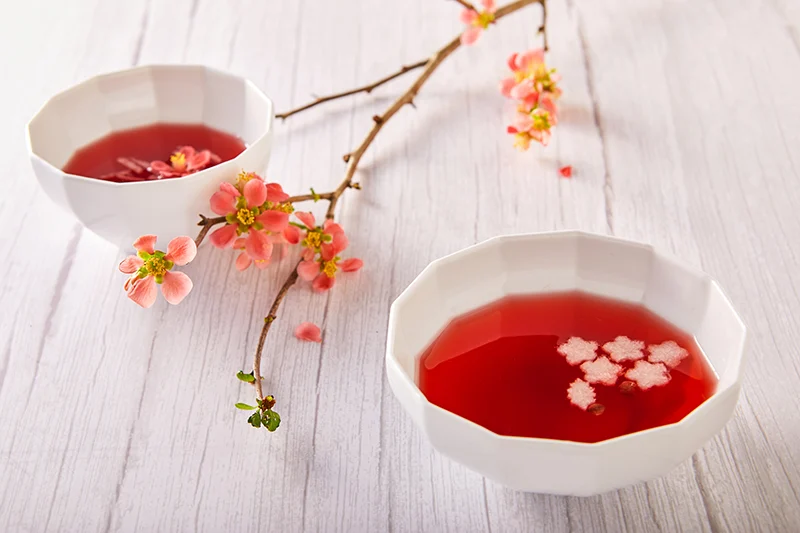
The color contrast is a useful menu shortcut when translations are limited: daechu is usually brown and mellow; omija is ruby-red and tart.
Omija-cha: tart, fragrant and good cold
Omija means “five flavors.” The berry is traditionally described as sweet, sour, bitter, salty and pungent, although the first impression in a café is usually tartness and vivid color. The official VISITKOREA omija-tea entry describes dried omija gently heated with water and served with honey. Modern cafés may use a syrup or concentrate instead.
Choose omija if cranberry, hibiscus or tart berry drinks appeal to you. Iced omija is the most refreshing choice among these four. Hot omija keeps its fragrance but may feel sharper. If you prefer a drier drink, ask whether the sweetener can be reduced or served separately; a pre-mixed base may make that impossible.
Useful order: 오미자차는 차갑게 주세요 — Please serve the omija tea cold.
Ssanghwa-cha: the strongest herbal experience
Ssanghwa-cha is an herbal decoction, so it is the cup most likely to surprise a first-time visitor. The current official listing for Jeongeup Ssanghwacha Street names white woodland peony, Chinese foxglove, angelica root, cinnamon and licorice among traditional ingredients. It also notes that walnuts, pine nuts and egg yolk may be added. Recipes differ by shop.
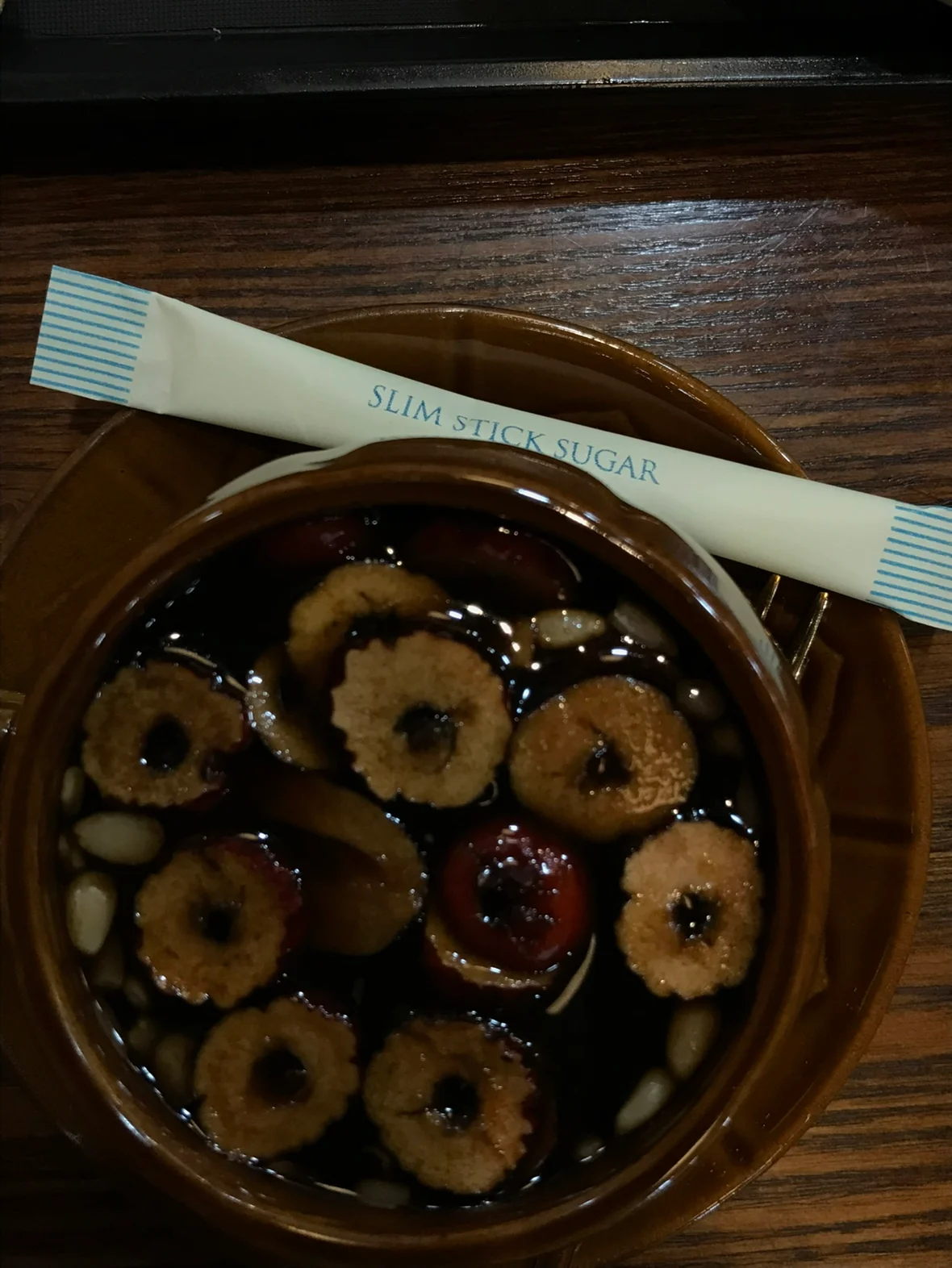
Expect a dark color, concentrated herbal aroma and a flavor that can be bitter, earthy, sweet and spiced at once. Floating jujube, nuts and seeds add texture; sip first, then use the spoon. Some cafés add egg yolk or serve rice cake, porridge or fruit alongside the drink, while others do none of these.
Order ssanghwa because you want the herbal intensity, not because a menu labels it restorative. Traditional use and café wellness language do not prove that a drink treats a cold, fatigue or another condition. A 2024 r/KoreanFood discussion about an unidentified herbal bundle illustrates how easy it is to confuse one decoction with another. The thread is personal discussion, not ingredient authority; ask the café what is in its blend.
What “traditional teahouse” may mean
The label describes a mood and menu, not one standardized ceremony. The room may be a hanok courtyard, a renovated old building with low tables, or a modern café using wood and ceramics. Tea may come in one cup, a pot or a composed tray.
- Shoes: some hanok rooms ask guests to remove them at the entrance.
- Seating: floor cushions may replace chairs; request chair seating if your knees or back need support.
- Minimum order: small rooms and busy cafés may expect one drink per guest. Confirm rather than assume.
- Time: allow roughly 45–75 minutes as an editorial planning range, not a guaranteed service time. Handmade preserves and full trays can take longer than espresso.
- Photos: photograph your own table and avoid blocking narrow walkways or including other guests.
In a KoreaTravel recommendation thread, one visitor described an English menu, photo menu, shoes-off entrance and floor seating at a Bukchon teahouse. That venue-specific traveler account is anecdotal, but it explains why seating and language support are worth checking before a queue.
Pair one snack, then taste the tea first
Yakgwa is dense and honeyed, yugwa is airy and crisp, and injeolmi is chewy with roasted soybean powder. A strong ssanghwa can stand beside a sweet rice cake; tart omija cuts through richer yakgwa; sweet yuja may work better with a plain rice cake.
If a composed tray is included, sip the tea before eating every sweet item. There is no universal ceremonial order you must follow in an ordinary café.
Check ingredients before ordering
The Korea Tourism Organization's official yuja-cha entry confirms the common sugar-or-honey preserve method. That makes sweetness part of the recipe, not merely an optional finishing syrup.
Ask the café about:
- Tea leaves and caffeine: these four names generally refer to fruit or herbal bases, but shop blends and additions vary. Ask explicitly if caffeine matters.
- Allergens and dietary needs: check nuts, seeds, honey, ginger, licorice and egg; a garnish can be part of the drink rather than decoration.
- Hot or iced availability: not every base is offered both ways.
- Current recipe and set contents: an old travel post may outlive the exact menu or the teahouse.
For the simplest choice, order hot yuja for sweet citrus, iced omija for refreshment, daechu for a mellow winter cup and ssanghwa only when the strongest herbal flavor is the point.
Facts and source pages were rechecked on August 12, 2026. This is a food and travel guide, not medical advice.
Sources and image credits
- Delivery Spot — traditional tea ceremony set — Published web-ready body asset retained from the source guide; original editorial collection credited to the KTO hanbang-café feature below.
- Delivery Spot — elaborate herbal tea set — Published web-ready body asset retained from the source guide; original editorial collection credited to the KTO hanbang-café feature below.
- Korea Tourism Organization — 2024 hanbang-café feature — Examples of tea sets, garnishes and café formats; published December 24, 2024, states that information may differ after November 2024, and health language is not used as medical evidence.
- Korea Tourism Organization — jujube tea — Official preparation description with low simmer, dried jujube, optional pear, ginger and honey; rechecked August 12, 2026. Health claims omitted.
- Delivery Spot — jujube tea — Published web-ready body asset retained from the source guide; original page credited to the KTO jujube-tea entry above.
- Delivery Spot — omija tea — Published web-ready body asset retained from the source guide; original page credited to the KTO omija-tea entry below.
- Korea Tourism Organization — omija tea — Official five-flavor and dried-fruit preparation description; rechecked August 12, 2026. Health claims omitted.
- Korea Tourism Organization — Jeongeup Ssanghwacha Street — Official ingredient, garnish and flavor context for ssanghwa; rechecked August 12, 2026. Restorative use is treated as tradition, not clinical proof.
- Delivery Spot — garnished ssanghwa tea — Published web-ready body asset retained from the source guide; original editorial collection credited to the KTO hanbang-café feature above.
- r/KoreanFood — unidentified herbal bundle discussion — Personal discussion used only to show why a specific café blend should be confirmed.
- r/koreatravel — teahouse recommendation discussion — Venue-specific anecdote used only for seating, shoes and language expectation-setting.
- Korea Tourism Organization — yuja tea — Official sugar-or-honey preserve and dilution method; rechecked August 12, 2026. Health claims omitted.
- Delivery Spot cover image file — Published web-ready cover retained from the source guide; original editorial collection credited to the KTO hanbang-café feature above.
Last updated


