
Semi-Permanent Brows in Korea: Check Before Booking
Before paying for semi-permanent brows in Korea, verify the artist, sterile single-use setup, healed work, written aftercare, and a realistic follow-up plan after you fly home.
An open appointment between lunch and shopping is not a good reason to book semi-permanent brows. The procedure breaks the skin and places pigment inside it. A fresh photo is not the healed result, infection control matters more than a polished feed, and any touch-up or complication may happen after you leave Korea.
Treat the deposit as the end of your research, not the beginning. Before paying, identify the actual artist, understand what their current credential means, see healed work, check the hygiene setup, and get aftercare and overseas follow-up terms in writing.
Five answers to obtain before paying
- Who performs the procedure? Ask for the artist’s full name, exact credential, issuer, and relevant experience—not simply “certified.”
- Where is the healed portfolio? Look for dated, unfiltered results on clients with similar skin, natural brow density, and old pigment.
- What is single-use and sterile? Confirm the sealed needle or cartridge, pigment cups, gauze, applicators, gloves, surface barrier, and sharps disposal.
- Can your itinerary follow the aftercare? Get product-specific rules for cleansing, water, sweat, sauna, swimming, sun, makeup, acids, retinoids, and facials before choosing the date.
- What happens after Korea? Put the touch-up window and price, remote contact, complication process, and limits of any guarantee in writing.
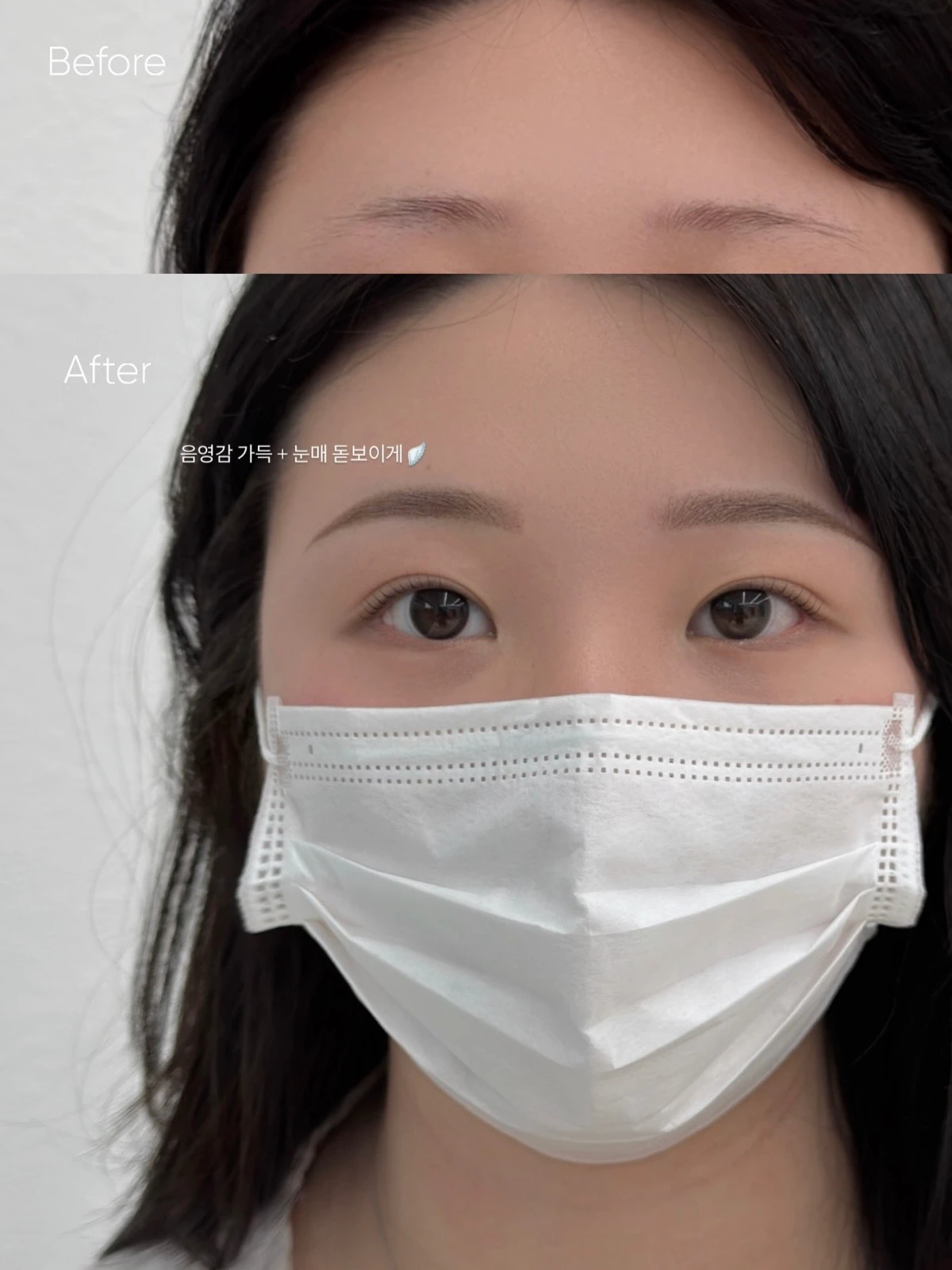
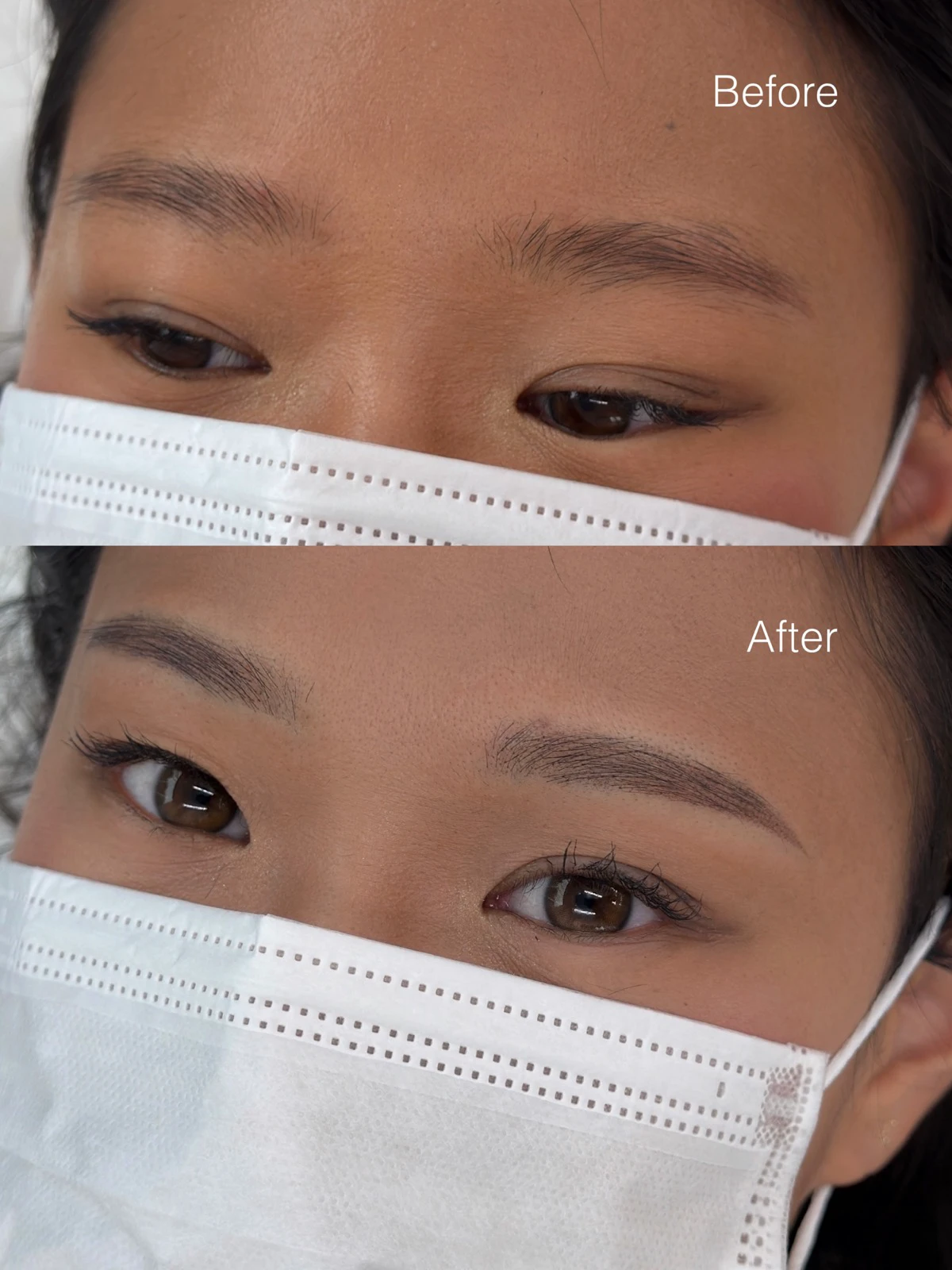
The image above is a same-day studio marketing comparison. It can show the intended design, but it cannot prove the final color, edge, symmetry, or retention. “After” on the treatment bed is the start of healing, not the endpoint.
Korea’s future tattooist license is not operating yet
South Korea promulgated the Tattooist Act on October 28, 2025. The Ministry of Health and Welfare says the new national system takes effect on October 29, 2027 and will cover artistic and cosmetic tattooing, statutory qualifications, and registered premises. As of this article’s August 12, 2026 recheck, that system is not yet in force.
The practical point is precise: “licensed,” “Korean-certified,” an academy certificate, and the future national tattooist qualification are not interchangeable. Do not decide the legality or clinical suitability of a procedure from a social-media label. Ask what credential the named artist holds now, which body issued it, and what it authorizes. A private course certificate should not be described as the future national license.
The Ministry’s July 2026 announcement gives the enactment and effective dates and publishes a standard tattooing guideline for the transition. Rules and enforcement can change, so verify the current Korean position before booking.
Turn “clean studio” into observable questions
The 2026 Ministry guideline gives travelers a useful benchmark: separated treatment and cleaning areas, sterile single-use instruments, immediate disposal, sterile high-risk consumables, sterile gloves, health screening, consent, treatment records, and written aftercare. It prepares the field for the 2027 law; this article does not claim every line already functions as a current licensing test.
Ask the studio:
- Will the artist open the sealed sterile needle or cartridge in front of me?
- Are pigment cups, gauze, applicators and gloves new for every client?
- Is pigment dispensed for one client rather than returned to or reused from a shared container?
- How are the treatment surface and contaminated items handled between clients?
- Will I complete a health questionnaire and consent form and receive a treatment record?
A tidy lobby, mask, or disposable-looking item in a photo does not answer those questions. If the artist will not show a sealed needle or explain waste handling, leave before treatment.
Fresh photos and healed photos answer different questions
Fresh pigment can be darker, sharper, warmer, and more even than the healed result. Technique, depth, pigment, skin, aftercare, sun exposure, and individual healing affect what remains.
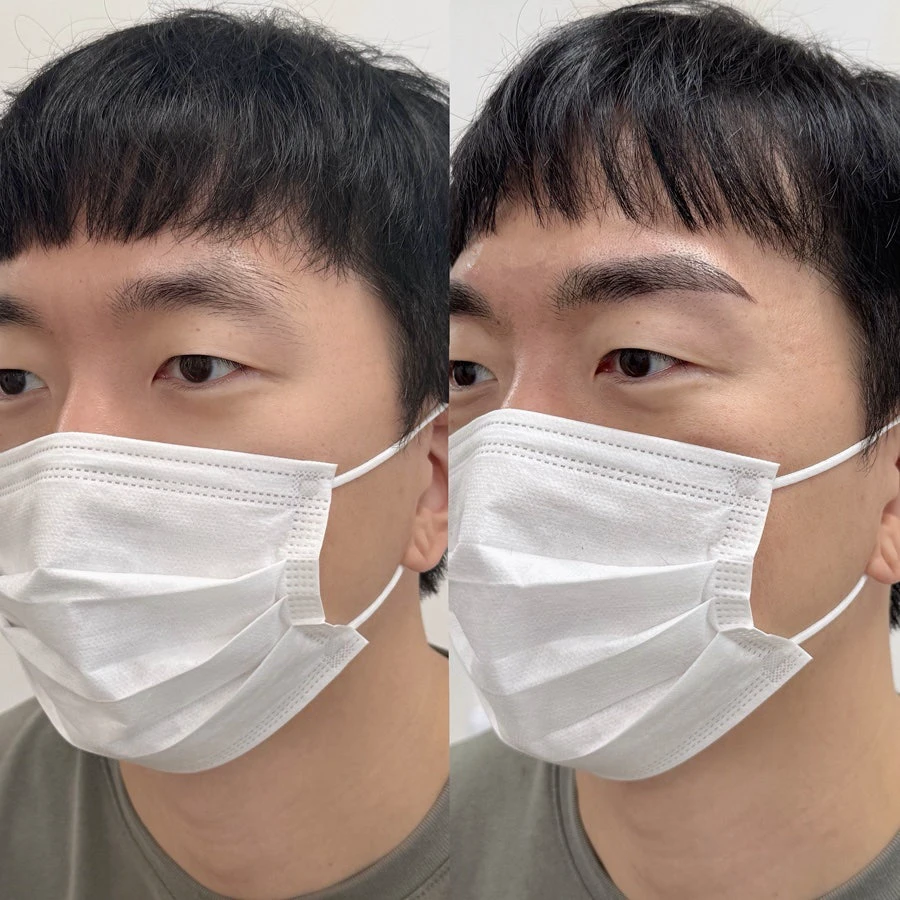
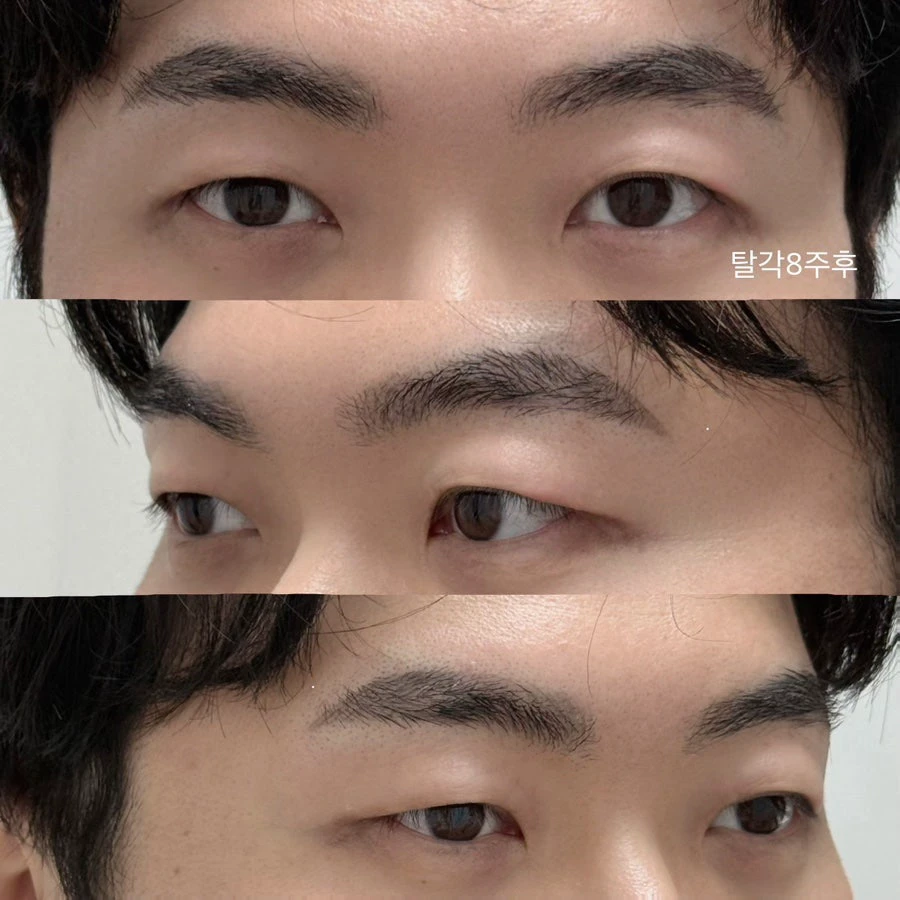
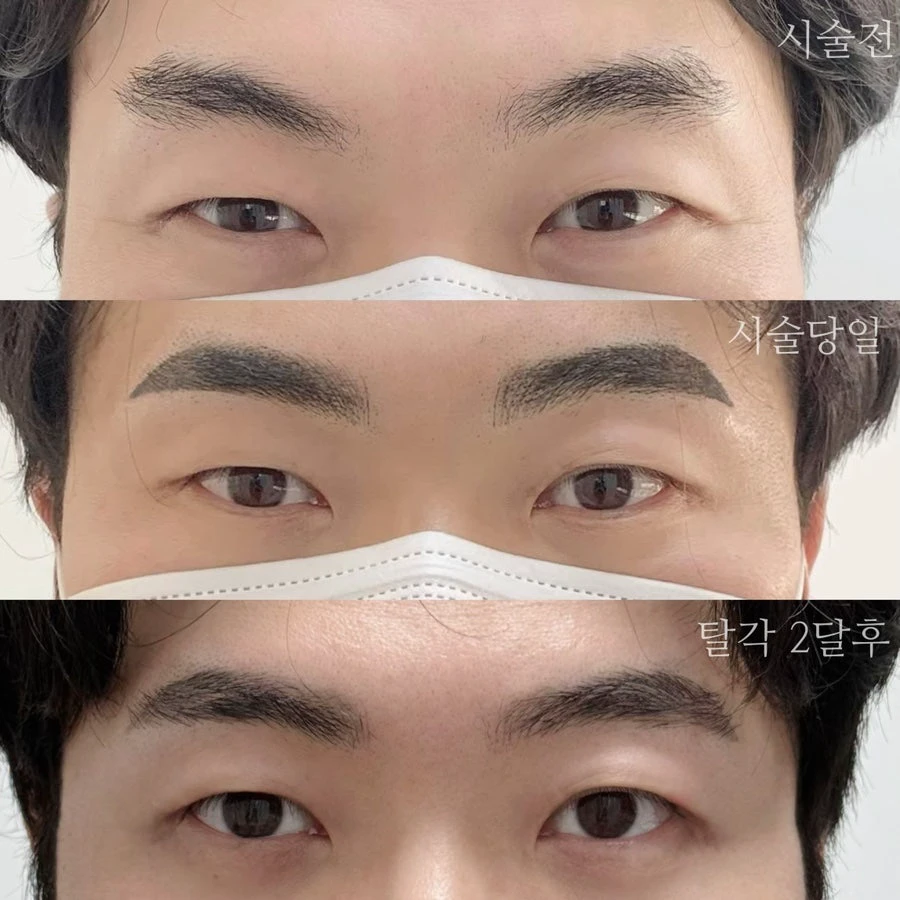
These images from one studio’s October 2025 Naver post show different clients and stages: immediate work, a result labeled eight weeks after peeling, and another labeled before, treatment day, and two months after. They are marketing examples, not a universal recovery calendar or a promise of your result. Their useful lesson is simply that treatment-day and healed evidence are different.
Ask for healed images with dates and consistent lighting. If you have old red, blue, gray, blurred, or asymmetric pigment, ask specifically for healed correction work, not only a fresh cover-up. A practitioner-written Reddit guide also emphasizes healed work for travelers; treat it as professional opinion and community context, not independent medical evidence.
“Semi-permanent” does not mean easily reversible
The U.S. FDA’s permanent-makeup fact sheet lists infection, allergic reaction, granulomas, keloid formation, pigment migration, and dissatisfaction among concerns. Removal can require several treatments, cost substantially, leave pigment behind, and cause scarring. U.S. regulatory details do not define Korean practice, but the biological and removal cautions remain relevant.
Approve the shape without time pressure. Have both brows drawn first, sit upright, check them in normal light and from the side, and confirm the front edge, arch, tail, thickness, color family, and plan for existing asymmetry.
Disclose keloid history, previous pigment or topical reactions, active skin disease around the brows, conditions that affect healing, and medicines that may affect bleeding or recovery. Ask an appropriate clinician whether the procedure is suitable when your medical history raises a concern; a beauty studio cannot overrule medical advice.
Plan around healing, not the return flight
Do not schedule a first brow tattoo for your last evening. Leave time to read the instructions and observe the early skin condition. Avoid placing it immediately before a pool, sauna, jjimjilbang, intense workout, facial, or strong-sun day unless the written instructions for the exact technique and products allow it.
Ask for specific written answers:
- how and when to clean the area;
- what product, if any, to use and for how long;
- when water, sweat, sauna, swimming, brow makeup, sunscreen, acids, retinoids, and facials may resume;
- what darkening, lightening, flaking, tenderness, or patchiness is expected; and
- which signs require medical care rather than a salon message.
Do not pick flakes or improvise with antibiotic ointment, acids, oils, or removal products. A salon’s May 2026 Naver aftercare overview illustrates common darkening and flaking, but its schedule and product suggestions are not instructions for every technique or skin.
Build a follow-up file before flying home
Save the artist’s full name, studio contact, procedure date, receipt, consent form, technique, previous-pigment notes, pigment brand and color, lot or batch number, needle or cartridge type, before-and-after photos, written aftercare, remote contact, and touch-up terms.
Ask whether another qualified professional at home may perform a touch-up and whether that changes any studio promise. Do not assume a local artist will work over someone else’s fresh pigment. If correction or removal becomes necessary, consult an appropriately qualified medical professional rather than using a home removal kit.
When a message to the salon is not enough
Some short-lived tenderness, swelling, darkening, or flaking may be described in your written aftercare. The American Academy of Dermatology’s tattoo-reaction guidance says spreading or darkening redness, worsening pain, painful bumps, fever, chills, pus, or open sores can signal infection and warrant prompt medical care.
Seek urgent care for breathing difficulty, chest tightness, dizziness, hives, intense or rapidly increasing facial swelling, serious pain, or eye symptoms. Do not ask an overseas artist to diagnose a worsening reaction from a photo. Bring the saved pigment and product details.
A message to send before booking
안녕하세요. 예약금을 보내기 전에 실제 시술자의 성함, 현재 자격명, 발급기관을 알려주세요. 비슷한 눈썹이나 기존 잔흔이 있는 고객의 탈각 후 사진도 부탁드립니다. 멸균된 일회용 니들을 제 앞에서 개봉하고 색소컵, 거즈, 장갑, 어플리케이터를 모두 새 제품으로 사용하시나요? 사용하는 색소 브랜드, 색상명, 제조번호도 기록해 주실 수 있을까요? 건강상태 확인서, 서면 사후관리 안내, 리터치 시기와 비용, 귀국 후 원격 상담 방법, 이상 반응 발생 시 안내 절차도 보내주세요.
A trustworthy studio should understand why a traveler needs those answers. Semi-permanent brows can be a planned beauty appointment in Korea; they should not become an impulsive souvenir.
Sources and asset credits
- Same-day brow comparison — Delivery Spot stored studio marketing image; not a healed-result guarantee
- Korean Ministry of Health and Welfare July 2026 announcement — Tattooist Act transition dates and standard tattooing guideline; rechecked August 12, 2026
- Immediate male-brow comparison — Delivery Spot stored BBAB Studio image
- Eight-week labeled result — Delivery Spot stored BBAB Studio image
- Before, treatment-day and two-month comparison — Delivery Spot stored BBAB Studio image
- BBAB Studio original Naver post — Studio marketing examples from October 2025; not a universal healing schedule
- Practitioner-written microblading discussion — Professional opinion and community context only
- FDA permanent-makeup fact sheet — Infection, allergic reaction, pigment and removal cautions; U.S. regulatory scope
- Salon aftercare overview — May 2026 salon illustration; not individualized medical advice
- Moyo Brow featured-photo source — Original studio social post
- Moyo Brow August 2026 post — Original studio social post
- BBAB Studio image source — Original source for slider images
- American Academy of Dermatology tattoo-reaction guidance — Infection and allergic-reaction warning signs; rechecked August 12, 2026
- Cover image file — Delivery Spot licensed semi-permanent brow comparison image
Last updated


