
Korean Salt Bread: Five Signs of a Good One
Judge Korean salt bread by five contrasts: a thin shell, browned butter-fried base, elastic crumb, clean butter aroma and brief salt. Freshness matters more than the queue.
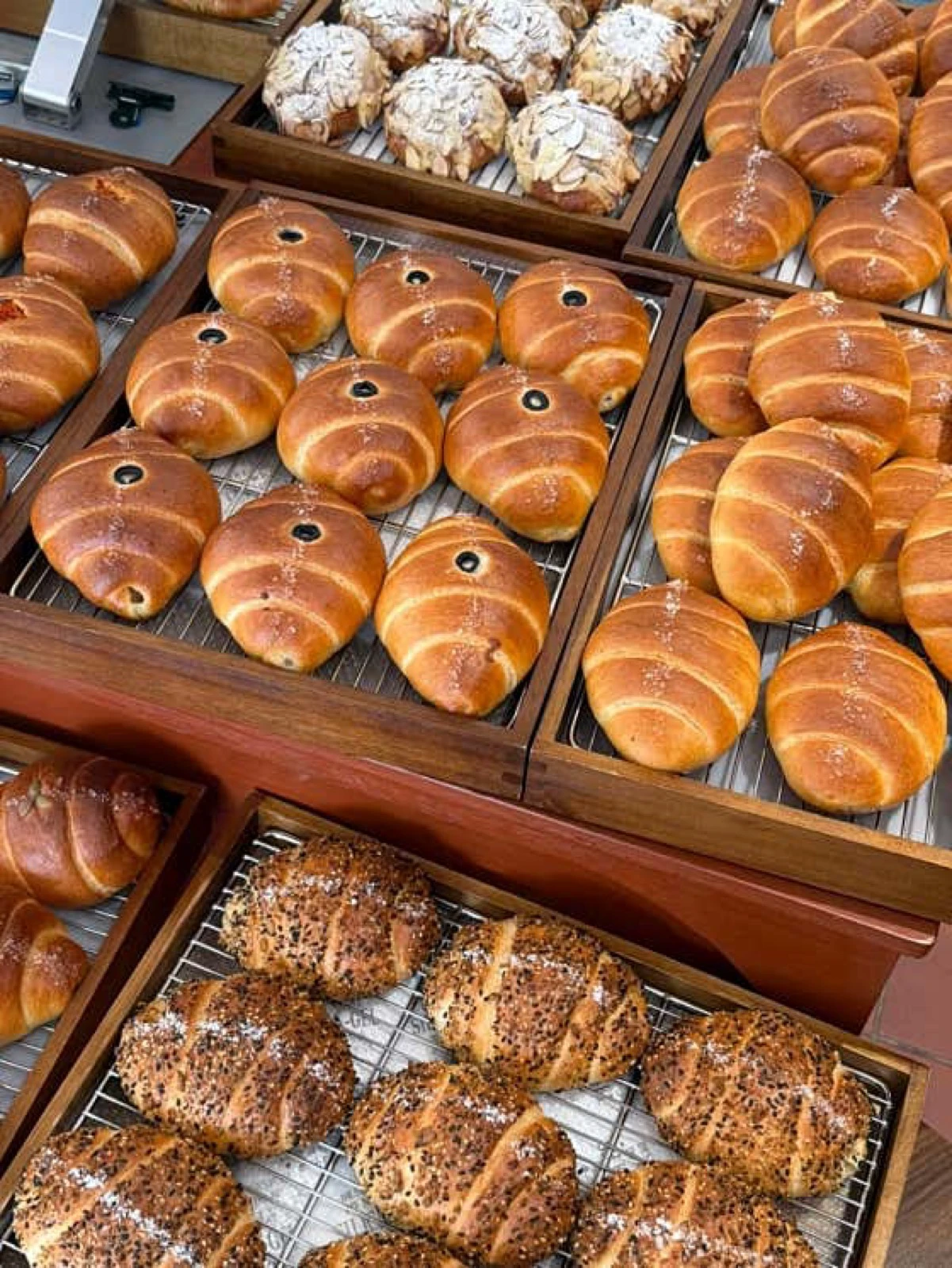
Korean salt bread is popular because one small roll creates five contrasts at once: a thin crisp shell, a butter-fried base, a moist elastic middle, a hollow left by melted butter, and brief hits of coarse salt. The best one is not the biggest, saltiest, or most heavily filled. It is the roll whose contrasts are still alive when you eat it.
For a fair first test, buy one plain roll from a recent batch, turn it over to inspect the base, and eat it the same day. Fame and queue length come after freshness.
The Korean trend has a Japanese starting point
In Korea the roll is called sogeum-ppang (소금빵), literally salt bread; in Japan it is shio pan. An Asia Business Daily origin account, rechecked August 12, 2026, attributes the modern form to Pan Maison in Yawatahama, Ehime: cold butter is enclosed in soft dough, then melts during baking to moisten the interior and crisp the exterior. Treat this as a reported origin account, not proof that no earlier salted roll existed.
Korean bakeries expanded the format. Korea JoongAng Daily reported that the bread became a Korean social-media trend after the COVID-19 pandemic. Specialist shops, timed batches, display trays and fillings turned a modest roll into a destination item. The Korea Tourism Organization's current salt-bread feature likewise contrasts the simpler Japanese form with Korea's crisp-soft, sweet-savory versions and filled “butter cave.”
The practical appeal is less mysterious: one roll is portable, smaller than a full café dessert, savory enough for breakfast, and visually distinctive when torn open.
The five-part quality check
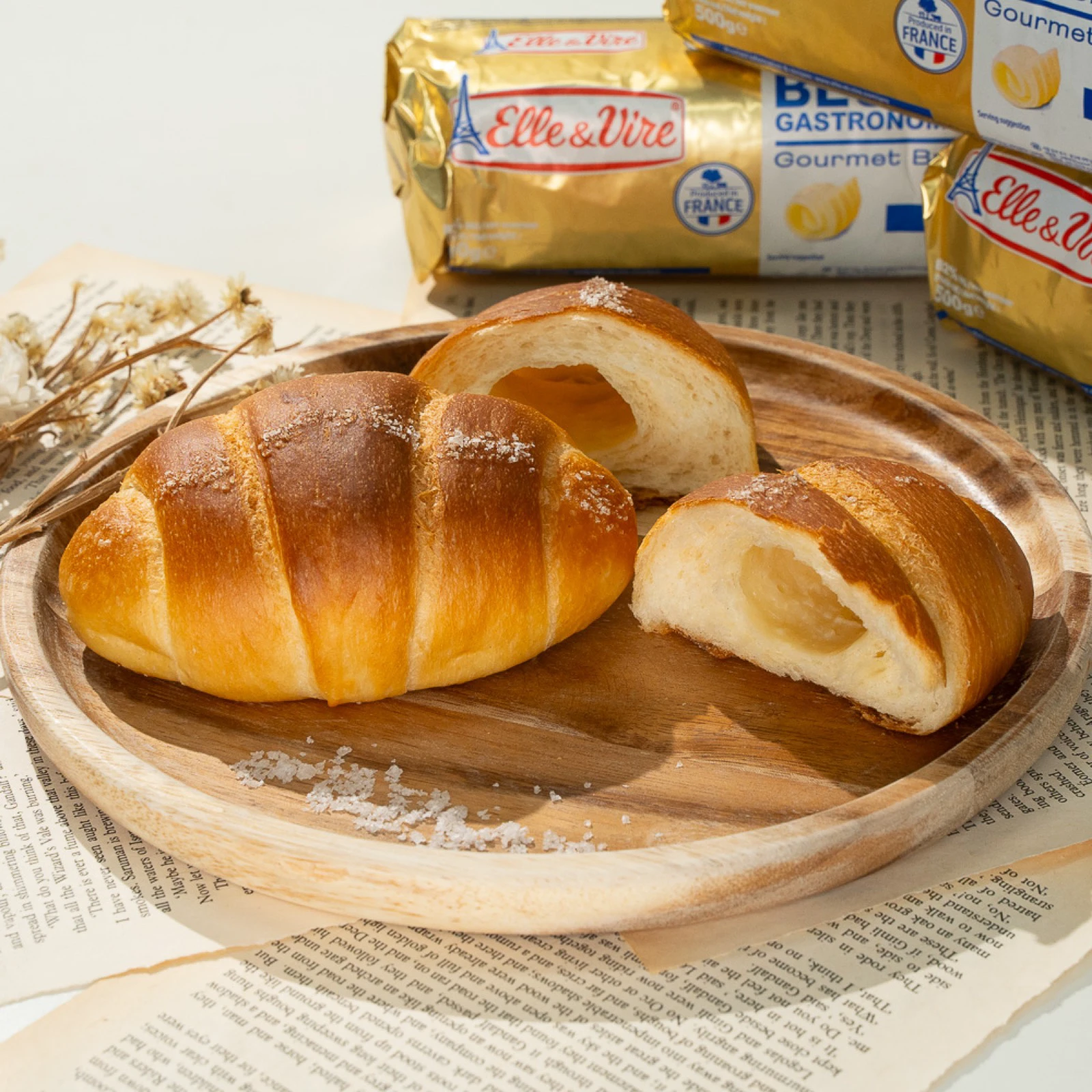
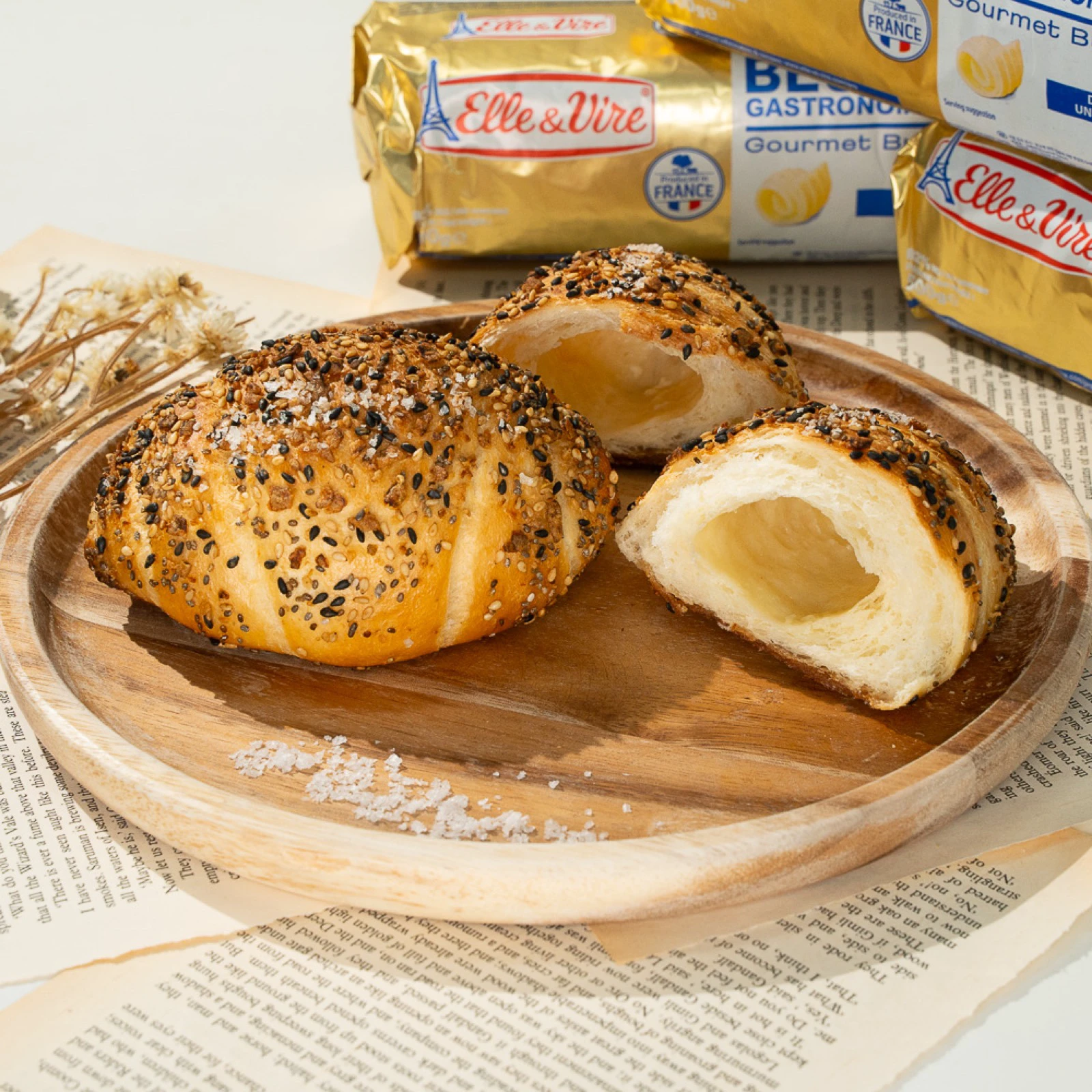
1. A thin shell, not a leather skin
The outside should crackle or rustle under light pressure. It may be tender rather than croissant-flaky, but a uniformly soft or tough skin has lost the contrast.
2. A deeply browned bottom
This is the easiest signal to check before buying. Butter melts out of the dough and fries the bottom against the tray, so a strong example has a crisp, well-browned base. Pale means less fried character; damp or oil-soaked is not the same as crisp and buttery.
3. Moist, elastic crumb around the hollow
Look for light strands with a little pull and bounce. Korean shops range from airy-soft to noticeably chewy, so there is no single correct pore size. Dense cake-like bread or a dry ring around the cavity is the more useful warning.
4. Clean butter aroma
The aroma should be warm, dairy-rich, and sometimes slightly nutty. A stale-fat smell or heavy coating that remains without bread flavor means the balance is off. Salt bread normally contains dairy, and recipes can also contain wheat, milk, miso or other allergens; never infer allergy safety from the plain appearance.
5. Salt as punctuation
Coarse crystals should sharpen a few bites, not dominate the roll. A topping-heavy version can be intentionally saltier, but “more salt” is not the definition of better salt bread.
King Arthur Baking's test-kitchen recipe, rechecked August 12, 2026, describes a crisp, crackly crust, feather-light pull-apart interior, hollow center, and butter-fried bottom. It is a useful structural reference, not a rule that every Korean bakery must copy its flour blend or texture.
The hollow center is intentional
First-time buyers sometimes think a filling was forgotten. The cavity is normally the footprint of butter. Cold butter is rolled inside the dough; in the oven it melts and steams, leaving a tunnel while some runs onto the tray and fries the base.
A large hollow alone does not prove quality. The ring of crumb still needs moisture and elasticity, and the bottom still needs a clean crispness. Judge the cavity together with the other four signals, not as a social-media size contest.
Freshness beats the famous name
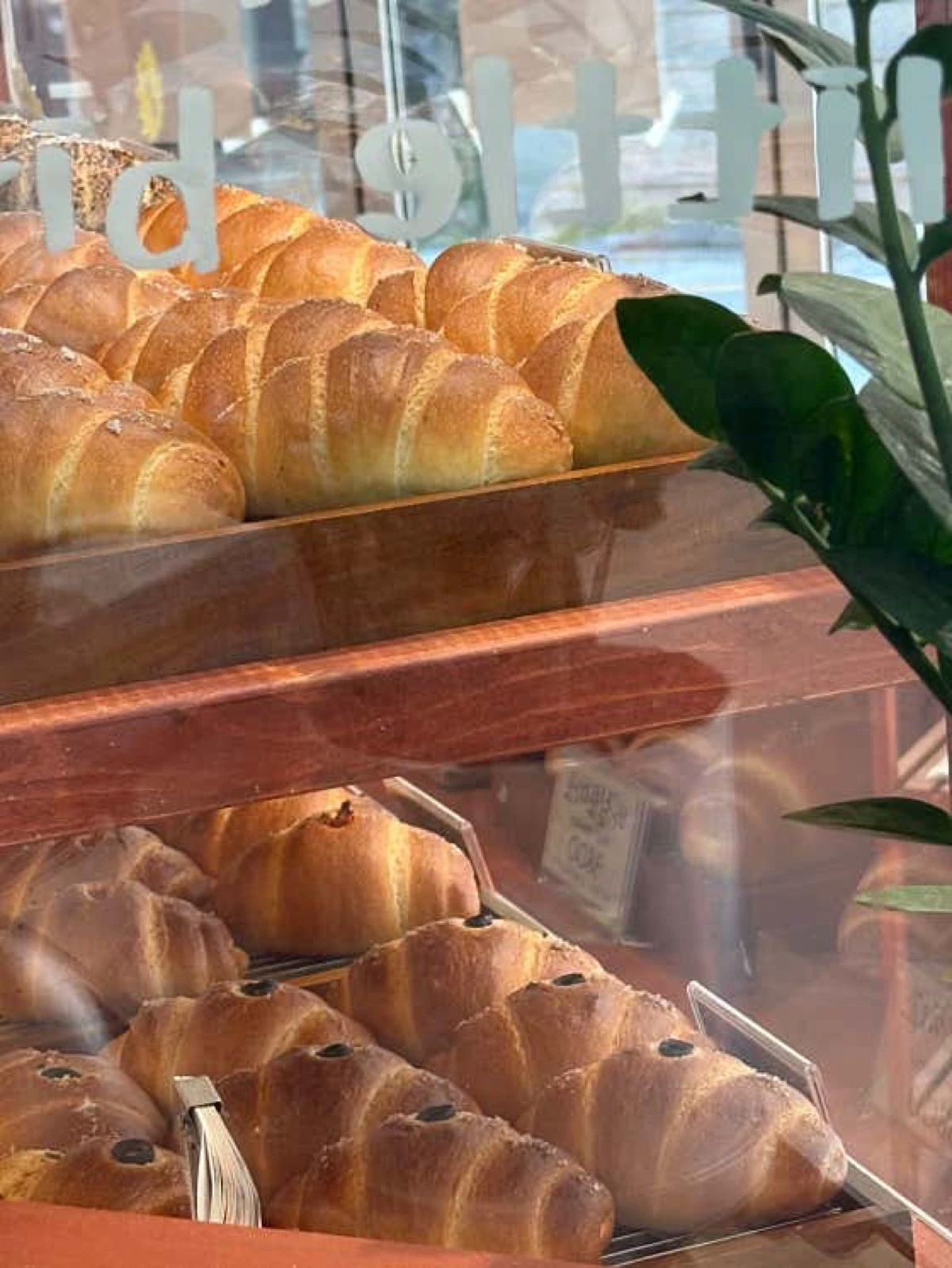
Salt bread has a short textural peak. Moisture moves from the interior into the crust, the base softens, and cooled butter feels heavier. That is why a warm neighborhood batch can beat a famous bag carried across Seoul.
Ask about the next or most recent batch, not merely opening time:
- 소금빵 하나 주세요. Sogeum-ppang hana juseyo. — One salt bread, please.
- 방금 나온 소금빵 있어요? Banggeum naon sogeum-ppang isseoyo? — Do you have salt bread that just came out?
Do not expect a shop to heat one on demand, and do not squeeze bread on a self-service tray. Look at the base, ask staff, and buy only what you can eat soon.
For a cooled plain roll, King Arthur recommends reheating uncovered in a 175°C/350°F oven for 5–10 minutes or using a toaster oven. This is home-baking guidance, not a guarantee for every cream-, cheese-, meat-, or sugar-filled Korean variation. Check the shop's storage instructions for fillings, let the roll stand briefly, and remember melted butter may be hotter than the surface. Its recipe stores a plain roll well wrapped at room temperature for up to two days or freezes it longer; a merchant's product label takes priority.
Plain first, variations second
Korean bakeries sell garlic, cheese, truffle, pollock roe, scallion cream cheese, red-bean butter, chocolate, and many shop-specific versions. Start with plain if the purpose is to judge the bakery. The base, crumb, butter, salt, and cavity are easier to read when a strong filling is not covering them.
After that, choose a variation because you want that flavor—not because a longer menu must mean better technique. Check allergens and whether a savory filling requires refrigeration. Sesame, cheese, fish roe, nuts, and cream are not decoration-only details for an allergy or storage decision.
Is the famous queue worth it?
Sometimes, but the line itself is not a quality signal. In a 2026 r/koreatravel discussion, one Seoul resident preferred a less famous bakery and recommended timing a fresh batch. In a separate r/KoreanFood discussion, some travelers described salt bread as a trip highlight while others found the trend average. These are individual experiences, not an objective ranking or current merchant evidence.
Use a simple decision rule:
- Short wait for a known fresh batch: reasonable if the bakery is already on the route.
- Long line with no batch information: set a time limit before joining.
- Cross-city detour for a bag that will cool: difficult to justify when another well-browned plain roll is nearby.
- First comparison: buy one, eat it now, then decide whether extras deserve luggage space.
The product photos in this guide came through Salt,0 / Saltify and its merchant-managed Naver Place page, both rechecked August 12, 2026. They identify the photographed shop and assets; they do not prove that every current batch has the same texture, price, stock, or hours.
A 30-second check before paying
- Is there a recent-batch time?
- Is the plain base visibly browned?
- Will you eat it today rather than carry it across the city?
- Are the filling and allergens clear?
- Is the queue still shorter than your chosen limit?
If those answers work, buy the roll. Tear it open while the shell and bottom are still crisp, and let the bread—not the line—decide whether it deserves a second one.
Sources and image credits
- Asia Business Daily origin account — reported Pan Maison/Yawatahama origin and Korea-Japan trend context; rechecked August 12, 2026.
- Korea JoongAng Daily on the Seongsu salt-bread trend — Korean post-pandemic popularity context; rechecked August 12, 2026.
- Plain salt-bread image asset — Delivery Spot crop from the credited Salt,0 / Saltify merchant imagery.
- Seeded salt-bread image asset — Delivery Spot crop from the credited Salt,0 / Saltify merchant imagery.
- King Arthur Baking salt-bread recipe — method, texture, hollow center, storage and reheating benchmark; rechecked August 12, 2026.
- Bakery-display image asset — Delivery Spot crop from the credited Salt,0 / Saltify merchant imagery.
- r/koreatravel salt-bread discussion — individual freshness and bakery-preference experience only.
- r/KoreanFood salt-bread discussion — mixed individual reactions only; not ranking evidence.
- Salt,0 / Saltify website — photographed merchant and product context; rechecked August 12, 2026.
- Salt,0 merchant-managed Naver Place — merchant listing and image-source context; dynamic details require live confirmation.
- VisitKorea: Top 5 K-Desserts — current Korea Tourism Organization salt-bread overview, Korean variations and butter-cave explanation; rechecked August 12, 2026.
- Cover image asset — trays of plain and seeded salt bread; Delivery Spot crop from the credited Salt,0 / Saltify merchant imagery.
Last updated


