
C-Curl, S-Curl or Root Perm? A Korean Salon Decision Guide
Choose by where you want movement: one bend at the ends, repeated waves through the length, or lift close to the scalp—then confirm technique and hair condition.
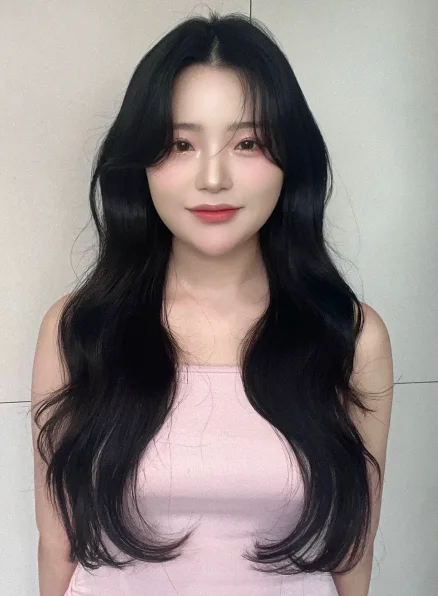
Choose the result by where you want movement. A C-curl turns the ends, an S-curl creates repeated waves through more of the length, and a root perm lifts selected hair near the scalp; the salon may use a different technique to build that shape after checking your cut, condition and chemical history.
The useful beginner question is not which name is most fashionable. Ask where the first bend should start, how the hair should look after an ordinary wash, and what you will need to do at home to reproduce it.
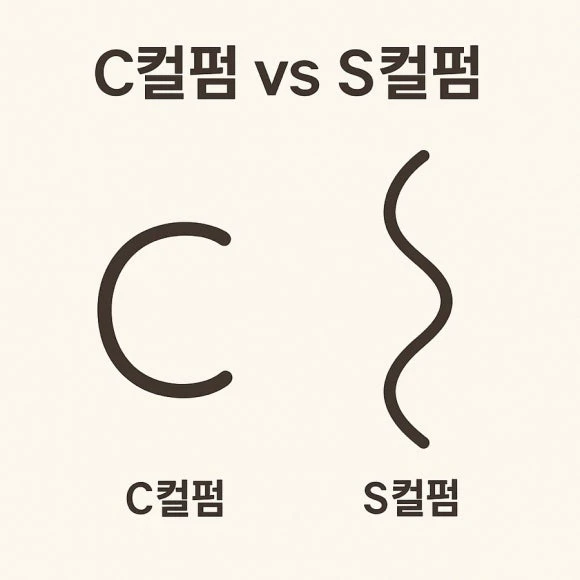
The 20-second choice
- C-curl: choose this when you want one controlled bend at the ends of a bob, lob or layered medium cut.
- S-curl: choose this when you want visible waves through the mid-lengths and ends, usually with enough length or layers to show more than one bend.
- Root perm: choose this when the main issue is a flat crown, part or fringe. It does not replace a C- or S-shaped design through the lengths.
- Mixed design: useful when different sections need different jobs, such as root lift plus C-shaped ends or C- and S-bends through layers.
These are design directions, not eligibility rules. Density, strand thickness, porosity, natural pattern, haircut and previous bleaching, coloring, straightening or perming can change the plan.
Shape and salon technique are different decisions
C컬 and S컬 describe the visible shape. 디지털펌 (digital perm), 셋팅펌 (setting perm) and 일반펌 (cold or standard perm) describe methods a salon may use. 뿌리펌 (root perm) names the target area close to the scalp.
This distinction prevents a common booking mistake. Selecting “digital perm” does not by itself promise a C-shaped end or an S-shaped wave, and one finished style may mix both. The current Myeongdong Juno Hair guide separates methods from visible results and tells clients to confirm where curls begin, their strength, daily styling and damage level. A current Juno Hair Seoul Station listing describes its Glam Wave as a consultation-led mix of natural C- and S-curls; its duration and price are live booking details, so check the listing again rather than treating a snapshot as a fixed quote.
Bring one reference that shows the front, side and back. Then ask: “Which parts are C, which are S, where does the first wave start, and which technique would you use on my hair?”
C-curl: a finished edge, not waves everywhere
A C-curl bends the ends inward or outward in one broad curve. It can give a bob, lob or layered medium cut a clean outline without adding a repeated wave through the whole head. The visual reference is closer to the bend made by a round-brush blow-dry than to a ringlet.
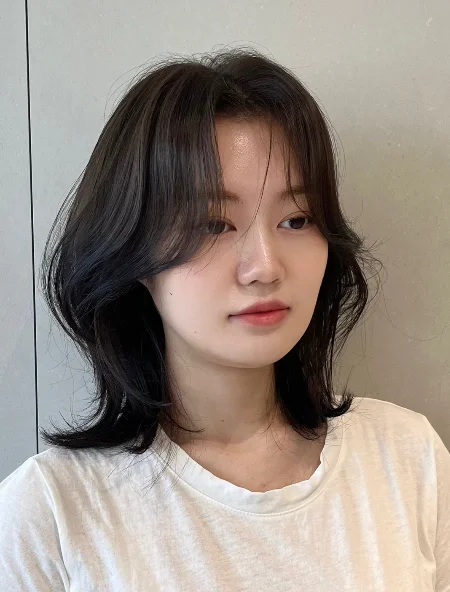
It is a practical direction when the ends stick out unpredictably, you prefer a smooth silhouette, or you want movement only at the perimeter and selected layers. You will still need to dry the ends in the intended direction.
The result depends heavily on the cut. Hair that hits the shoulder may flip against clothing, a strong cowlick can redirect the bend, and very straight dense hair may pull it flatter. A later trim can also remove much of the effect because the treated shape is concentrated near the ends.
A Yewoom Hair salon explanation pairs C-shaped ends with bobs, medium lengths and layers, while recommending that C, S or a mix be chosen after considering condition and styling habits. The direct Naver page was not readable during the August 12, 2026 recheck, so treat it as one salon's recorded guidance rather than a current universal rule.
S-curl: repeated movement needs enough canvas
An S-curl changes direction more than once. It may be loose and flowing or more defined depending on rod size, layer placement and how high the first wave begins. Medium-to-long layered hair gives the pattern more room to show.
Choose this direction when you want visible movement through the mid-lengths and ends and are comfortable drying sections along the curl or using a light product. Ask for an unstyled or simply dried result in the portfolio, not only a salon blowout.
More wave does not guarantee more lift at the crown. Long dense hair can remain flat at the part while the lengths wave; fine hair can look separated when the curl is too strong or the product too heavy. The current Hongdae Hair Studio comparison also separates an end-focused C shape from fuller-length S movement and says intensity should be adjusted to hair condition. It is salon advice, not an independent face-shape rule.
Root perm: targeted lift close to the scalp
A root perm changes the direction or lift of selected new-growth sections, often around the crown, part or fringe. It does not create C- or S-shaped lengths. A salon may combine root lift with a full perm, but they are separate jobs and may be booked or priced separately.
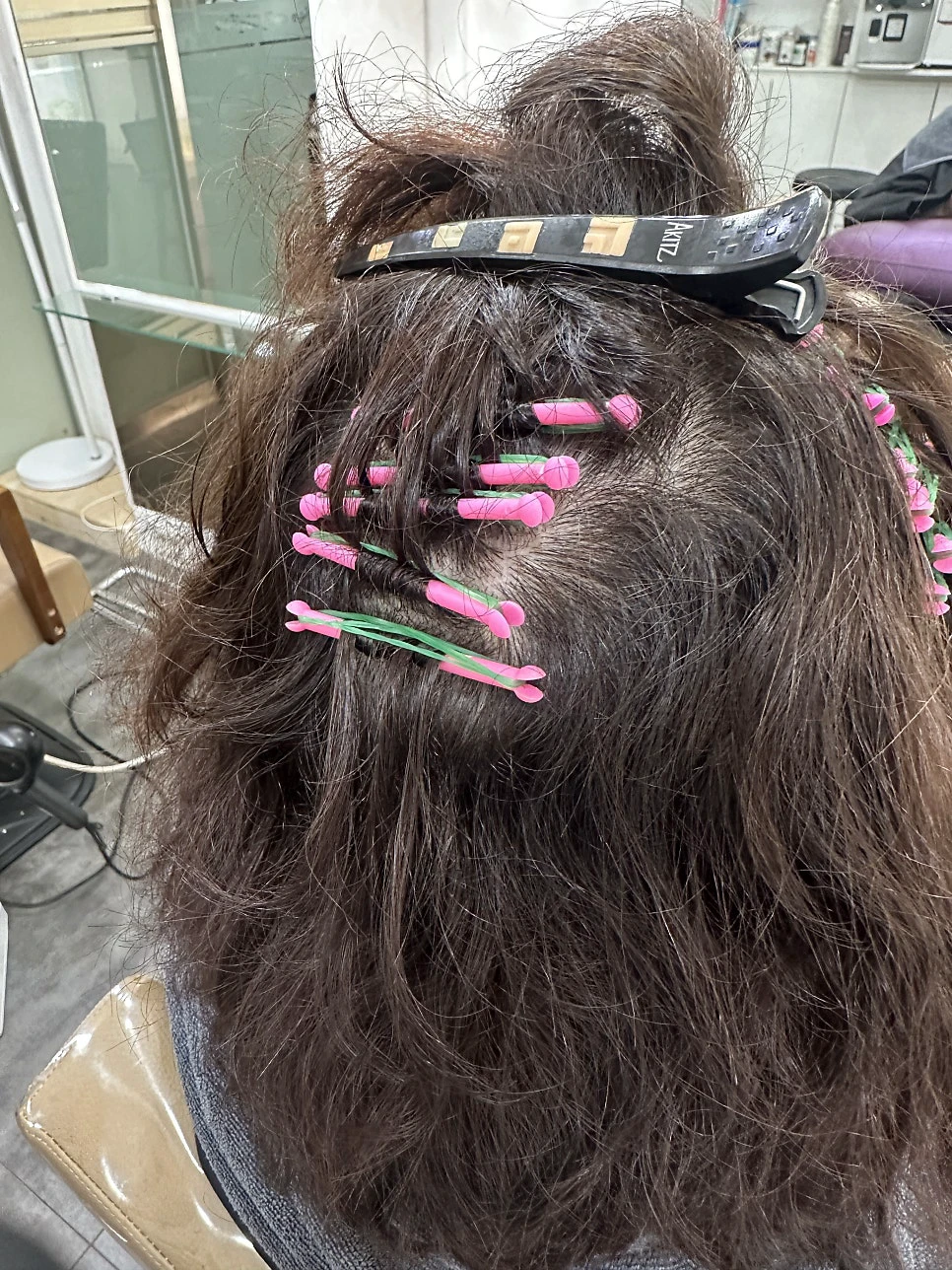
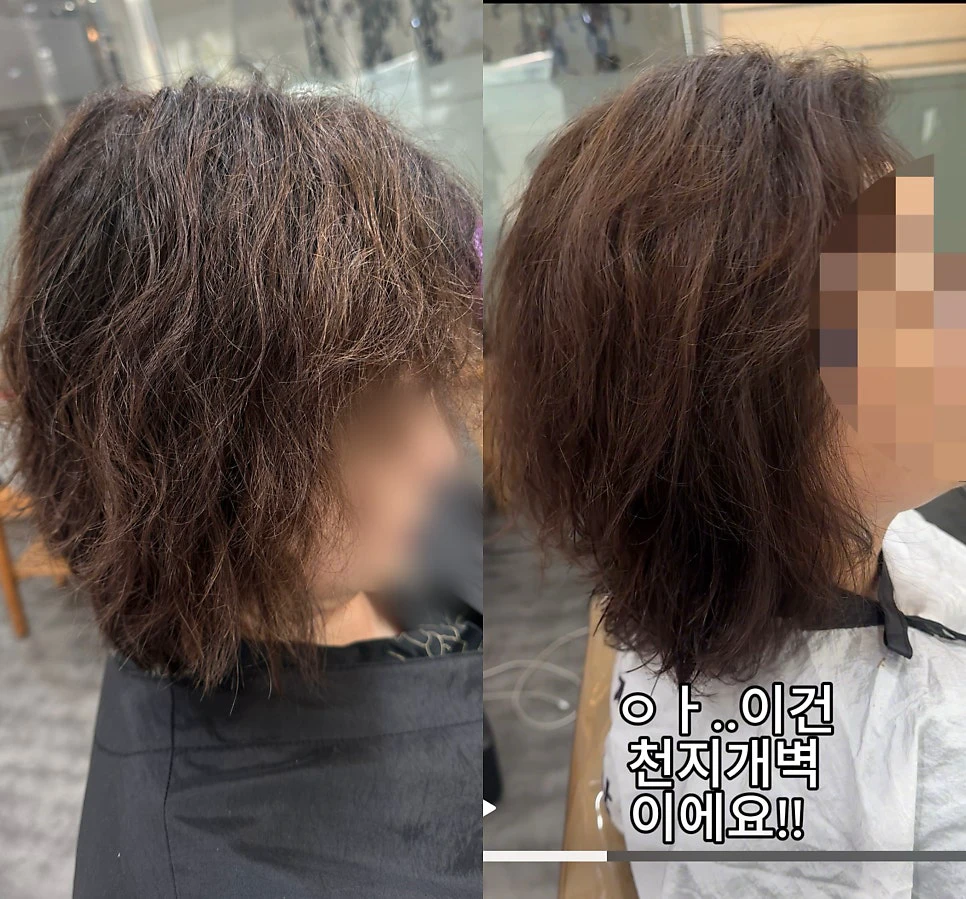
It makes the most sense when your main complaint is a crown or part that collapses soon after drying. Oil buildup, a heavy one-length cut or a growth pattern that fights your styling direction may respond better to a cut, part change or drying adjustment.
Work close to the scalp needs a careful formula and sectioning. In a promotional N U Hair stylist case, the stylist discusses visible crimp marks and rough damage when product or strength is poorly matched, then describes adjusting both to the client's condition. The direct page was not readable in the August 12 recheck, and the post is a salon case rather than proof of a guaranteed outcome. Its useful questions remain: where will the lift sit, will it leave a line as it grows, and how will it interact with recent root color, bleach or straightening?
Hair condition can overrule the design
Tell the stylist about every bleach, color, relaxer, straightening service and previous perm, including work done months ago or in another country. A careful consultation may lead to a weaker design, a test strand, a cut-only alternative or refusal when the hair cannot safely support the plan.
General starting points are:
- Straight or gently wavy bob-to-medium hair: often gives a C-shaped end enough structure to show.
- Medium-to-long layered hair: provides room for an S pattern or C/S mix.
- Flat roots with otherwise workable lengths: may benefit from targeted root lift.
- Naturally curly, coily, strongly wavy or highly porous hair: needs a stylist who can explain how the new chemical pattern will interact with the existing one.
None of these guarantees candidacy. Ask for portfolio examples on hair that behaves like yours. If a salon describes a service as “for Asian hair” or “low maintenance,” request the actual cut, condition and home-styling assumptions behind that label.
Perming can leave hair dry and brittle. The American Academy of Dermatology advises caution with chemical perming and says excessive stinging or burning while solution is on the scalp is a reason to rinse immediately and consult a dermatologist. This is general safety information, not a diagnosis. Do not normalize intense pain because you are in the middle of a paid appointment.
Do not buy a fixed longevity promise
There is no universal expiry date for a perm. Curl size, method, formula, processing, condition, washing and drying, later haircuts and new growth all affect how long the result remains useful. Root lift changes visually as the treated section moves away from the scalp.
A recent AsianBeauty discussion about a C-curl perm contains sharply different personal results, from quickly flattened bends to curls lasting many months. The thread is anecdotal and cannot predict your outcome; its disagreement is the reason to ask how the design is expected to fade on hair like yours.
Before paying, ask:
- Which section will loosen first?
- Will a normal trim remove the C-shaped ends?
- How will root lift look as it grows out?
- What drying direction and product are required after washing?
- What should you contact the salon about if the result is much weaker, stronger or more irritating than expected?
A booking message to copy
“My hair is [length] and naturally [straight/wavy/curly/coily]. I last [bleached/colored/straightened/permed] it on [date]. I want [one C-bend at the ends / loose S-waves starting here / lift only at the crown]. Does the reference require a cut, root perm and full perm? Which technique would you recommend after checking my hair, and what drying or product will I need at home?”
Attach current front, side and back photos without heavy styling. Mark the exact height where you want the first bend or wave to begin. If you are open to a mixed design, label which sections may be C-shaped and which may be S-shaped.
The beginner decision stays simple: C-curl for one controlled end bend, S-curl for repeated movement through the length, and root perm for lift close to the scalp. The right booking is the one your present hair can support and you can reproduce on an ordinary morning.
Sources and image credits
- C- and S-shape diagram asset — Delivery Spot comparison graphic; attribution retained from the frozen English post.
- Myeongdong Juno Hair perm guide — current salon terminology for method, shape and consultation questions; rechecked August 12, 2026.
- Juno Hair Seoul Station listing — current Glam Wave service description and live-booking context; rechecked August 12, 2026.
- Juno Hair C-curl image asset — Delivery Spot image from the frozen post, showing a softly curved end result.
- Yewoom Hair C/S-curl post — salon explanation preserved from the English master; direct page retrieval was unavailable during the August 12 recheck.
- Hongdae Hair Studio comparison — current salon comparison of end-focused C and fuller-length S movement; rechecked August 12, 2026.
- Root-perm rod image asset — Delivery Spot image from the frozen post.
- Root-lift comparison image asset — Delivery Spot before-and-after image from the frozen post.
- N U Hair root-perm case — promotional stylist example preserved from the English master; direct page retrieval was unavailable during the August 12 recheck.
- AsianBeauty C-curl discussion — personal outcomes only, not evidence of expected longevity.
- American Academy of Dermatology perming safety — general chemical-perm damage and scalp-reaction guidance; rechecked August 12, 2026.
- Cover image asset — Juno Hair Seoul Station wave style used as the Delivery Spot cover; attribution retained from the frozen post.
Last updated


