
Does Korean Military Service Really Break Couples Up?
Military service can strain a relationship, but it is not an automatic breakup. Here is what has changed—and why contact, leave, and the gendered ‘gomshin’ role still matter.
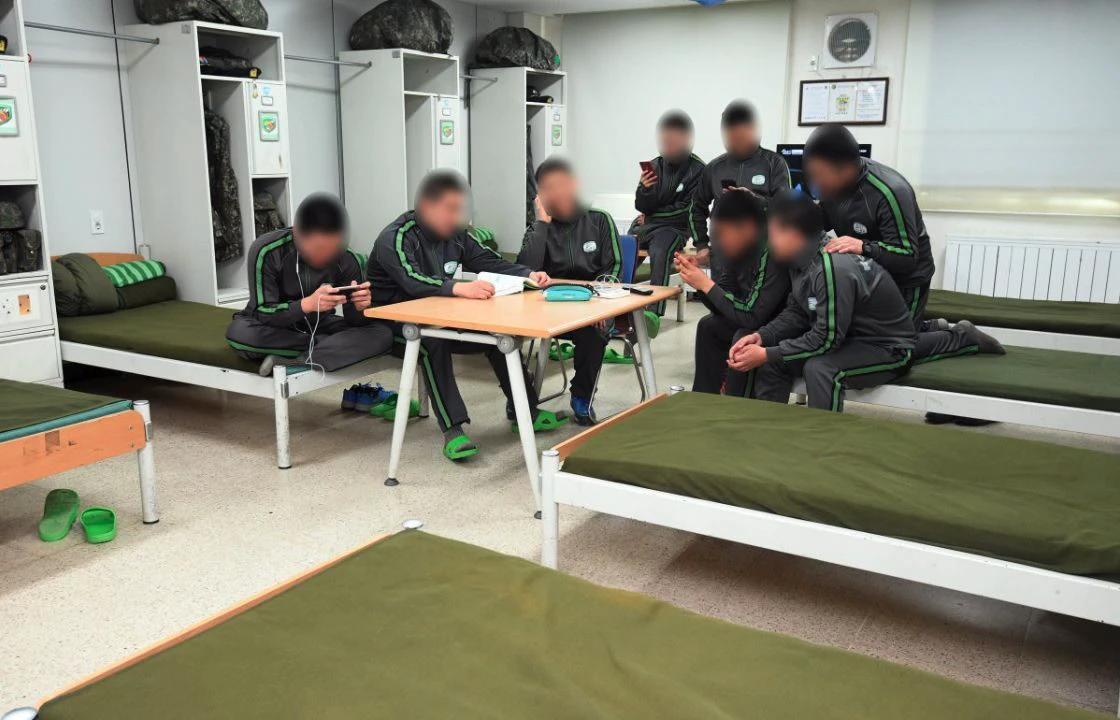
Military service can put real pressure on a relationship, but the idea that the Korean army simply breaks couples up is a stereotype, not a measured probability. Today’s shorter service terms and scheduled phone access make staying in touch far easier than older stories suggest; what still hurts is the lack of control over when a call, visit, or leave day will actually happen.
The cliché came from a different military
A lot of English-language advice about dating a Korean conscript still describes roughly two years of service, rare calls, and long stretches of letters. That picture is no longer current. The Military Manpower Administration’s present guidance lists 18 months for the Army and Marine Corps, 20 months for the Navy, and 21 months for the Air Force.
Phone access changed the daily rhythm even more. Under the policy announced by the Ministry of National Defense in August 2024, regular enlisted personnel retain phone-use windows of 6–9 p.m. on weekdays and 8:30 a.m.–9 p.m. on weekends and public holidays. Trainees are allowed one hour on weekends and public holidays. The ministry’s policy page confirms the expansion work, while Dong-A Ilbo’s report on the announcement records the exact hours.
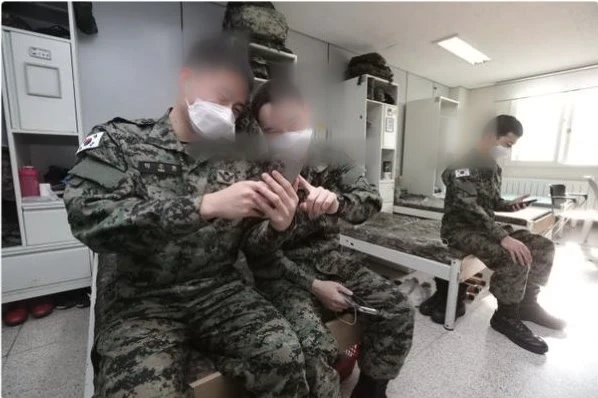
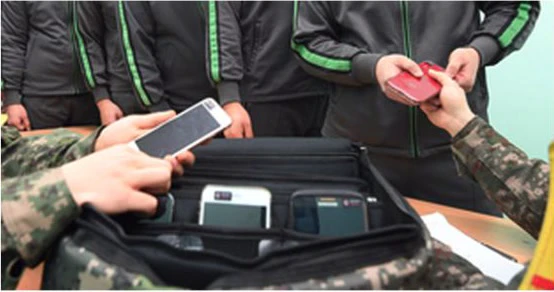
Those are access windows, not guaranteed call appointments. Training, guard duty, field exercises, and unit conditions can still disrupt the evening someone has been waiting for.
The hard part is usually uncertainty, not silence
The most revealing recent accounts do not say, “we could never speak.” They say that the timing kept moving. In one detailed 2025 Naver diary, the writer’s partner served in a GOP unit: the first leave took almost three months, ordinary outings and overnight leave were not available in the way she had expected, and some leave dates did not overlap with her work. Her hardest problem was repeatedly keeping time open for a call or visit that might change. That is one person’s experience, not a universal schedule, but it captures a pattern that official phone hours cannot solve. Her full timeline is here.
Leave can create a second squeeze. A few days outside the unit may need to cover parents, siblings, old friends, errands, rest, and a partner at once. If one person hears “leave” as couple time while the other hears “the only time I can see everyone,” resentment can arrive before the train does.
Meanwhile, the civilian partner’s life keeps moving normally. Exams, a new job, rent, family events, and weekends with friends do not pause just because a discharge countdown exists. Older Reddit threads are full of people asking whether they should wait without knowing what post-training contact will look like; replies range from successful long-distance relationships to months with only a handful of messages. Those posts predate today’s phone policy, so they are poor guides to current access—but they remain a good record of how uncertainty, not one fixed rule, drives anxiety. See the discussions from 2018 and 2019.
‘Gomshin’ is affectionate—and a job description
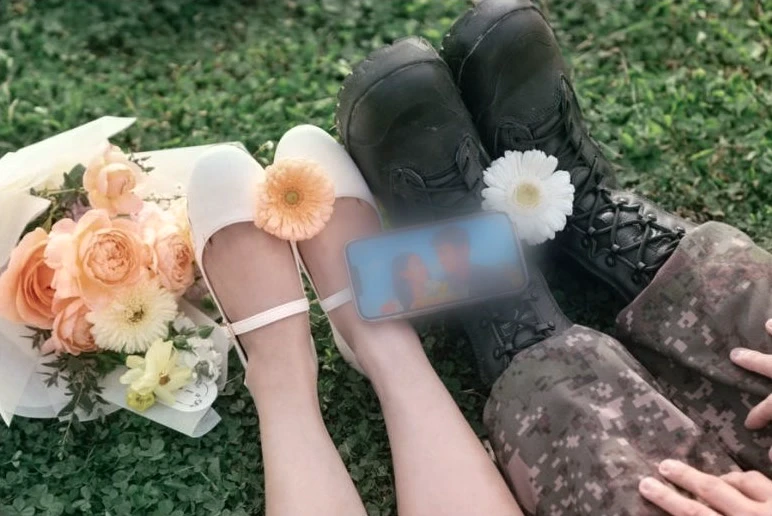
The familiar word gomshin refers to the girlfriend waiting for a male service member, while “putting the rubber shoes on backwards” became a joking phrase for leaving him before discharge. At the happy end of the story, the waiting partner is said to “wear flower shoes.” The language can feel playful and intimate, but it also assigns one person a role: wait, write, count days, prepare packages, and prove loyalty.
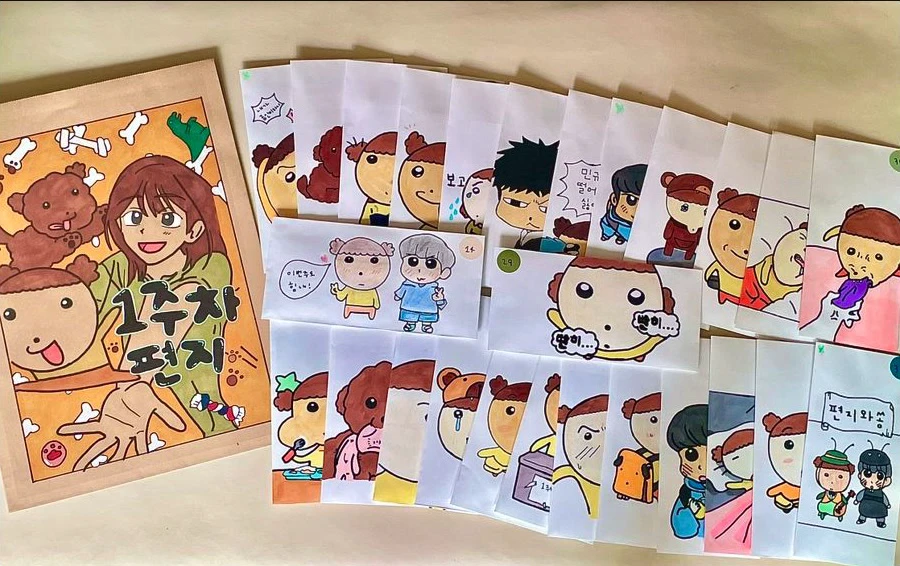
That work is visible in the culture of decorated training-camp envelopes. Some partners turn each week’s mail into a small art project, then share templates and tips online. It can be a generous ritual; it can also become another standard against which someone measures whether they are waiting correctly.
The label is also narrower than real life. It assumes a heterosexual woman waiting for a male conscript. Queer couples, international couples, and couples who simply dislike the “waiting girlfriend” identity may face the same scheduling problem without seeing themselves in the word at all. Even among women who use it proudly, the amount of emotional and practical labor varies. Earlier reporting by Ewha Voice and The Korea Times helps explain how the image of the devoted waiting girlfriend became so recognizable.
There is no useful national breakup percentage
You will see confident claims online about how many military couples split up. They should be treated cautiously: there is no widely cited official national statistic that isolates military service as the cause of a breakup. Breakups are private, the starting population is hard to define, and couples enter service at very different stages.
A 2018 Korean study is often more useful when read for what it actually measured. It examined 239 Army soldiers from one frontline and one rear division who were experiencing couple-relationship difficulties. In that selected sample, stronger “couple resilience” was associated with lower military-life stress and better adjustment. It did not calculate a national breakup rate, and it cannot prove that the military caused a relationship to end. The study abstract and sample details are available through ScienceON.
In plain terms, military service is a stress test, not a breakup machine. It amplifies mismatched expectations that were easy to avoid when both people controlled their calendars.
Three conversations beat one dramatic promise
Before enlistment, agree on a minimum contact rhythm and a backup: for example, a short message when a call will not happen, rather than an assumed hour-long call every night. The point is not to schedule affection; it is to stop one person from spending an entire evening on standby.
Talk about leave before the first leave date appears. How much time is likely to go to family, friends, rest, and the relationship? No division will survive every last-minute military change, but the conversation reveals whether both people think the scarce time belongs to the couple alone.
Finally, the waiting partner needs a life that is not arranged around a possible notification. Recent successful Naver diaries describe work, school, friends, and ordinary routines as the reason the months remained livable—not because independence guarantees a happy ending, but because waiting became one part of life instead of the whole of it. Two recent examples make that point in very different voices.
A couple can still break up during service, and the breakup can still feel inseparable from the military. The more accurate claim is smaller: service removes spontaneity, concentrates expectations into short calls and leave days, and makes unequal effort hard to ignore. Whether that ends the relationship depends less on the uniform than on what the couple does with that pressure.
Sources and image credits
- Military Manpower Administration service-period FAQ — Current 18-, 20-, and 21-month active-duty periods by branch.
- Ministry of National Defense mobile-phone policy — Official policy record for expanding enlisted phone possession.
- Dong-A Ilbo phone-policy report — Exact regular-soldier and trainee phone-use windows; featured photo by News1.
- SPN phone-use report — Duty-related limits on access; body photo credit: Kookbang Ilbo.
- JoongAng Ilbo phone-security report — Body photo credit: News1.
- A 546-day Naver military-couple diary — A unit-specific account of delayed leave and unpredictable contact.
- Naver Blog training-camp envelope diary — Body photo credit: 17_bom.
- Naver Blog discharge and flower-shoe diary — Body photo credit: suyom23; phone screen blurred by Delivery Spot for privacy.
- ScienceON couple-resilience study — 2018 study scope, sample, and correlations; not a national breakup rate.
- Ewha Voice on gomushin culture — Historical background on the waiting-girlfriend community.
- Cover delivery asset — News1 via the Dong-A Ilbo source above.
Last updated


