
How to Use a Korean Convenience Store Ramyeon Machine—and Avoid the Usual Mistakes
Use the store’s designated bowl, follow its exact preset, let the machine control the water, stay beside it and sort broth and packaging at the marked station.
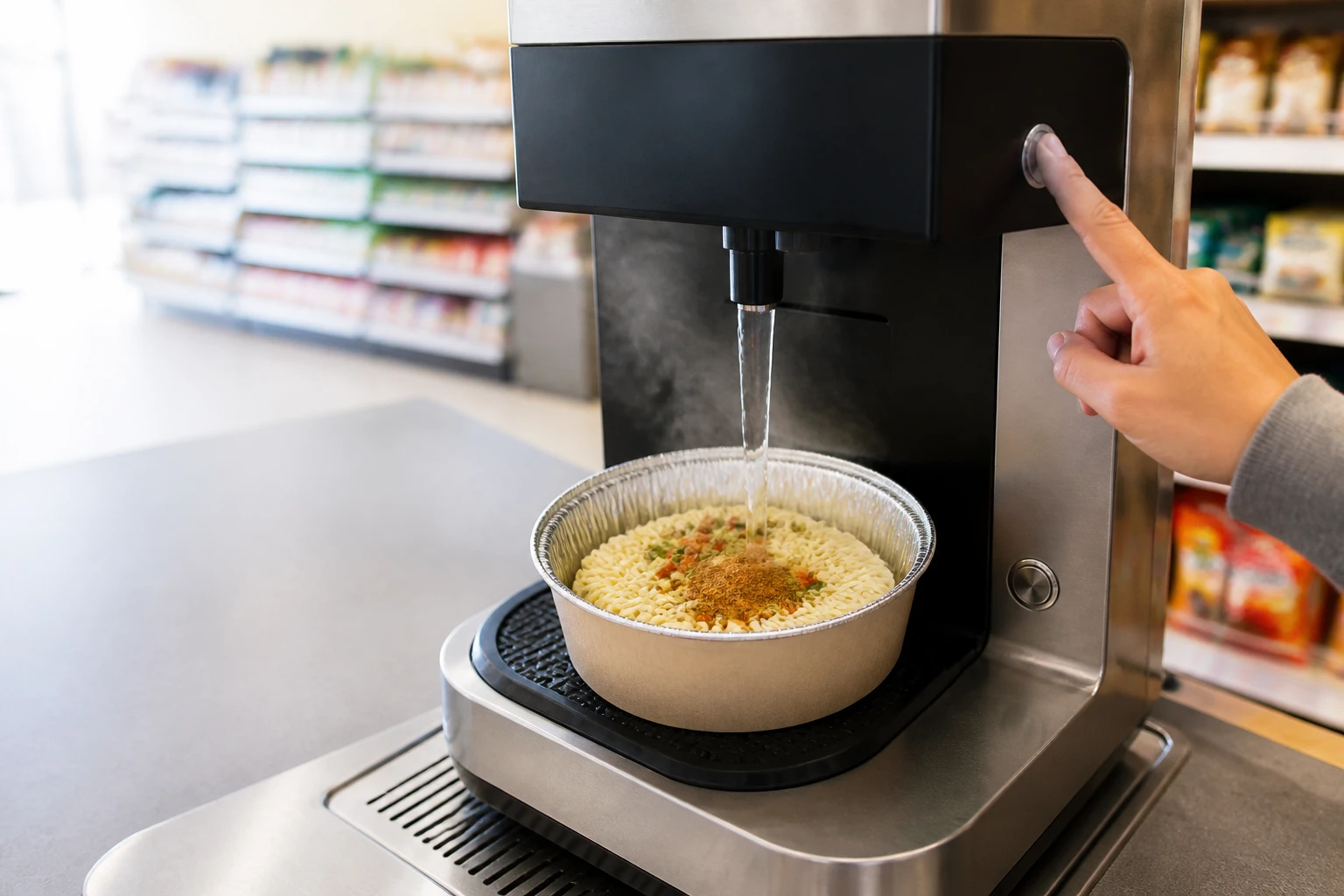
A Korean convenience-store ramyeon machine can make a hot meal in minutes, but it is not the same as a cup-noodle water dispenser. The reliable rule is: use bagged ramyeon, the bowl supplied for that cooker, and the instructions posted at that exact store. Never assume one national water volume or cooking time.
Commercial machines are adjustable. HausCook’s commercial cooker page says operators can set water and time, while its model-specific recipe examples use different settings for different noodles. A number copied from another store can cause weak soup, overflow or undercooked noodles.
First identify which setup the store has
Look for a cooker, matching disposable bowls and an instruction card. A store with only a hot-water dispenser may support cup noodles but not machine-cooked bagged ramyeon. Seating and customer access are branch-specific; ask before buying if the setup is unclear.
- Cup ramyeon: keep it in its retail cup and use the hot-water dispenser according to the package fill line. Never put that cup on the cooker.
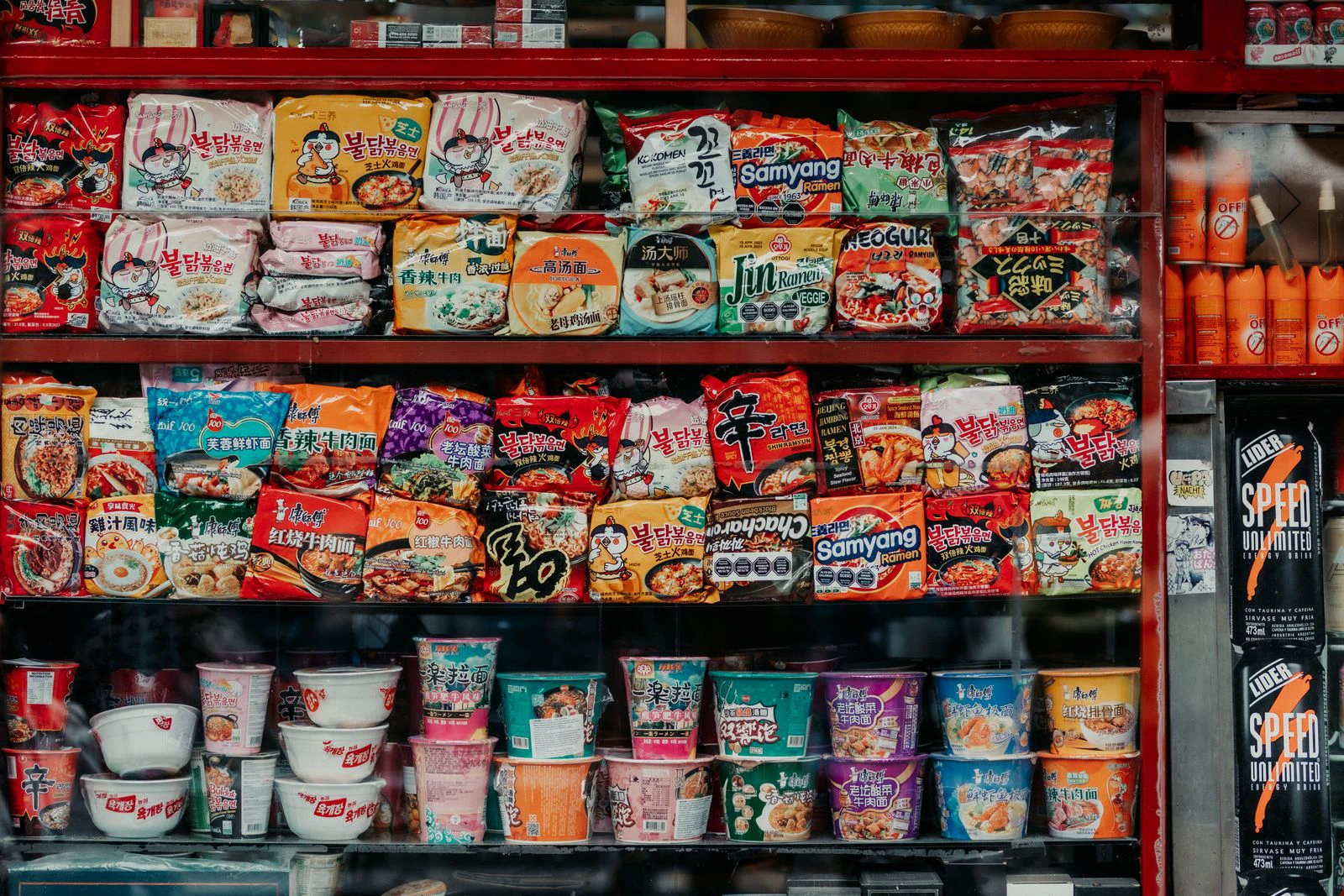
- Bagged ramyeon: buy the packet and the designated cooker bowl. The bowl may be bundled or sold separately. Do not substitute a paper cup, delivery container or bowl from another shop.
A traveler discussion about convenience-store hot water and a discussion of unmanned ramyeon shops show common visitor confusion. They are anecdotes, not operating instructions; the current store’s sign and staff take priority.
Six steps at the cooker
1. Read before opening
Find the numbered diagram or preset for your noodles. Useful labels are 조리시작 (start cooking), 물 (water), 시간 (time), and 라면용기 (ramyeon bowl). Follow a store notice over a generic online guide.
2. Load the approved bowl
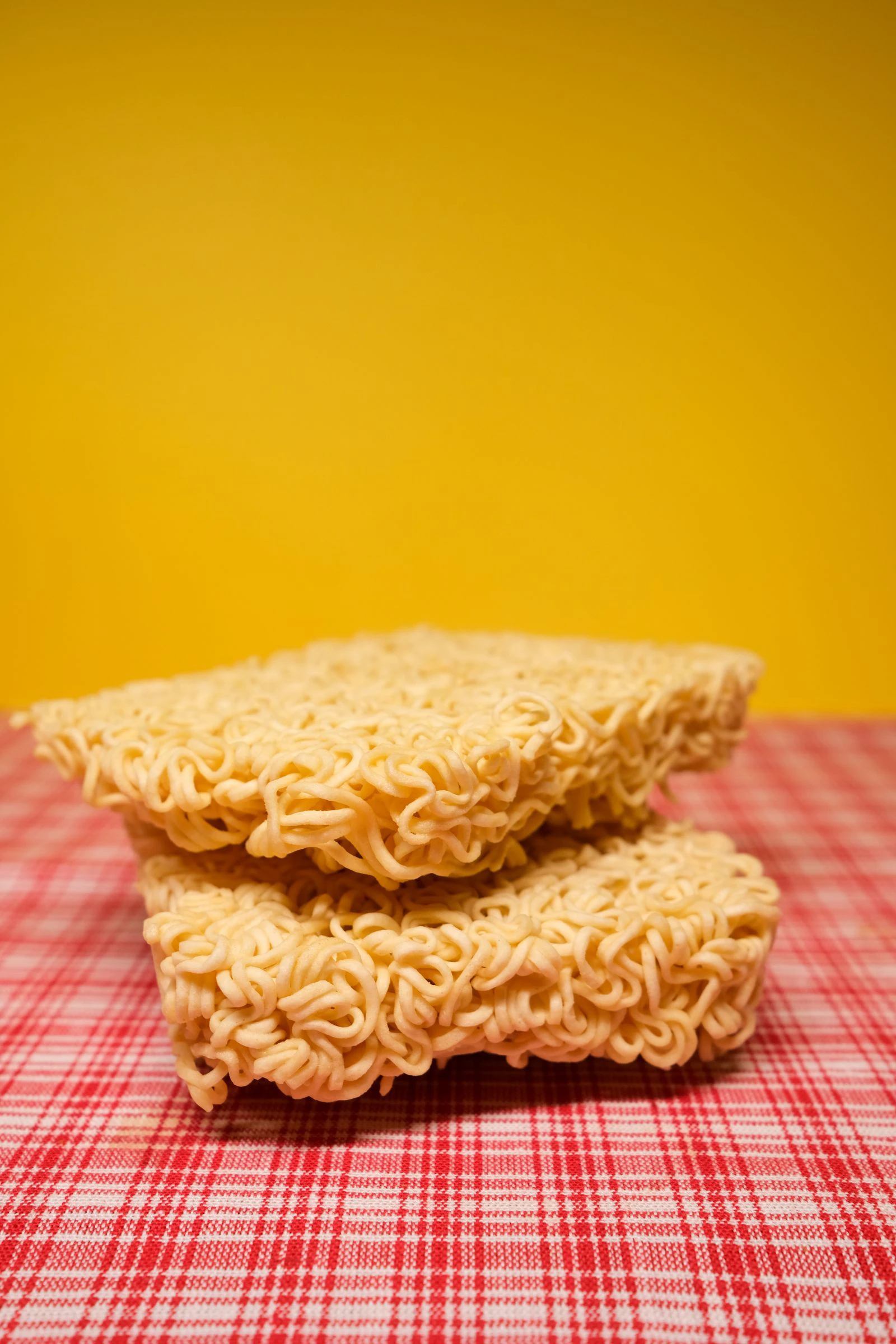
For ordinary soup ramyeon, put the noodle block, powder and dried-vegetable packet in the bowl unless the sign says otherwise. Keep wrappers away from the hot surface. Stir-fried or sauce noodles may require draining and adding sauce later; use a clearly marked program or ask staff instead of improvising.
3. Center it under the spout
Set the bowl flat on the marked surface directly below the outlet. Do not hold it while starting the cycle.
4. Choose the posted program and press once
Use the button, barcode or preset shown. Many machines add a measured dose of water automatically, so do not pre-fill the bowl unless instructed. If nothing happens, check placement and ask staff. Repeated presses can add another dose or restart a cycle on some machines.
5. Stay and avoid the steam
Do not walk away. The rim, water, steam and cooking surface become hot. Stir only when instructed, keep the bowl centered and never reach under the spout during operation.
6. Wait for the end signal
Lift from reinforced edges with both hands or use a tray. Follow the store’s timing for eggs, cheese or other toppings, and do not add outside food unless allowed.
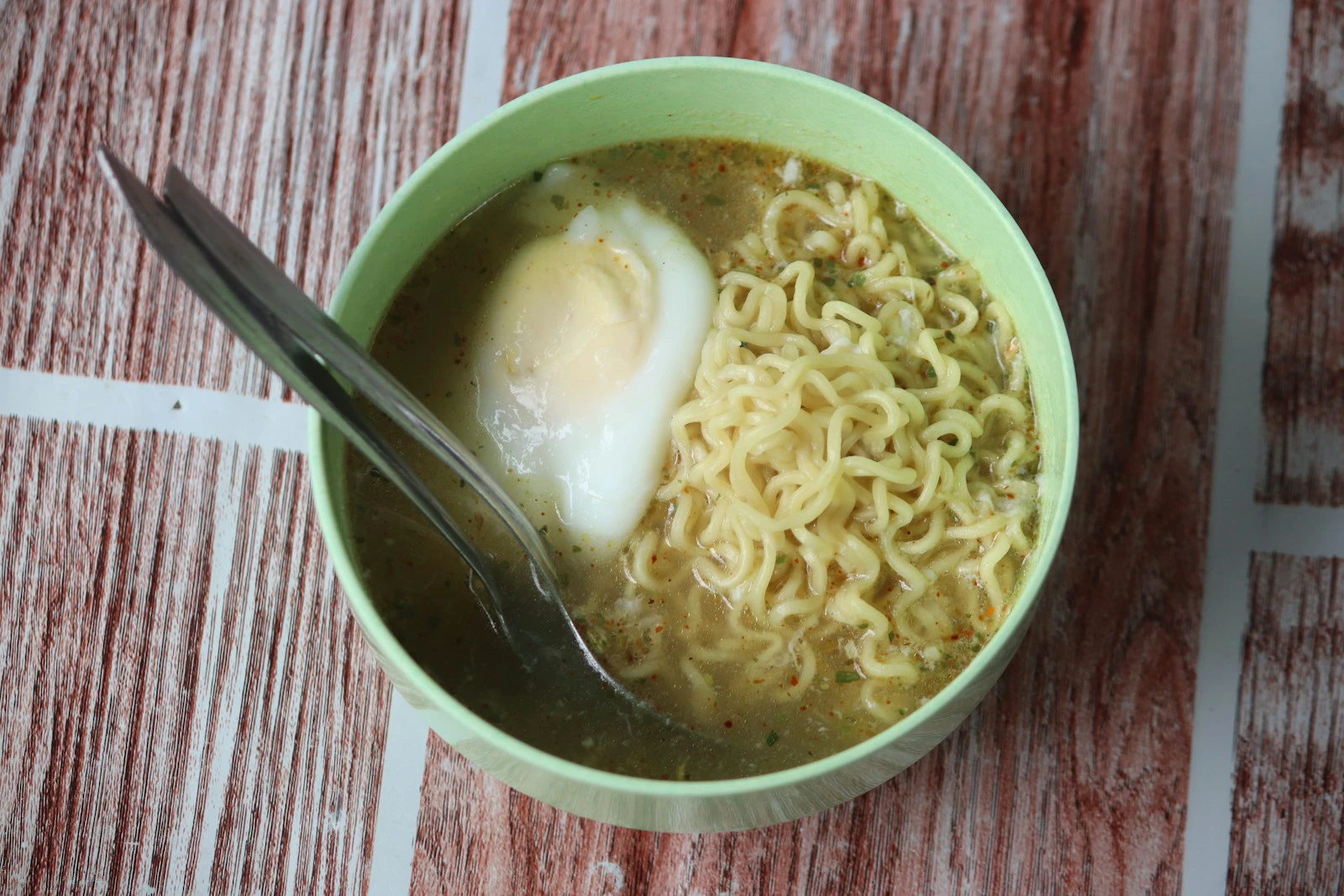
This is an example of a finished bowl, not a universal water line or topping recipe.
Mistakes to avoid
- Retail cup on the cooker: use its printed hot-water method instead.
- Adding water twice: decide whether you or the machine supplies water before pressing start.
- Copying a viral number: settings belong to a model, operator and noodle style—not all Korea.
- Pressing start again: firm noodles may still be mid-cycle; ask if the machine stops or errors.
- Leaving the bowl: a spill can quickly cause a burn or mess.
- Lifting one-handed: heated disposable bowls soften; support both edges or use a tray.
- Pouring broth into dry trash: follow the labels at the disposal station.
Useful waste labels are 국물 (broth/liquid), 음식물 (food waste), 일반쓰레기 (general waste), and 재활용 (recycling). If unclear, use the return area and ask rather than causing a leak. Store and building sorting rules can differ.
Hangang ramyeon is popular, not standardized
Seoul visitor content features convenience-store ramyeon at Hangang Park, and the official Hangang Parks overview describes park facilities. Popularity does not make every cooker, bowl, eating area or waste station identical. Read the branch and park signs in front of you.
The 20-second check
Before pressing start, confirm:
- Customers may use this cooker and eating area.
- You have bagged noodles and its designated bowl, not a retail cup.
- The correct noodle and seasoning packets are inside.
- The bowl is centered and you have not added water unless told.
- You know the preset, end signal and broth-disposal point.
If one item is unclear, point to the machine and ask “Igeo eotteoke sayonghaeyo?” (이거 어떻게 사용해요?, “How do I use this?”). Once the setup is clear: load, center, start once, stay, lift carefully and sort the waste.
Photo credits
- Instant-noodle display: Gera Cejas / Pexels, Pexels license.
- Dry noodle blocks: Alena Shekhovtcova / Pexels, Pexels license.
- Finished noodles: Mufid Majnun / Unsplash, Unsplash license.
- Featured image: original unbranded editorial image created for Delivery Spot with OpenAI ImageGen.
Sources
- HausCook commercial cooker — Adjustable commercial model context
- HausCook recipe examples — Model-specific water and time examples
- Traveler hot-water discussion — Anecdotal visitor confusion only
- Unmanned-shop discussion — Anecdotal shop-use context only
- Seoul visitor ramyeon feature — Official Hangang visitor context
- Seoul Hangang Parks — Official park-facility context
- Pexels noodle display — Body image credit
- Pexels license — Image license
- Pexels dry noodles — Body image credit
- Pexels license — Image license
- Unsplash finished noodles — Body image credit
- Unsplash license — Image license
- Featured cover asset — Original Delivery Spot editorial asset
Last updated


