
Which Korean Convenience-Store Food Combos Do People Actually Eat?
The combinations that last are simple meal fixes: ramyeon with triangle gimbap, tteokbokki with a protein, or spicy noodles softened with egg or cheese. Treat banana-milk coffee and elaborate snack mashups as optional viral experiments, not national habits.
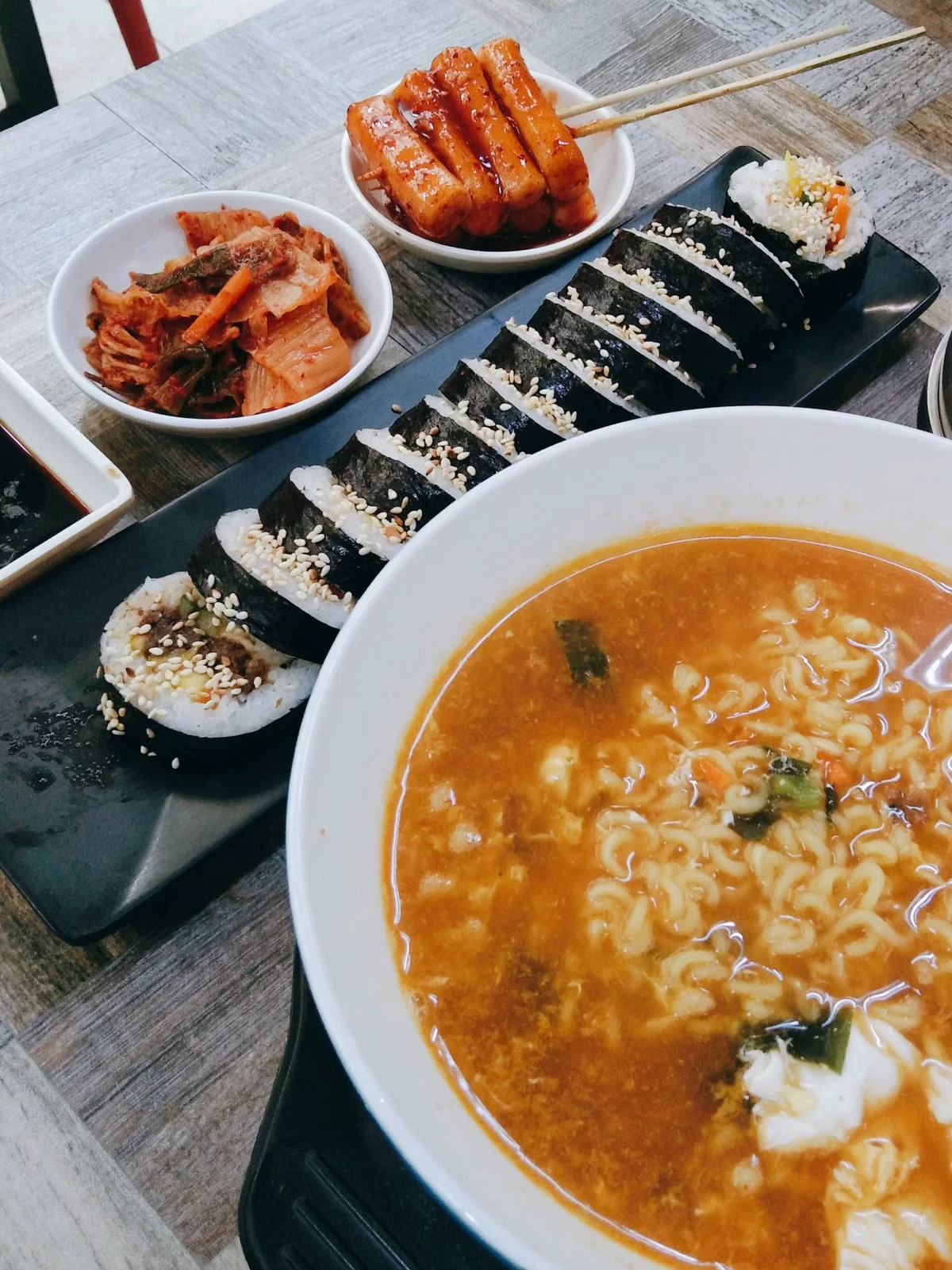
The Korean convenience-store combinations that last are usually practical: a hot, salty item paired with rice; a spicy item balanced by egg, cheese, or sausage; or a small prepared meal rounded out with one drink. They solve hunger with products that are widely stocked and easy to prepare.
No combination is universal, and a popular post is not a survey of Korean eating habits. This guide separates pairings that appear repeatedly in Korean tourism guidance, store assortments, and current user discussions from mixes that are better understood as one-time internet experiments.
The durability test: does the combination solve a meal?
A useful rule is to ask what the second item contributes. Rice makes a cup of noodles more filling. Egg, cheese, or a hot bar adds protein and softens a sharp sauce. A cold drink resets the palate. Those are repeatable reasons to buy two products together.
Korea Tourism Organization's convenience-store must-eats guide explicitly calls cup noodles with samgak gimbap a convenience-store soul-food combination. Its broader guide to Korean convenience-store culture also describes people mixing ramyeon varieties or adding sausage and cheese to spicy noodles. These are formats, not fixed branded recipes: exact products rotate by chain, branch, promotion, and season.
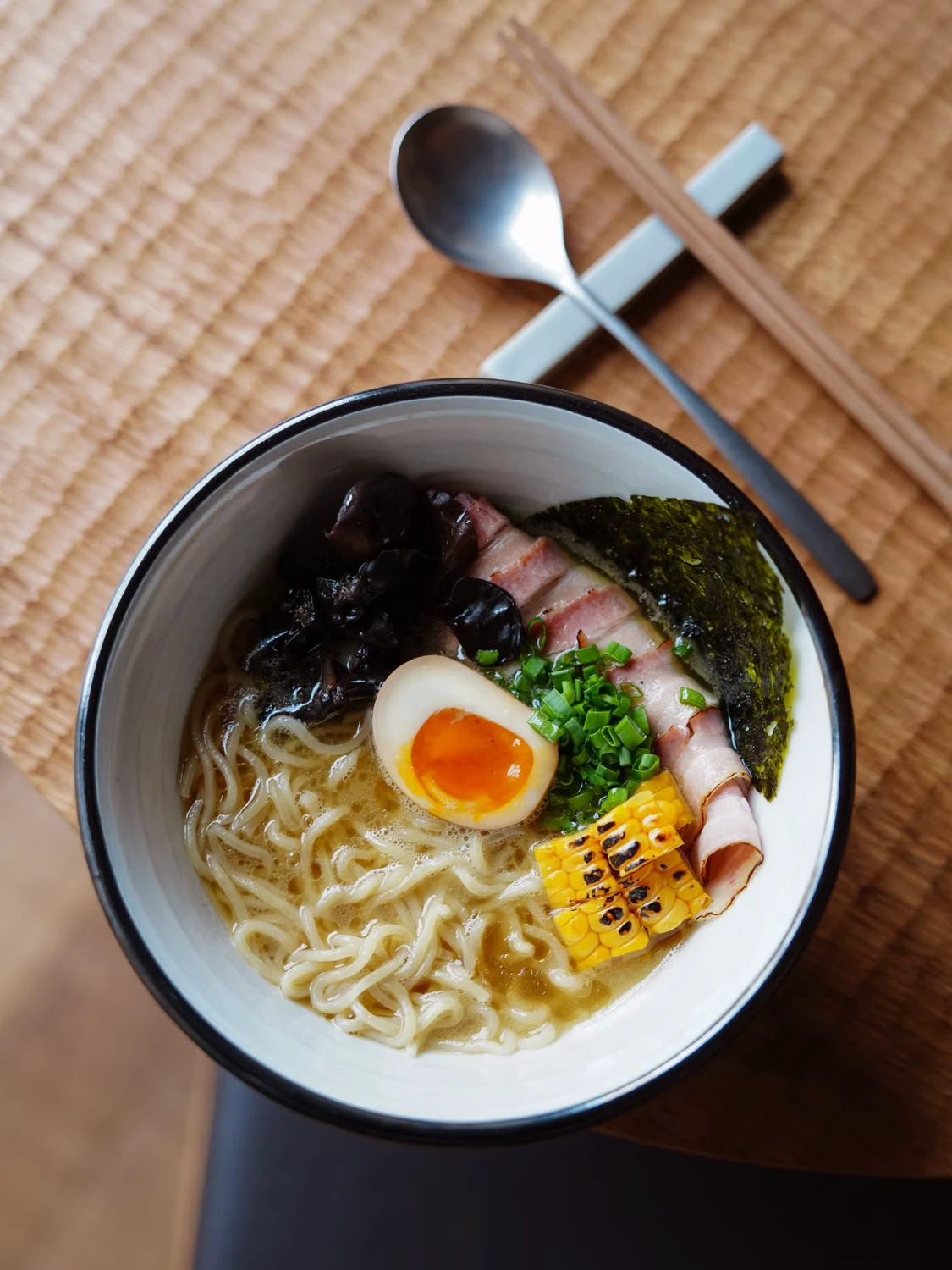
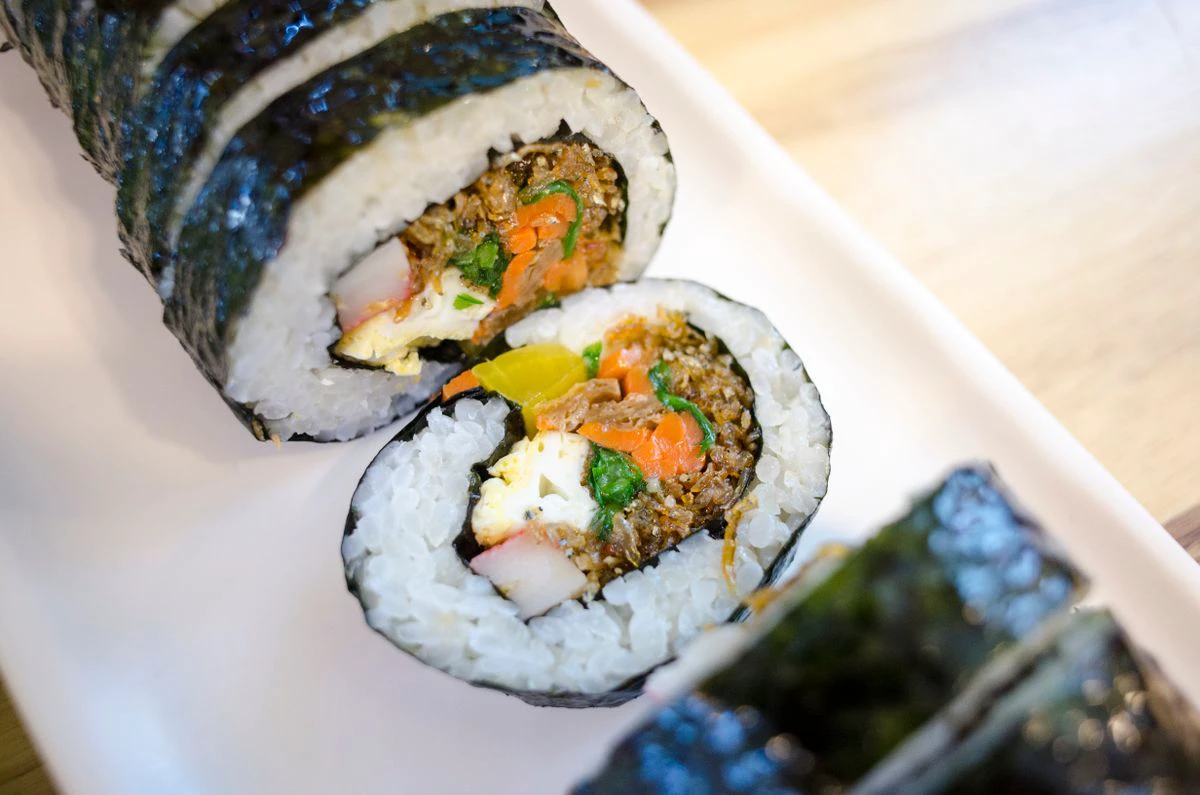
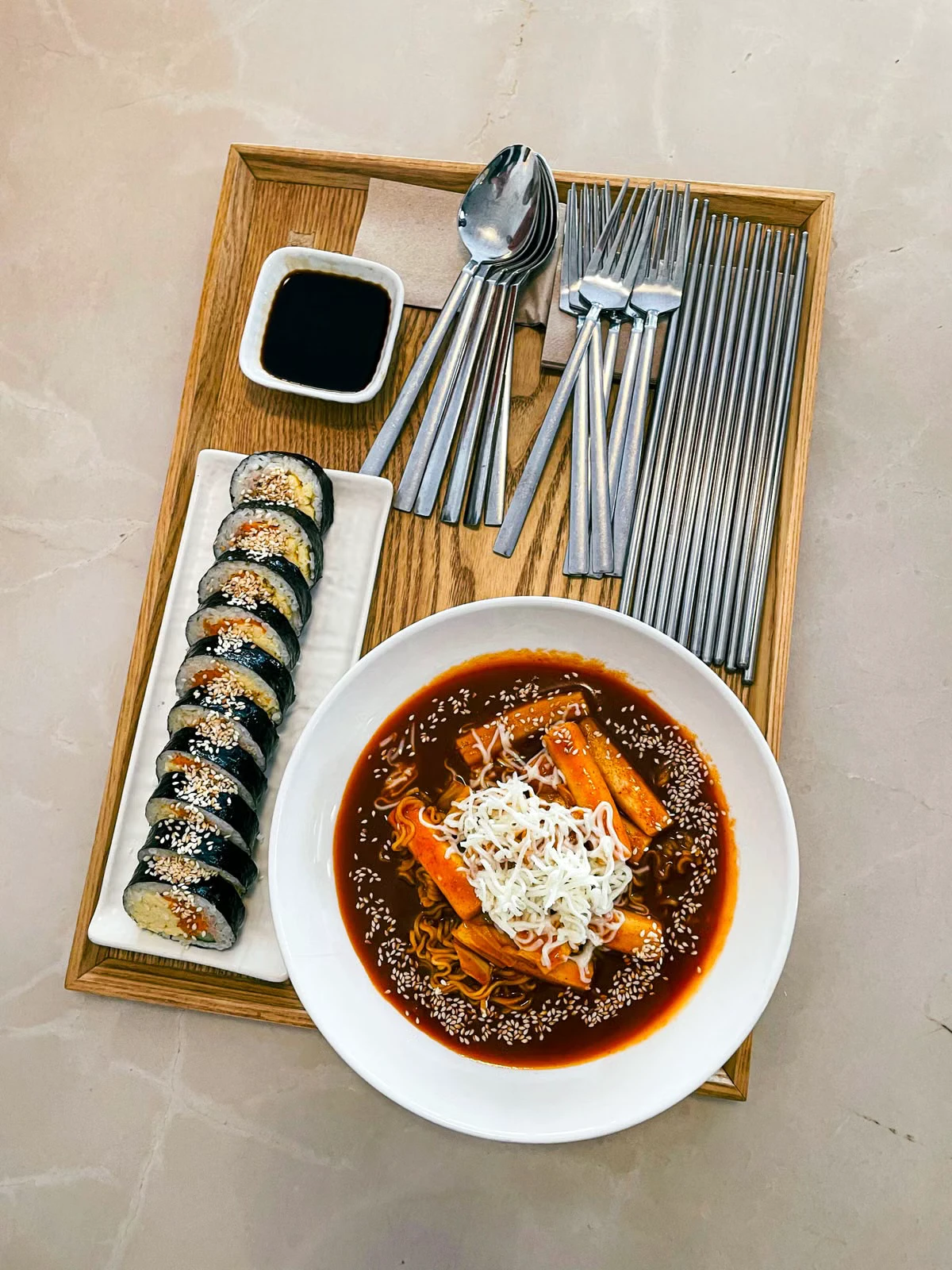
The three images below illustrate the basic logic: a bowl made richer with toppings, rice that can stand beside soup, and a spicy rice-cake dish paired with gimbap. They are serving examples rather than claims that a particular branch stocks the pictured food.
Four combinations with staying power
1. Cup ramyeon plus samgak gimbap
This is the clearest baseline. The noodles provide heat and broth; the triangle rice ball adds bulk and a mild, savory center. Tuna mayo is the easiest low-spice partner, while Jeonju bibimbap or kimchi fillings push the meal hotter. A July 2026 KoreanFood discussion still described ramyeon with a beef Jeonju triangle gimbap as a dependable value meal, while an earlier KoreaTravel recommendation thread repeatedly returned to noodles with a rice ball or gimbap.
Eat the gimbap in alternating bites unless the package specifically invites mixing. Dropping the whole rice ball into the broth turns a portable rice item into porridge and can make the seaweed gummy. Heat it only when its label gives microwave directions, and remove any wrapper section the diagram tells you to remove.
2. Tteokbokki plus a hot bar, sausage, or boiled egg
Convenience-store tteokbokki is sweet, spicy, chewy, and often light on protein. A hot bar or sausage adds salt and a firmer bite; a packaged egg is the gentler option. This combination survives because each component has a distinct job. It is also easy to scale down: buy the smallest tteokbokki cup and one add-on rather than several toppings.
Do not assume cheese makes a very spicy sauce mild. It rounds the flavor, but the capsaicin remains. If you are sensitive to heat, start with an egg or a mild hot bar and keep water or plain milk nearby.
3. Spicy ramyeon plus egg or cheese
Egg adds body without dominating the noodles. A cheese slice makes a dry or very spicy noodle sauce creamier and saltier. Sausage is common as a third option, but piling egg, cheese, sausage, and a second noodle cup into one bowl quickly stops being a practical meal and becomes a stunt-sized portion.
Use only an egg product meant to be eaten as sold or prepared with the equipment available. Do not crack a raw egg into a cup unless the package and store setup clearly support that method. The microwave, hot-water dispenser, and ramyeon cooker are different tools; follow the container instructions rather than copying a clip filmed with another product.
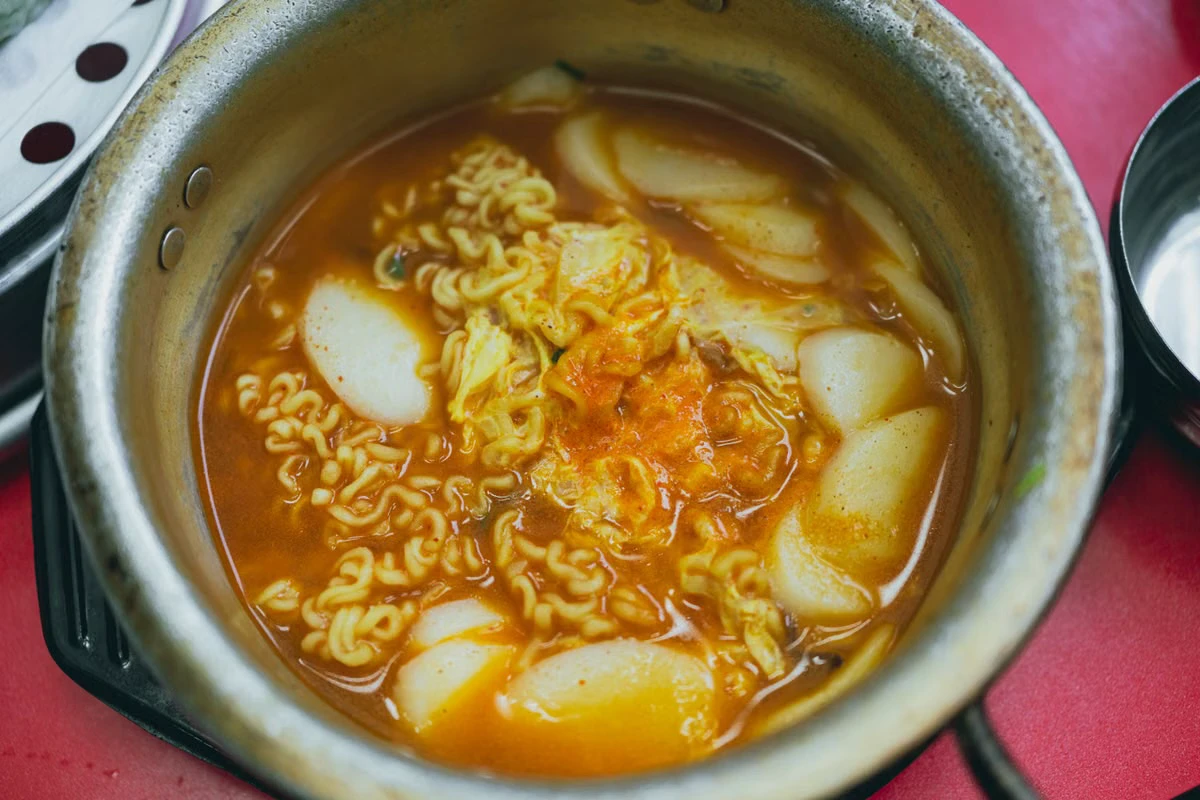
4. Gimbap or a sandwich plus one simple protein or drink
A roll or sandwich with a packaged egg, chicken breast, milk, or fresh coffee makes a realistic convenience-store breakfast. GS25's current fresh-food catalogue keeps gimbap and rice balls, lunch boxes, sandwiches, and simple meals as stable categories even though individual stock changes. The pairing works because it is quick, portioned, and easy to understand without building a recipe at the counter.
Choose the second item according to the first. A tuna-mayo rice ball rarely needs another rich mayonnaise snack. A sweet cream sandwich is better with unsweetened coffee than another dessert drink. The point is balance, not collecting as many famous packages as possible.
What belongs in the viral-experiment category
Banana milk plus pouch coffee
This can taste like a sweet banana latte, and people do try it. It should not be presented as something Koreans broadly drink. In a June 2026 KoreanFood thread, several long-term residents and Korean commenters challenged the claim that it was a common local habit, even while others said the mixture tasted better than expected. That is a useful distinction: enjoyable is not the same as customary.
If it appeals to you, use a small amount of each liquid over ice and taste before combining the whole package. If it sounds too sweet, buy fresh coffee or drink the banana milk on its own.
Two noodle products mixed together
Mixing two ramyeon flavors has a long history in Korean convenience-store recipe culture, but a named pairing can fade when one product is reformulated or disappears. It also creates a large portion with two seasoning packets. Start with one noodle container, then add one familiar topping. Only mix two products when their cooking times and water instructions are compatible and you actually intend to eat the full portion.
Chips, sweets, or leftovers folded into noodle broth
Crushed chips in leftover soup, chocolate with spicy noodles, or a tower of promotional snacks may work as content. They are poor first recommendations because the result is unpredictable and food waste is common. A 2026 discussion about current Korean convenience-store combinations itself noted that trends move quickly and listed several sweet-savory experiments alongside the more durable sausage-and-tteokbokki pairing. Treat the experimental list as inspiration, not a checklist.
Build a better combination in three decisions
- Choose one base. Pick rice, noodles, tteokbokki, a lunch box, or bread. Do not start with two full meals.
- Add one contrast. Use egg, cheese, sausage, a mild rice item, kimchi, or a less-sweet drink to change texture or intensity.
- Stop when the portion makes sense. Promotions can make a second item cheaper, but they do not make it necessary. Check the exact product and size printed on a 1+1 or 2+1 shelf tag.
For a first visit, these baskets are easier than copying a named hack:
- Warm and mild: a mild cup ramyeon, tuna-mayo samgak gimbap, and water.
- Spicy and filling: a small tteokbokki, one boiled egg or hot bar, and plain milk or water.
- Cold breakfast: a gimbap roll or sandwich, one packaged egg, and unsweetened coffee.
- Curiosity test: one viral drink or snack combination in the smallest available sizes, after you have eaten a real meal.
Check the label before you combine anything
A familiar-looking product can contain fish cake, meat stock, shellfish seasoning, dairy, egg, nuts, or alcohol-derived flavoring. The filling name on the front is not a complete ingredient list. Travelers with allergies, religious restrictions, or vegetarian requirements should translate the full label and avoid shared preparation equipment when cross-contact matters.
Also check the use-by date, microwave instructions, and whether a sealed sauce or garnish must be removed before heating. Ask staff before using a cooker when the controls or compatible containers are unclear. Clean the table, return the tray, and sort waste using the bins provided.
The bottom line
The most credible Korean convenience-store combination is not the one with the most ingredients. It is the one that remains useful when the camera is off: cup ramyeon with triangle gimbap, spicy food with one calming or protein-rich add-on, or a simple prepared item with a sensible drink. Try a viral mix if the flavors genuinely interest you, but do not mistake novelty for a national custom.
Sources and image credits
- Korea Tourism Organization convenience-store must-eats guide — Official description of cup noodles with samgak gimbap as a recurring convenience-store combination.
- Korea Tourism Organization guide to Korean convenience-store culture — Mixing ramyeon varieties and adding sausage or cheese, with product availability caveats.
- July 2026 r/KoreanFood convenience-store discussion — Anecdotal value-meal example of ramyeon and beef Jeonju samgak gimbap.
- r/koreatravel convenience-store recommendation thread — Repeated anecdotal recommendations for noodles with a rice ball or gimbap.
- GS25 fresh-food catalogue — Current stable fresh-food categories; exact products still vary by branch and date.
- June 2026 r/KoreanFood banana-milk coffee discussion — Conflicting personal views used to distinguish an enjoyable experiment from a broad local habit.
- 2026 r/KoreanFood combination discussion — Fast-moving sweet-savory experiments and the more durable sausage-and-tteokbokki pairing.
- Pexels Korean meal — Cover image by kk b.
- Pexels ramen with toppings — Slider image by Nadin Sh.
- Pexels gimbap close-up — Slider image by makafood.
- Pexels tteokbokki and gimbap — Slider image by Rumeysa Nur Çelik.
- Pexels tteokbokki with ramyeon — Standalone image by Theodore Nguyen.
- Delivery Spot featured image file — Korean meal image used as the cover.
Last updated


