
Kimchi Jjigae, Doenjang Jjigae, or Sundubu: Which Korean Stew Should You Try First?
Choose kimchi jjigae for tangy fermented heat, doenjang jjigae for earthy soybean depth, or sundubu jjigae for silky tofu and adjustable variations. This first-order guide compares flavor, spice, ingredients, and solo-dining ease.
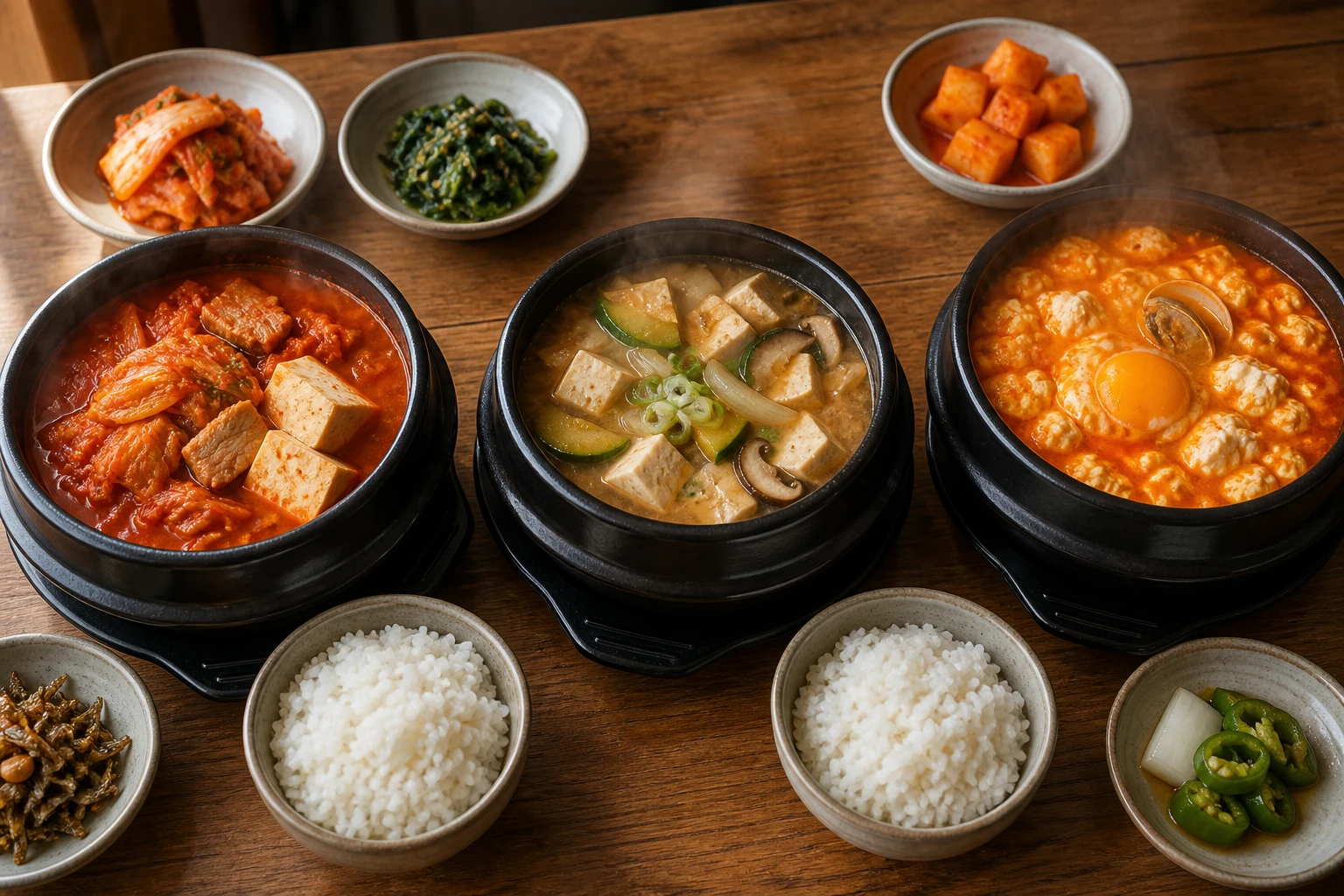
If this is your first Korean stew, choose by the flavor you already enjoy: kimchi jjigae for a bright, sour-spicy punch; doenjang jjigae for earthy fermented-soy depth; or sundubu jjigae for soft tofu in a broth that can range from mild to fiery. When dining alone, start at a sundubu specialist if its menu shows a separate price for each pot. That format is convenient, but the restaurant's minimum order still decides whether a dish works for one person.
None of these names guarantees a fixed heat level, meat-free recipe, or one-person portion. Check the menu and ask before ordering.
The 20-second choice
- Pick kimchi jjigae if you already like kimchi, sour flavors, and red chile warmth. It is usually the boldest and most obviously fermented of the three.
- Pick doenjang jjigae if you like miso, mushrooms, or deeply savory bean flavors. It is usually less chile-forward, but it can still contain fresh chiles or other spicy seasoning.
- Pick sundubu jjigae if texture matters most. The soft tofu curds make it gentle to eat even when the red broth has a noticeable kick; specialist menus often offer seafood, beef, pork, mushroom, or milder variations.
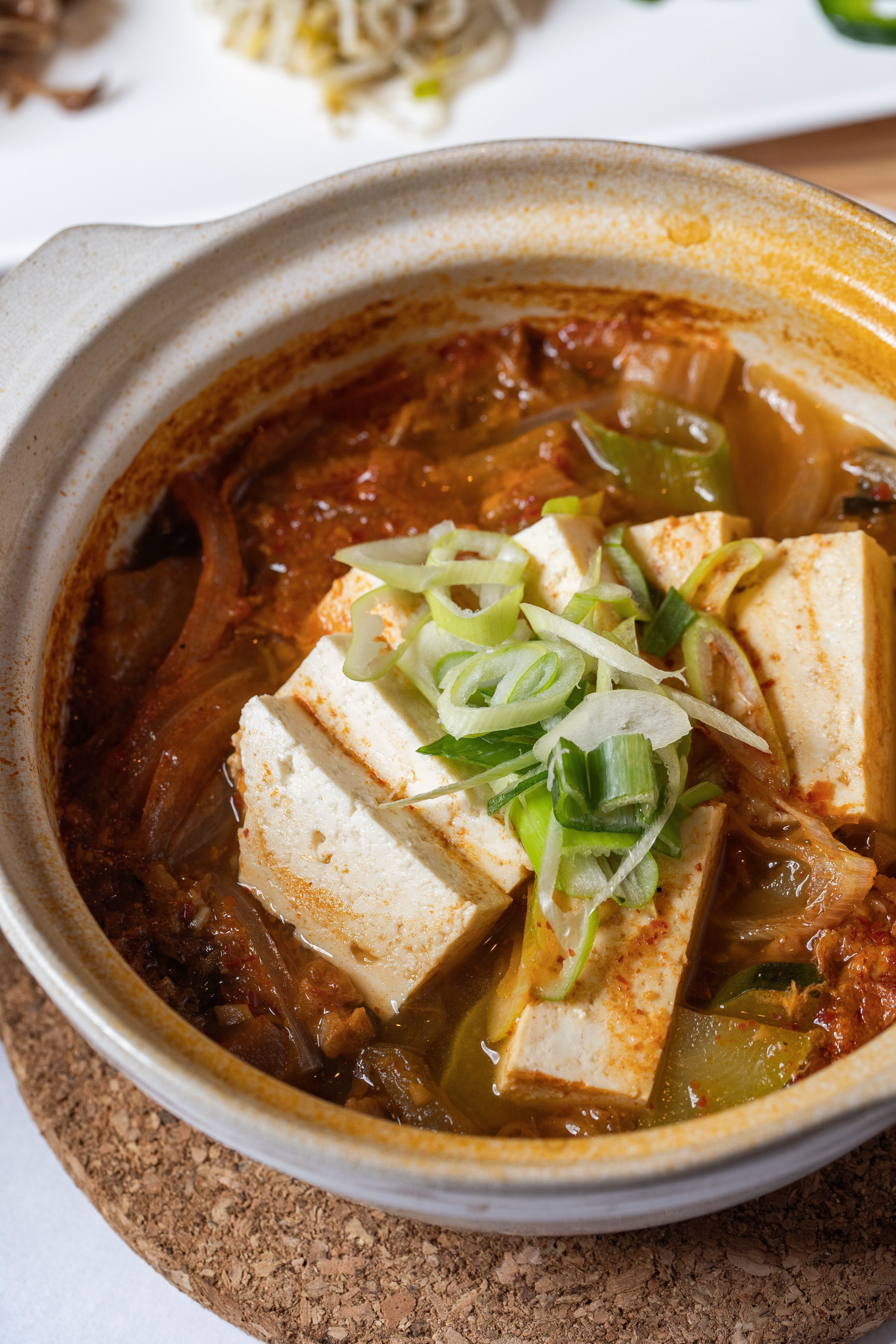
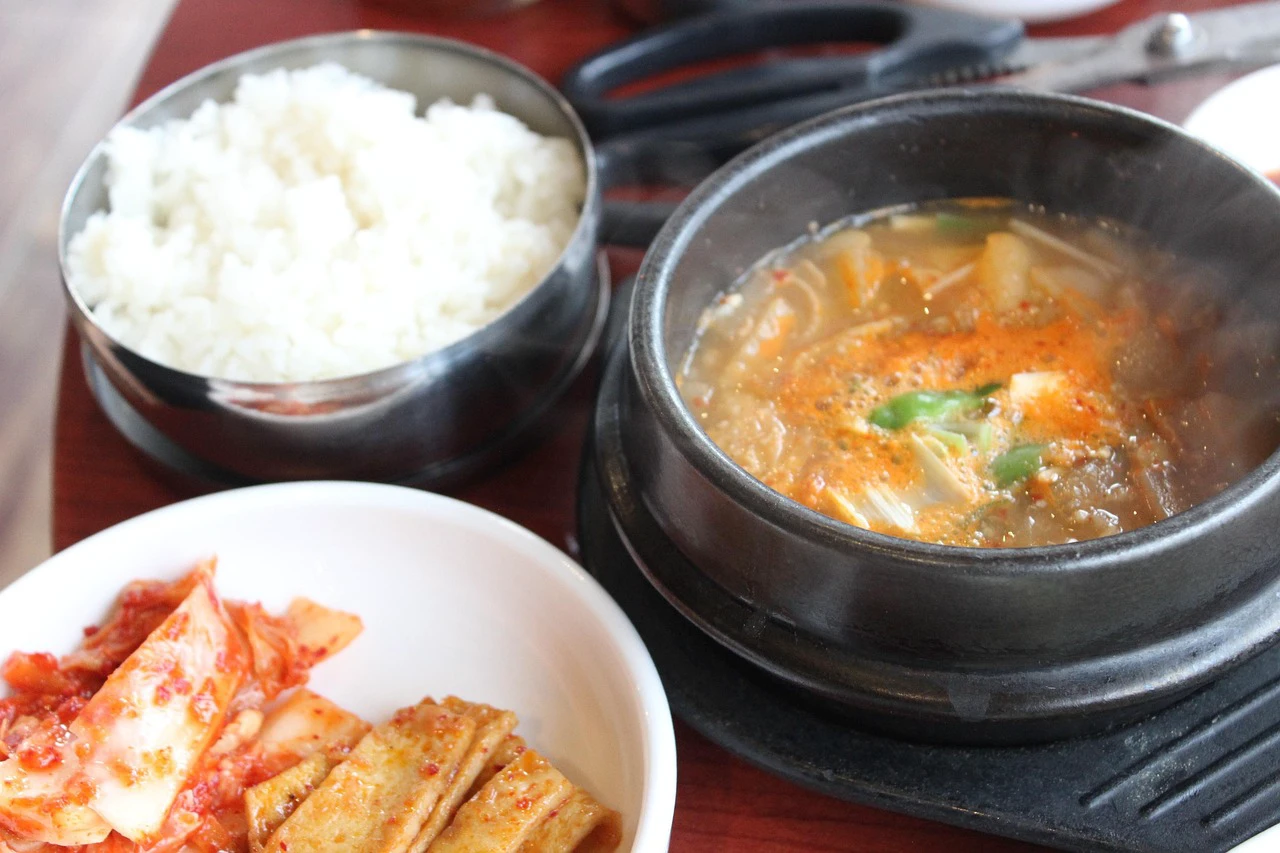
The color is a useful clue, not a spice meter. Kimchi and sundubu stews are commonly red, while doenjang is usually tan to brown. Recipes vary enough that the menu description and the restaurant's answer matter more than appearance alone.
Kimchi jjigae: tangy, red, and assertive
Kimchi jjigae begins with kimchi whose fermentation supplies acidity and depth. The Korea Tourism Organization's kimchi-jjigae guide describes a common version built around well-aged kimchi, pork, tofu, and onion. Other restaurants may use tuna, ham, sausage, mushrooms, or a combination.
Expect the most obvious sourness of the three and usually a medium-to-strong chile presence, although the exact heat follows the kimchi and seasoning. Choose it first if kimchi is already the part of a Korean meal you reach for. If fermented cabbage tastes too sharp to you, this stew will not hide it; the broth concentrates that character.
Do not assume that kimchi jjigae is vegetarian. Kimchi itself may contain fish sauce or salted seafood, and the stew commonly includes pork, tuna, or an animal-based stock. Ask about the whole broth rather than only visible pieces.
Doenjang jjigae: earthy, salty, and deeply savory
Doenjang is fermented soybean paste, so this stew leans toward roasted-bean, nutty, and earthy notes rather than kimchi's acidity. A Korea Tourism Organization example combines soybean-paste broth with tofu, mushrooms, zucchini, and clams. The ingredient mix changes widely: potatoes, onions, beef, blue crab, or other seafood may appear.
This is usually the best first choice for someone who dislikes red chile heat but enjoys strong fermented flavors. “Usually” matters. An official blue-crab doenjang-jjigae example includes anchovy-and-kelp broth and spicy chile, showing why brown broth should not be treated as a guarantee of zero heat. Doenjang can also taste saltier and funkier than a light Japanese miso soup.
A vegetable-heavy bowl is not necessarily vegetarian: anchovy broth, clams, crab, or beef can be hidden below the surface. Ask specifically about 멸치육수 (anchovy stock) as well as meat and seafood.
Sundubu jjigae: silky tofu with the widest menu range
Sundubu means very soft, unpressed tofu. Instead of neat cubes, it breaks into tender curds that carry the broth. The Korea Tourism Organization's sundubu-jjigae description notes the common chile-oil kick and seafood such as clams, shrimp, or squid. Restaurants also sell beef, pork, dumpling, mushroom, and mixed versions. A raw egg is often cracked into the bubbling pot or served for you to add.
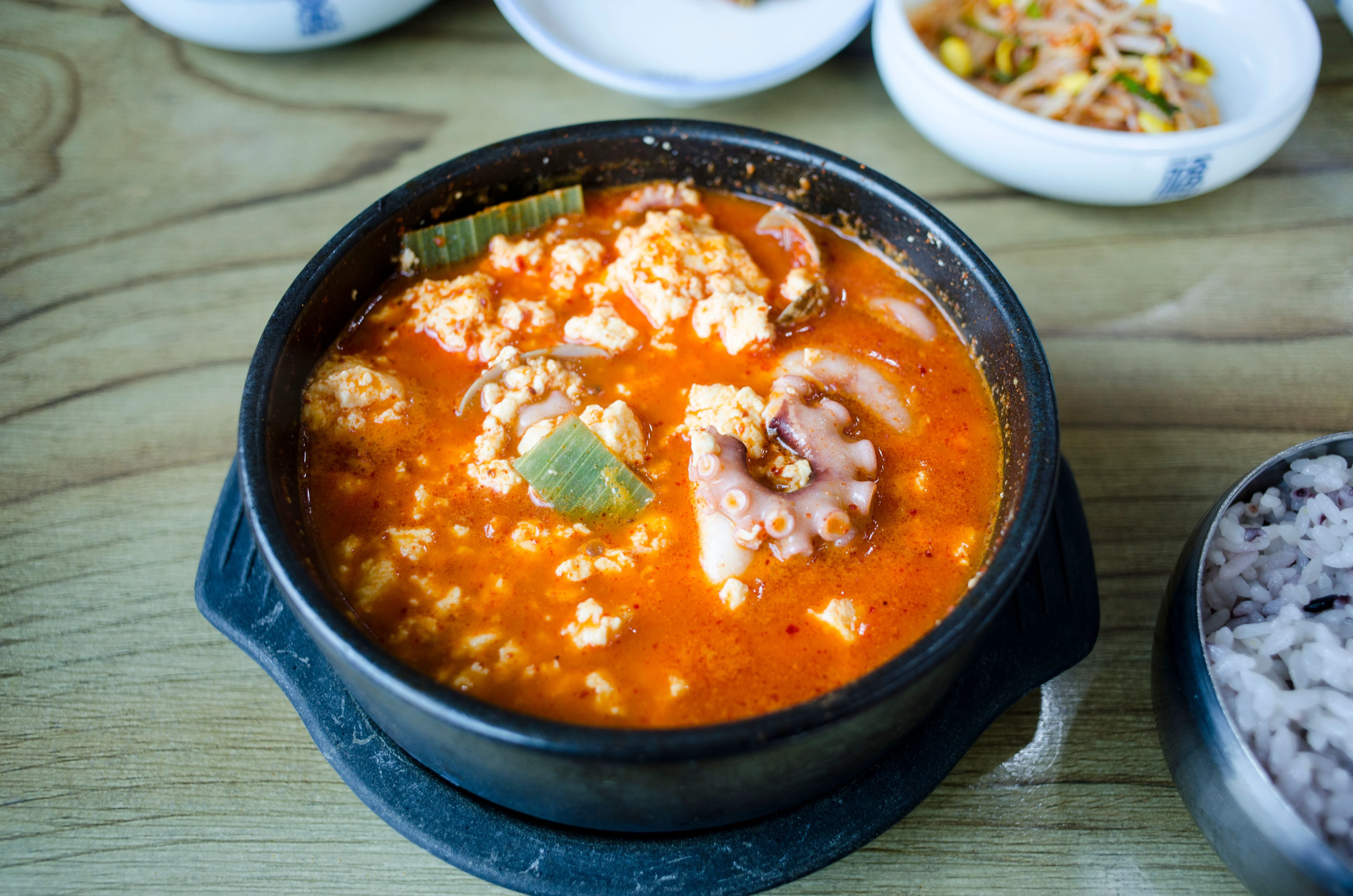
Red sundubu may be just as hot as kimchi jjigae, but specialist restaurants sometimes let you select a spice level. Non-red versions also exist: an official perilla-seed sundubu example uses an anchovy-based broth without the standard red chile-oil appearance. Ask what is possible before paying; a kitchen using a premixed base may not be able to change the heat. The tofu's softness can make each bite feel soothing, but it does not cancel the chile.
Choose sundubu first if you enjoy custardy textures or want a single-pot meal with clearly listed variations. It is often the easiest of the three to customize at a specialist, although seafood stock or meat can remain in a “mushroom” or “vegetable” version unless the restaurant confirms otherwise.
Which one is easiest when dining alone?
The dish name matters less than how the restaurant sells it. Look for a price beside a single stew, 1인분 (one serving), or an individual 뚝배기 (earthenware pot). At a stew specialist or lunch restaurant, any of the three may be an easy solo order.
The common friction points are format-specific:
- Sundubu specialists: usually the most straightforward because one pot is one meal, often with rice and banchan.
- Everyday Korean diners: kimchi or doenjang stew may be sold per person, but confirm the minimum order.
- Barbecue restaurants: doenjang jjigae may be a small side dish tied to a meat order rather than a standalone main.
- Shared-pot restaurants: kimchi jjigae may have a two-person minimum or a price for the whole pot.
A useful question is 찌개 1인분 가능해요? (Jjigae il-inbun ganeunghaeyo?) — “Can I order one serving of the stew?” If the menu shows 2인 이상 or 2인분부터, it starts at two people or two portions.
Taste remains personal. In one Korean Food community discussion, diners described kimchi as tangy, doenjang as earthy comfort food, and sundubu as a restaurant favorite. That is anecdotal preference, not a ranking; it is a useful reminder that the best first bowl depends on your palate.
Order without making assumptions
Use the Korean dish name and ask only the questions that matter to you. Staff may answer that a change is not possible, especially when broth or seasoning is prepared in advance.
안 맵게 가능해요?— Can you make it not spicy?덜 맵게 가능해요?— Can you make it less spicy?고기 들어가요?— Does it contain meat?해물 들어가요?— Does it contain seafood?멸치육수 들어가요?— Does it contain anchovy stock?달걀 들어가요?— Does it contain egg?
For allergies or strict dietary restrictions, these phrases are only a first check. Broth, fermented pastes, kimchi seasoning, and shared kitchen equipment can contain ingredients that are not visible. Show a precise translated card and ask the kitchen to verify the recipe; do not infer safety from a dish's color or English menu label.
When the pot reaches the table
All three stews may arrive boiling hard in a black ttukbaegi. Do not touch the pot or its base. Let the bubbling settle, stir carefully, and use a spoonful of rice to cool a hot bite. If a raw egg comes with sundubu, add it promptly if you want it cooked by the residual heat, then give it time to set.
Your lowest-risk first order is therefore not one universal winner. Start with sundubu for soft texture and an individual-meal format, kimchi jjigae for sour-spicy intensity, or doenjang jjigae for fermented-soy depth. Then verify heat, broth, and portion rules at the restaurant in front of you.
Photo credits
- Kimchi jjigae: Cynthia Ortega Espinosa on Pexels, used under the Pexels License.
- Doenjang jjigae: yuri9092 on Pixabay, used under the Pixabay Content License.
- Sundubu jjigae: makafood on Pexels, used under the Pexels License.
- Featured image: created for Delivery Spot with OpenAI ImageGen.
Sources
- KTO kimchi jjigae — Common ingredients
- KTO doenjang jjigae — Common ingredients
- KTO blue-crab doenjang — Stock and chile variation
- KTO clam sundubu — Seafood and chile oil
- KTO perilla sundubu — Non-red example still using anchovy stock
- Community taste discussion — Anecdotal preference only
- Kimchi image — Pexels License
- Doenjang image — Pixabay Content License
- Sundubu image — Pexels License
- Featured cover — Delivery Spot ImageGen asset
Last updated


