
How to Sort Household Trash in Seoul Without Guessing
Separate general waste, clean recyclables and food scraps first, then follow your building and district for the exact bag, collection point and disposal night. Seoul has a shared framework, but the last step is local.
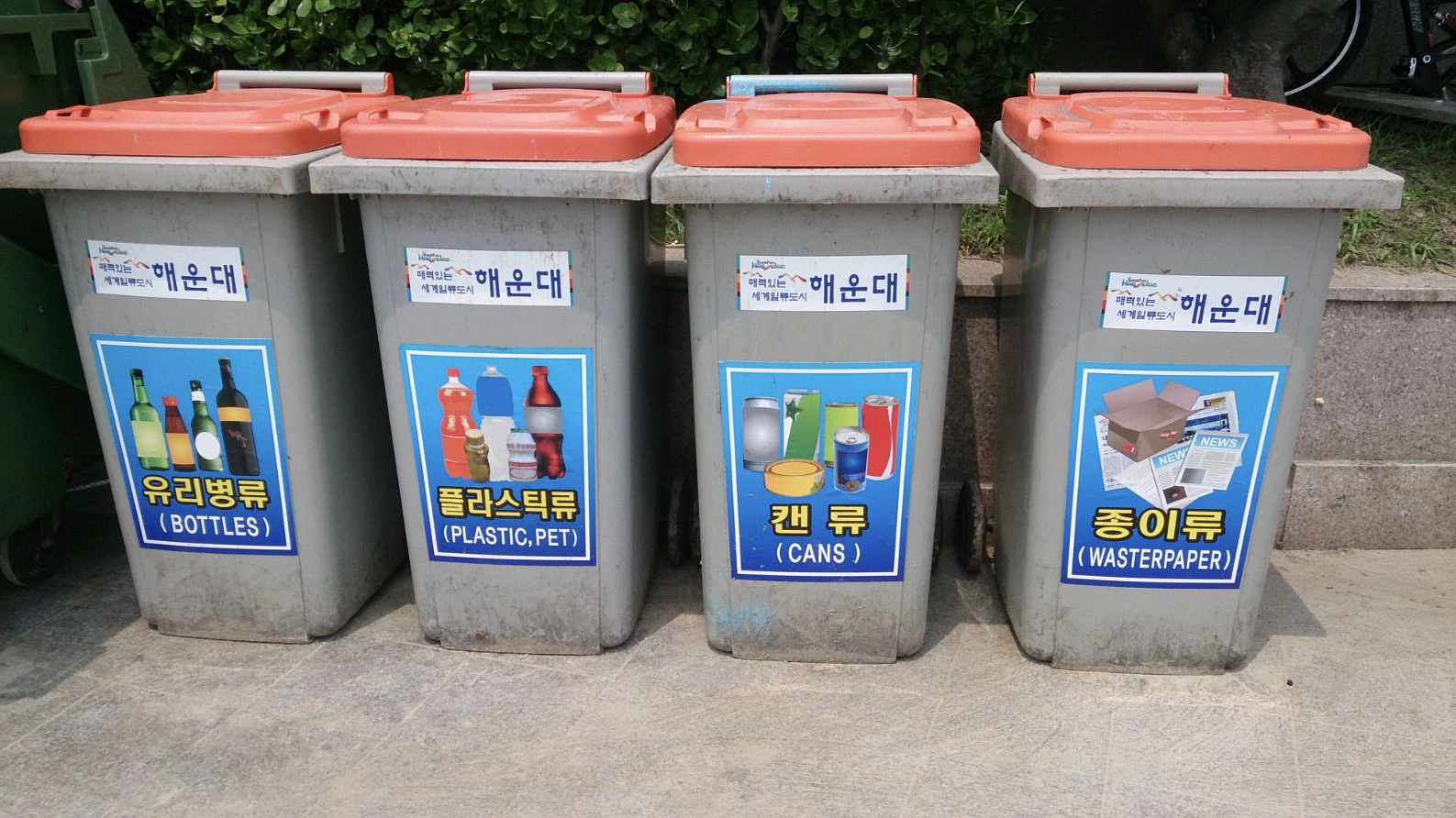
Throwing away household trash in Seoul feels difficult because three systems overlap. The city defines broad waste categories, each district (gu) sets practical rules such as collection days and bag prices, and your building decides where residents carry bags or how an RFID food-waste machine works.
The reliable order is simple: sort into general waste, recyclables and food waste; then check your building notice and district schedule before taking anything outside. A rule from a friend in another neighborhood may be correct there and wrong at your door.
Learn your address's rules before your first full bag
Seoul's 2026 Guidebook for Living in Seoul says disposal days vary among the city's 25 districts. It also shows that the collection setup changes with the home: a detached house may place bags in front of the building or at a designated point, while an apartment usually has a collection area and may use a food-waste machine.
Use this three-layer check in order:
- Building: photograph the notice in the lobby, recycling room or bin area. Ask the management office, landlord or host where each stream goes and how the food-waste equipment is unlocked or charged.
- District and neighborhood: confirm the permitted days, evening window and bag type on the district office website. Some schedules differ even by dong within one district.
- Citywide baseline: use Seoul's guide to understand the categories, not to replace a more specific local notice.
Do this before copying labels into a translation app: capture the whole notice, including the building name, days, hours and exception notes. A cropped line saying “Tuesday and Thursday” is useless if it belongs only to clear PET bottles.
Build three containers at home
Do not wait until disposal night to sort a mixed kitchen bag. Start with three small holding areas:
- General waste: non-recyclable household waste that is not accepted as food waste
- Recyclables: clean, separated paper, glass, metal, plastic, cartons, Styrofoam and other locally accepted materials
- Food waste: accepted cooking scraps and leftovers, drained of excess liquid and kept free of foreign objects
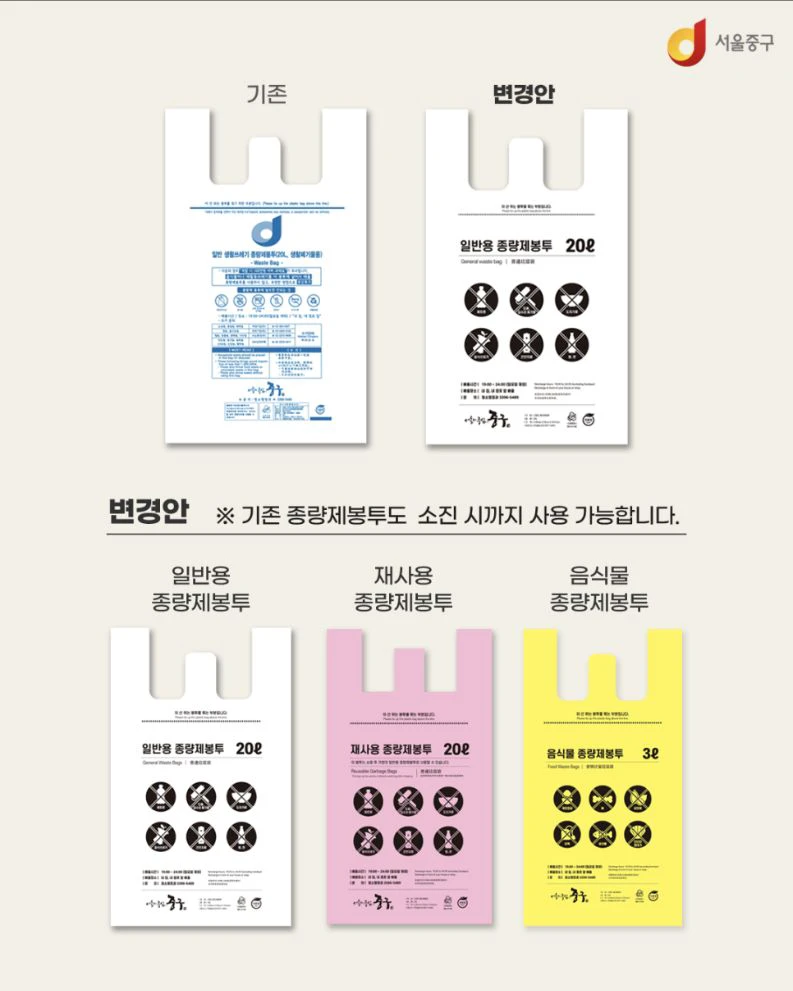
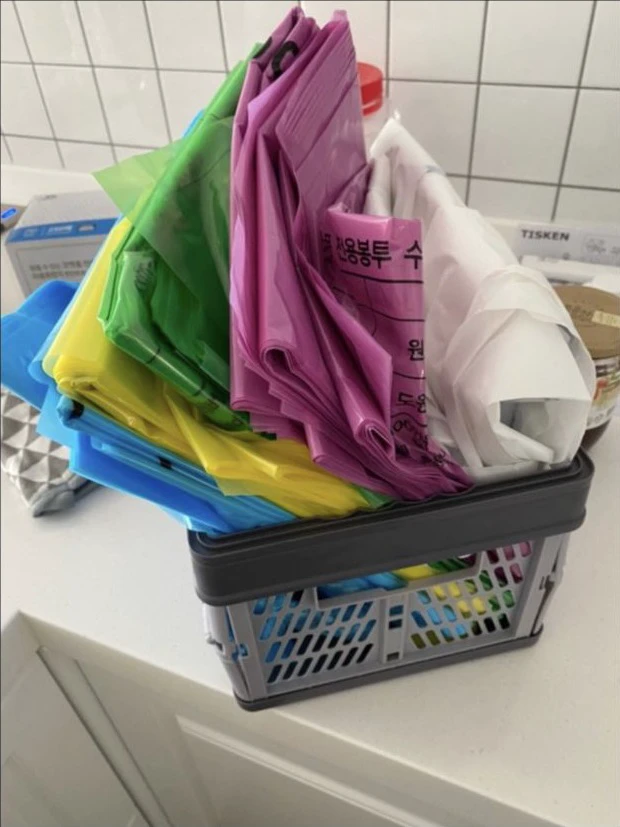
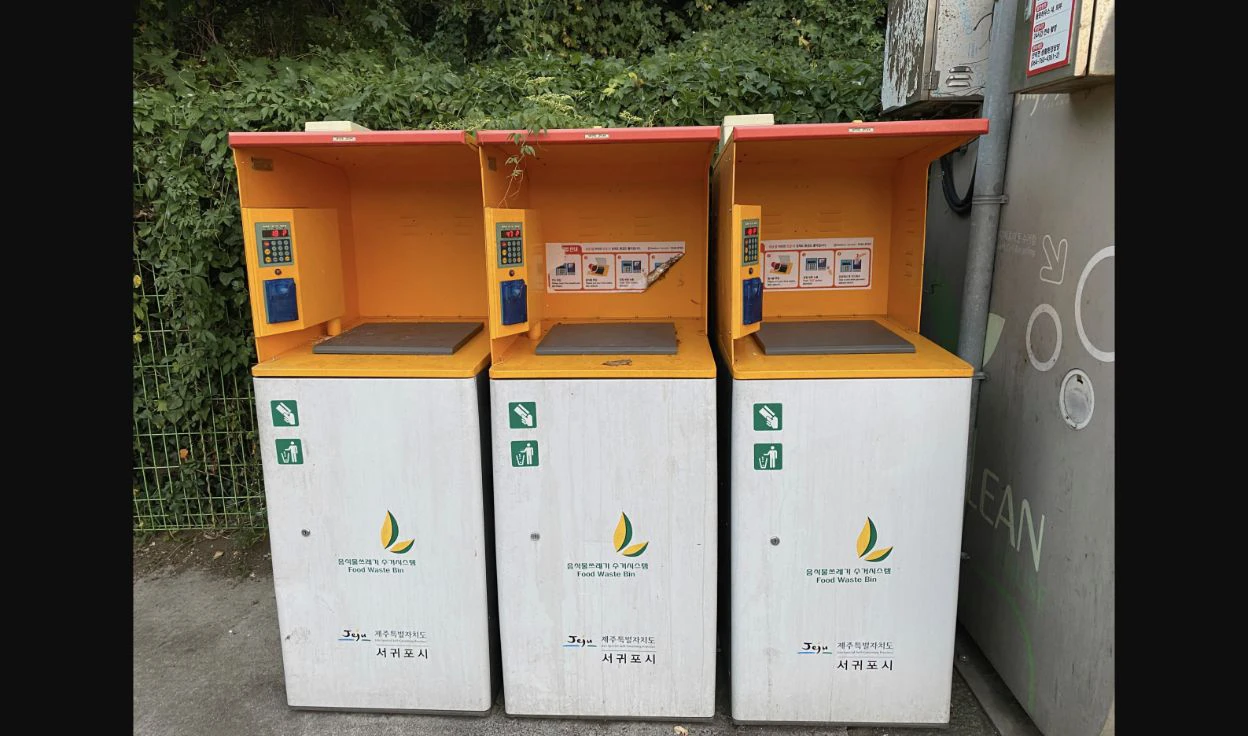
These are examples, not a Seoul-wide color code. The first slide is an official Jung-gu illustration of general, reusable-shopping and food-waste bags. The second shows several Korean waste-bag colors, and the third shows card-operated food-waste bins in Jeju. Your own district can use different colors, sizes and equipment, so read the printed category rather than matching a photo.
General waste goes in the district's official bag
A normal shopping bag is not a substitute for a volume-based waste bag, usually called a 종량제봉투 (jongnyangje bongtu). Seoul's 2026 guide says standard bags are sold at supermarkets and convenience stores and that prices vary by district. Buy them near your home and specify the stream and size.
At a shop, you can say:
일반쓰레기 종량제봉투 10리터 주세요.
Ilban sseuregi jongnyangje bongtu sip riteo juseyo.
“Please give me a 10-liter general-waste bag.”
Replace 10 liters with the size you need. If the clerk asks where you live, give the district or neighborhood; that is a useful check that you are buying the local product. Do not choose by color alone.
The city guide lists meat bones, shells, garlic and onion skins and disposable tea bags as general waste rather than food waste. Used tissues, badly soiled packaging and other non-recyclable household waste also usually belong here. Place the tied official bag only at your building's designated point and during the permitted window.
Recycling must be clean enough to recover
The official Seoul guide separates paper, glass, metal, Styrofoam, plastic, milk cartons, fluorescent lamps and vinyl, while distinguishing contaminated or unsuitable items. The practical routine is empty, rinse when needed, dry, separate and flatten. Then follow the building's labels for the final grouping.
A few details catch newcomers:
- Dirty vinyl is not recyclable; the guide directs clean vinyl into a transparent bag.
- Clear PET drink bottles may have a separate collection stream from other plastics in multi-unit housing.
- Coated paper, broken lamps, mirrors, heat-resistant glass and containers that held hazardous substances need their own local instructions rather than a hopeful trip to the recycling bin.
- A recycling symbol does not excuse leftover food. Remove the contents first.
Apartment stations may separate every material into a labeled bin. Low-rise buildings may ask residents to bundle paper or use transparent bags on a particular night. Both are normal. Follow the station you actually use.
Food waste is a processing stream, not “anything edible”
Food waste is collected for resource recovery, so hard or contaminating material is excluded even when it came from a kitchen. Seoul's food-waste separation standard lists hard nut shells and large fruit seeds, animal bones and feathers, shellfish and egg shells, tea or herbal grounds, onion and garlic skins, toothpicks, plastic and metal among items that must not enter food-waste equipment.
Drain moisture, remove packaging and foreign objects, and use the method assigned to the building. Depending on the property, that may be a designated food-waste bag, a shared container, a management-fee system or an RFID machine charged by weight. The 2026 Seoul guide describes all of these housing-dependent arrangements. Do not force a bag into a machine or leave food beside a locked container; ask how residents activate it.
If one item is uncertain, set it aside and check the district list. That is safer than relying on the popular “could an animal eat it?” shortcut, which does not answer local processing rules.
Put it out on the right night
Seoul's guide gives a common evening pattern—general waste from sunset to midnight and food waste by a designated time—while repeatedly stating that the day varies by district. Holiday collection can change again. Apartment collection rooms may also have their own access hours even when trucks follow a district schedule.
Confirm the exact answer in this order:
- Read the latest building notice at the collection point.
- Search the district website for
생활쓰레기 배출plus your dong. - Ask the management office or district sanitation department.
- For multilingual municipal help, call Seoul's 120 Dasan Call Center; the foreign-language menu is reached through 120, then 9.
Do not leave a bag early because the collection corner already contains other trash. It may be illegally dumped, left from another stream or awaiting a different pickup. Seoul's guide warns that incorrect or mixed disposal can lead to a fine, with serious violations reaching up to KRW 1 million.
A first-night checklist that prevents most mistakes
Before unpacking the last box:
- photograph the building's current disposal notice;
- find the general-waste point, recycling station and food-waste container or machine;
- ask how the food-waste fee is paid and whether a card must be registered;
- buy local general-waste bags in one useful size;
- set three containers in the kitchen and label the common food-waste exclusions;
- add the permitted disposal nights to your phone;
- keep large furniture, appliances, batteries and lamps out of the three everyday streams until you check their separate procedure.
The system becomes much easier once you stop searching for one Korean rule. Seoul gives you the framework; your district supplies the calendar and bags; your building supplies the door, bin and machine. Learn those three layers once, and weekly disposal becomes routine rather than a recurring guessing game.
Photo credits
- Korean recycling bins: ProjectManhattan / Wikimedia Commons, CC BY-SA 3.0; resized and compressed for the web.
- Jung-gu waste-bag designs: Seoul Jung-gu Office via its official Naver Blog; used with written operator permission.
- Korean waste-bag colors: Group7pororo / Wikimedia Commons, CC BY-SA 4.0; resized and compressed for the web.
- Card-operated food-waste bins: Sgroey / Wikimedia Commons, CC BY-SA 4.0; resized and compressed for the web.
Sources and image credits
- 2026 Guidebook for Living in Seoul — Checked for guide details or image attribution.
- food-waste separation standard — Checked for guide details or image attribution.
- 120 Dasan Call Center — Checked for guide details or image attribution.
- ProjectManhattan / Wikimedia Commons — Checked for guide details or image attribution.
- Seoul Jung-gu Office — Checked for guide details or image attribution.
- Group7pororo / Wikimedia Commons — Checked for guide details or image attribution.
- Sgroey / Wikimedia Commons — Checked for guide details or image attribution.
Last updated


