
Why Does Triangle Gimbap Packaging Fail the First Time?
The numbered wrapper is a tiny piece of food engineering: pull the center strip first, slide the two side films out gently, and the dry seaweed folds around the rice. Here is the foolproof sequence, the mistakes that cause a seaweed-and-rice collapse, and a practical guide to Korea's most familiar fillings.
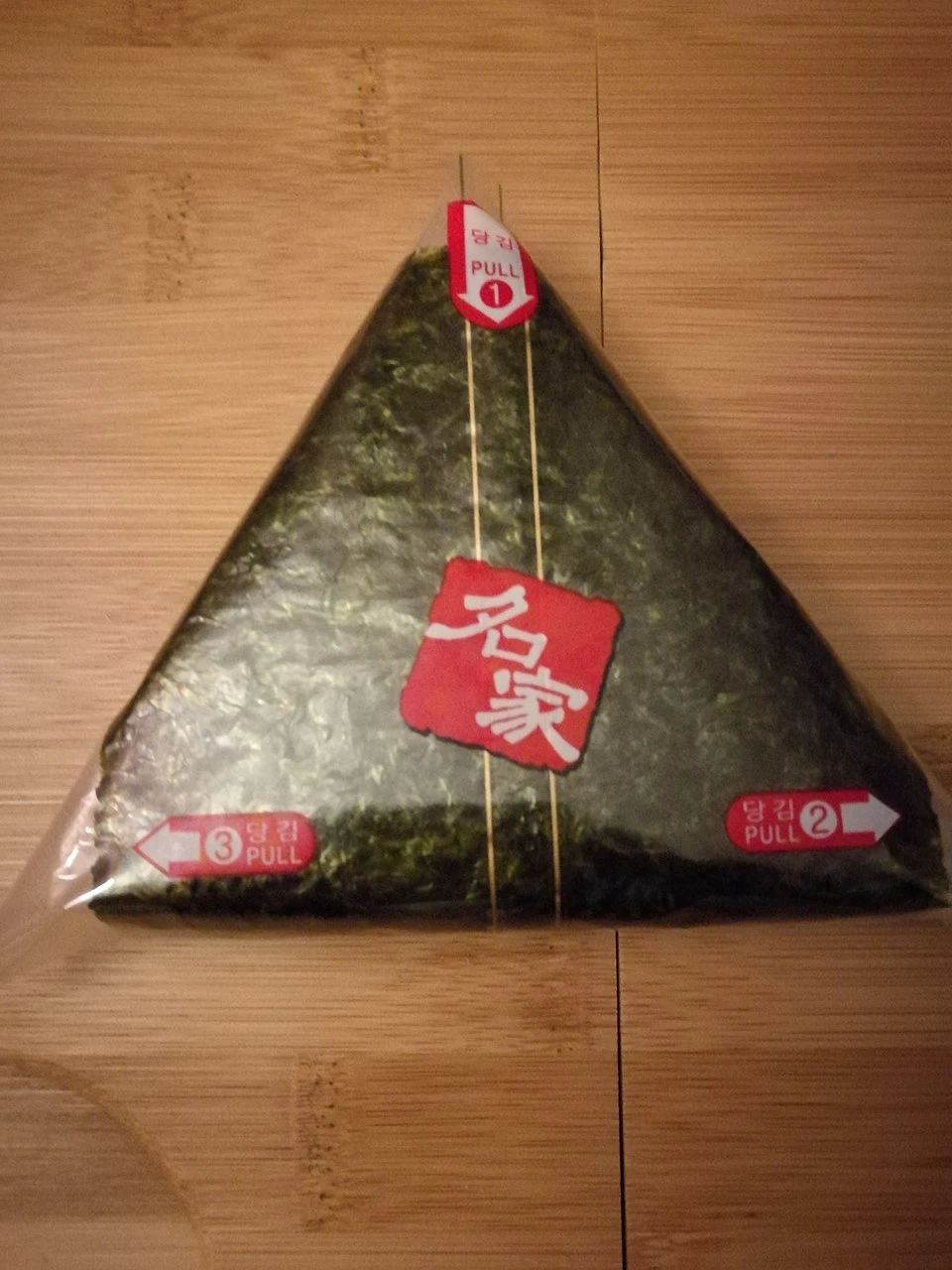
Pull strip 1 completely around the triangle, then slide tabs 2 and 3 out sideways in that order. If the seaweed tears or plastic stays trapped against the rice, the center strip probably stopped too early, a side film was pulled upward, or the triangle was squeezed too firmly.
The common numbered wrapper is designed to keep the dry seaweed away from moist rice until the moment you eat it. Pull 1 all the way around the triangle, then slide 2 and 3 out sideways. Treat the package like a sleeve that must leave the food, not like gift wrap that should be ripped off.
Why the wrapper has so many layers
Ordinary gimbap is rolled in seaweed before it is sliced. Triangle gimbap, or samgak gimbap (삼각김밥), has a different problem: it may sit in a refrigerated convenience-store case for hours. If the seaweed touches the rice the whole time, it absorbs moisture and loses its brittle crunch.
The numbered package solves that problem by putting film between the rice and the seaweed. A patent describing this style of triangular rice-ball wrapper identifies an outer film, an inner film around the dried seaweed, a central tear strip, and separate left and right sections. Designs vary by manufacturer, but the familiar result is the same: the rice and seaweed meet only after you remove the films in the intended order. Maangchi's samgak-gimbap recipe describes the packaged seaweed as sitting between two plastic sheets so it stays fresh.
Pulling a side tab first feels impossible because the center seam is still locking the structure together. The wrapper looks elaborate because the package is doing part of the final assembly.
The common 1-2-3 sequence
Look at the arrows on your own product before starting. Some graphics differ, and the printed directions on the package take priority. On the common Korean wrapper shown here, use this sequence.
1. Pull the center strip completely around
Hold the triangle lightly by its lower corners. Find the tab marked 1 at the top point. Pull it straight down the front, continue around the bottom edge, and keep going up the back until the center strip is fully detached.
Do not stop when the strip reaches the bottom point. That is the classic first-timer mistake: the package looks divided from the front, but the back is still joined. Pull steadily rather than diagonally so the narrow strip follows its channel instead of cutting into the seaweed.
2. Slide the second film sideways
Keep one hand under the rice so gravity does not become a surprise. Grip tab 2 and pull it outward, low and nearly parallel to the counter. The plastic should slide away from between the rice and seaweed.
Do not lift the tab toward the ceiling. An upward yank can raise the rice or catch a seaweed corner. Think of removing a bookmark from a closed book: straight out is smoother than up.
3. Slide the third film the other way
Support the triangle again, then pull tab 3 outward in the opposite direction. As the last film leaves, the seaweed should settle against the rice. Give the two side flaps a light press if they need help meeting. Eat soon if crunch is the reason you chose this package.
What to do when it starts going wrong
A bad opening can usually be rescued if you stop before yanking harder.
- A side film will not move: Check whether strip 1 is still attached on the back. Finish the center pull first.
- The seaweed corner is traveling with the film: Stop, support the rice from below, and ease the plastic away in small horizontal movements.
- The triangle is breaking: Put it on a flat surface and remove the remaining film while supporting both sides. It may become a deconstructed rice ball, but it is still lunch.
- Rice is stuck to plastic: Avoid squeezing the center of the triangle. Pressure makes soft rice grip the wrapper and can push filling out.
- The seaweed is already soft: Time, moisture, or heating may be responsible; reopening technique cannot restore crispness.
One more trap is the microwave. Do not heat a triangle simply because a microwave is nearby. Check the package for heating instructions, remove anything the label tells you to remove, and use the stated time for that product. A March 2026 report on a 7-Eleven triangle-gimbap update highlights the crispness of the seaweed and notes that heating can soften it. Some fillings are pleasant warm, but a warm filling and crisp seaweed can be competing goals.
Which filling should you choose first?
Convenience-store assortments rotate with seasons, collaborations, and chain-specific launches, so no list stays complete. Still, several flavor families are useful signposts. Korea Tourism Organization's convenience-store must-eats guide points visitors toward tuna-mayo and Jeonju-bibimbap triangle gimbap, two dependable starting styles. A current Reddit discussion among Korean-food fans also repeatedly mentions tuna and Jeonju bibimbap while showing how widely personal favorites vary.
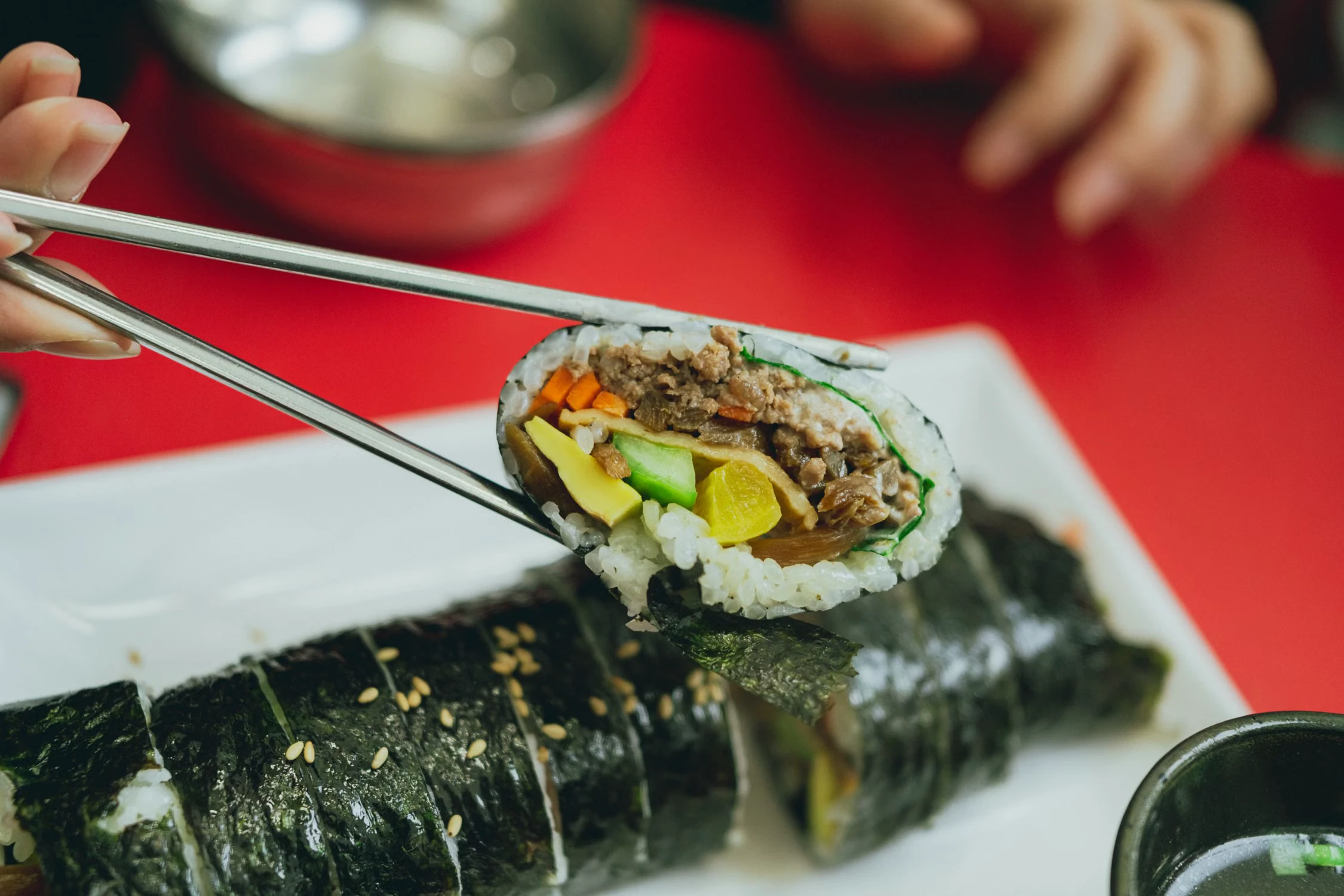
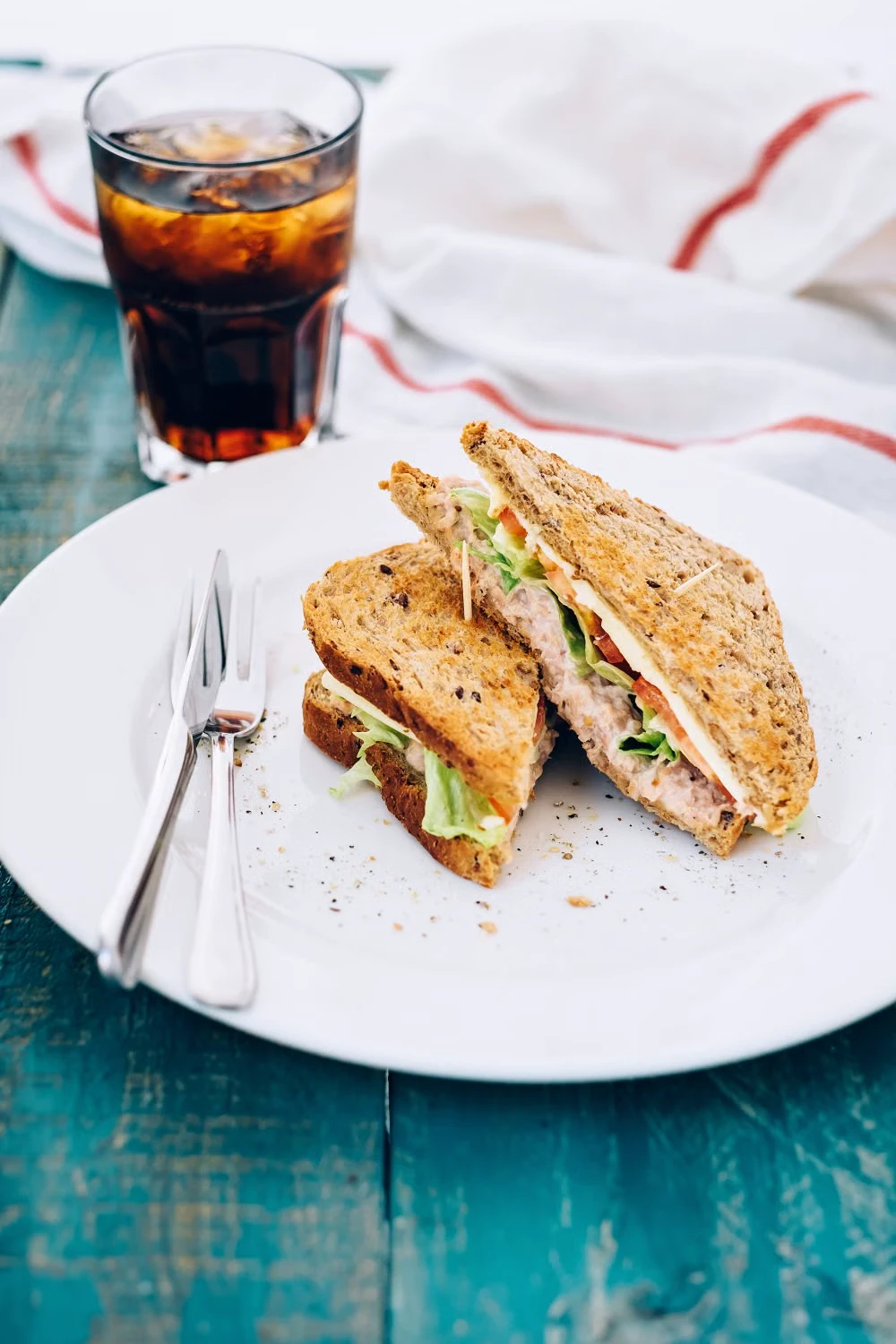
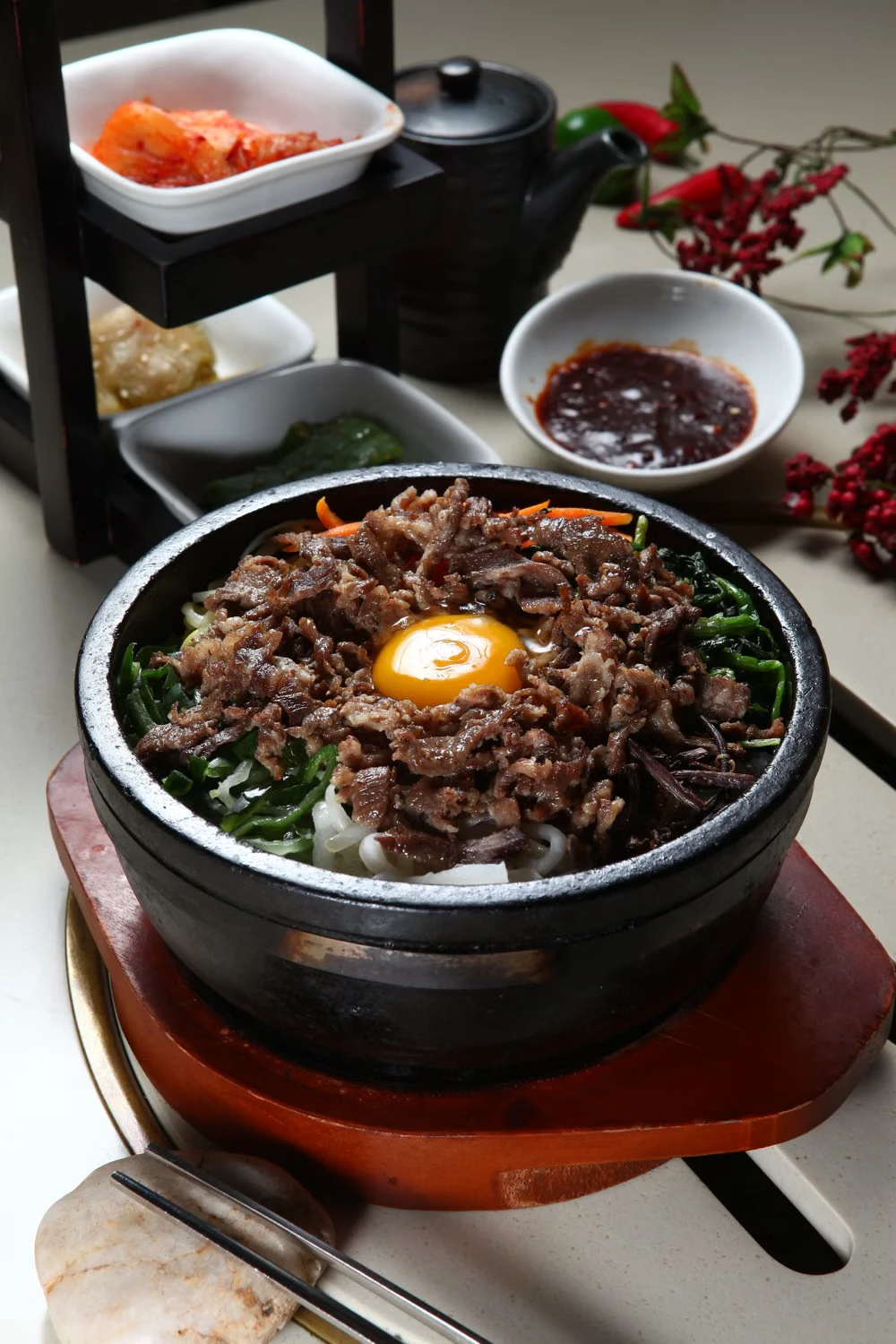
These three photographs are visual references for seaweed-and-rice texture, a mild tuna-mayo flavor family, and a seasoned bibimbap flavor family. They do not show the exact fillings inside a packaged triangle, and the sandwich and bowl contain ingredients that may not be present in the convenience-store item.
- Tuna mayo (참치마요): Creamy, savory, and usually one of the gentler introductions. It is not automatically mild in every version; check for spicy words or pepper graphics.
- Jeonju bibimbap (전주비빔): A more seasoned, often red-pepper-forward rice mixture. The convenience-store filling is inspired by a flavor profile, not a miniature restaurant bibimbap bowl.
- Kimchi tuna (김치참치): Richer and tangier, with heat that varies widely.
- Bulgogi or beef (불고기, 소고기): Sweet-savory meat flavors are approachable, but sauces and product recipes differ.
- Spicy pork or chicken (제육, 매콤치킨): Read the heat cues rather than assuming the triangle's small size means mild flavor.
- Salmon, pollock roe, and limited editions: These can be excellent, but availability is less predictable than the core flavors.
If you cannot read the front, a translation camera can help identify the name. It should not be your only allergy check. Read the full ingredient and allergen label, because tuna mayo may contain egg and soy, meat sauces may contain wheat or soy, and a vegetable-sounding name does not prove that the product is vegetarian. Manufacturing and cross-contact statements matter too.
A better way to choose in the refrigerated case
Start with the filling, then check the clock. Find the use-by time printed on the package and choose one comfortably within it. Look for a microwave icon or heating directions only if you want it warm. If crisp seaweed matters most, open and eat it soon after purchase rather than carrying it around after the package has warmed and cooled.
Price and promotional stickers can crowd the front, but the large product name usually tells you more than the photograph. Words such as 마요 (mayo), 김치 (kimchi), 불고기 (bulgogi), and 매콤 (spicy) are practical anchors. When in doubt, ask staff a simple question such as "Is this spicy?" rather than expecting them to certify every ingredient from memory.
Triangle gimbap works best as a snack or small meal component, not a promise of a balanced dinner. Pair it with water and, if you need a fuller meal, something with vegetables or additional protein whose label you can verify. The package is optimized for portability and texture; nutrition depends on the particular filling and portion.
The ten-second memory trick
Remember belt, left sleeve, right sleeve. Number 1 is the belt that travels all the way around. Numbers 2 and 3 are sleeves that slide horizontally away. Keep your grip gentle, support the rice, and never try to win an argument with the wrapper by pulling harder.
Once the motion makes sense, the package stops being a plastic puzzle. It becomes a clever little final step: the films leave, the crisp seaweed hugs the rice, and the convenience-store shelf turns into lunch.
Sources and image credits
- Triangular rice-ball wrapper patent — Film layers, center tear strip, and left/right wrapper sections.
- Maangchi — Samgak-gimbap preparation and seaweed kept between plastic sheets.
- The Asia Business Daily — March 2026 report on a 7-Eleven triangle-gimbap update and the effect of heating on seaweed texture.
- VISITKOREA convenience-store guide — Tuna-mayo and Jeonju-bibimbap examples.
- Reddit r/KoreanFood discussion — Individual filling preferences used as anecdotal context.
- Teemeah via Wikimedia Commons — Featured packaged triangle-gimbap image, CC BY-SA 3.0; uploaded copy available here.
- Theodore Nguyen via Pexels — Gimbap texture reference under the Pexels License.
- Electra Studio via Pexels — Tuna flavor-family reference under the Pexels License.
- minchephoto photography via Pexels — Bibimbap flavor-family reference under the Pexels License.
Last updated


