
How Real Are Chaebol Heirs in K-Dramas?
Family influence across Korean business groups is real, but dramas combine family ties, share ownership, executive roles, and control into one all-powerful heir. Five questions reveal the difference.

A K-drama chaebol heir starts with a real feature of the Korean economy, then turns it into one person viewers can follow. Family influence across generations is real. The fantasy is treating birth into that family as automatic ownership of every affiliate, authority over every employee, and permission to use corporate assets as private property.
The most useful way to watch the trope is to separate four things the script often combines: family relationship, share ownership, a board or executive position, and control over a wider business group.
What “chaebol” means outside a drama
In ordinary use, chaebol refers to a very large Korean business group influenced by a founding family. It is not a special legal form of corporation. The group is a network of separate companies—often called affiliates—that can share a controlling person or family, ownership links, a brand identity, and strategic direction.
The Korea Fair Trade Commission (KFTC) uses the statutory term business group, defined as companies under the de facto control of the same person. Its current large business group regulation overview, rechecked August 12, 2026, says the regulator designates disclosure groups and cross-shareholding-restricted groups annually. The same page lists separate disclosure duties for board decisions, ownership, executives, related-party transactions, guarantees, and group structure.

That is the first reality check. A skyline full of headquarters may look like several private kingdoms, but each corporation has its own assets, obligations, officers, board processes, and sometimes public shareholders. An affiliate's cash is not simply the founding family's wallet.
What dramas get broadly right
Family influence can exceed a family's direct economic stake
A family can maintain influence through voting shares, holdings among affiliates, board nominations, management roles, and relationships built over decades. The OECD's 2018 Korea economic survey discusses the recurring gap between ownership and control in Korean business groups. It remains useful as historical analysis, not a snapshot of every group in 2026.
The newer OECD Corporate Governance Factbook 2025 country note, rechecked August 12, 2026, shows why a contemporary drama cannot reduce a listed affiliate to family preference alone: Korea's framework includes shareholder rights, boards, disclosure, related-party transaction controls, and continuing amendments to corporate law.
Succession can shape years of strategy
A next-generation family member may acquire shares, rotate through selected affiliates, build a management record, or become part of a wider ownership reorganization. Family expectations and rivalry can matter. What is less realistic is a chairperson announcing an heir over dinner and the whole group legally changing hands the next morning.
A family name can create unusual access and pressure
An heir may enter with networks, visibility, and expectations unavailable to an ordinary employee. That does not erase professional managers, boards, investors, lenders, regulators, employees, or the legal identity of each company.
Where television switches to fantasy
The family portraits below show why the device works on screen. A complicated ownership network becomes a room of recognizable rivals, and corporate succession becomes a personal contest.
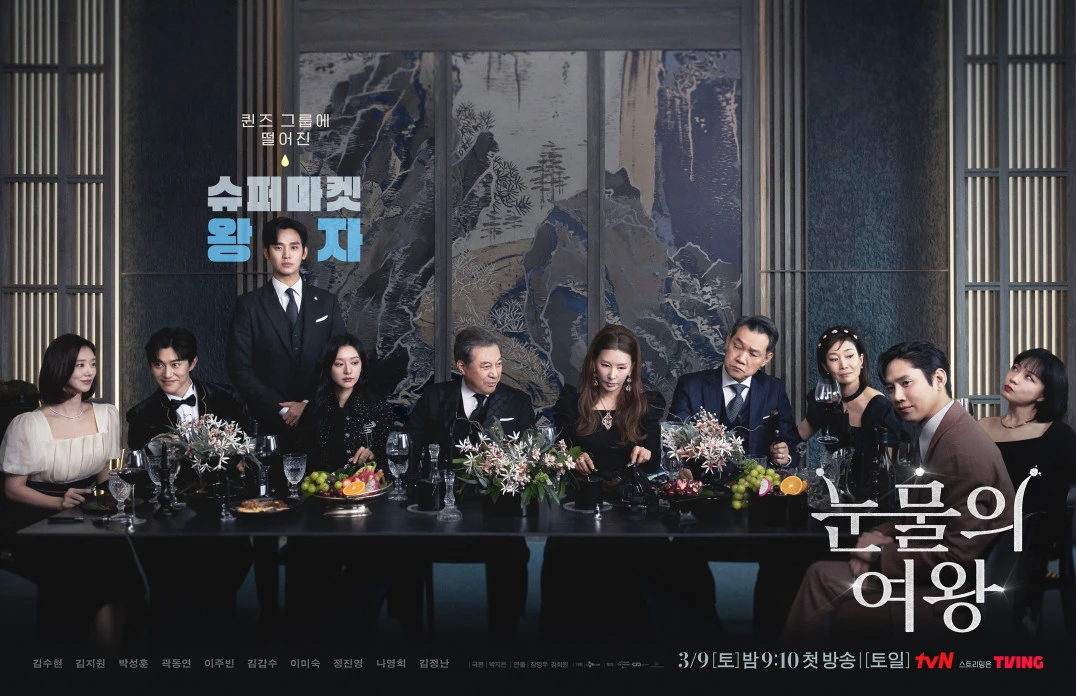
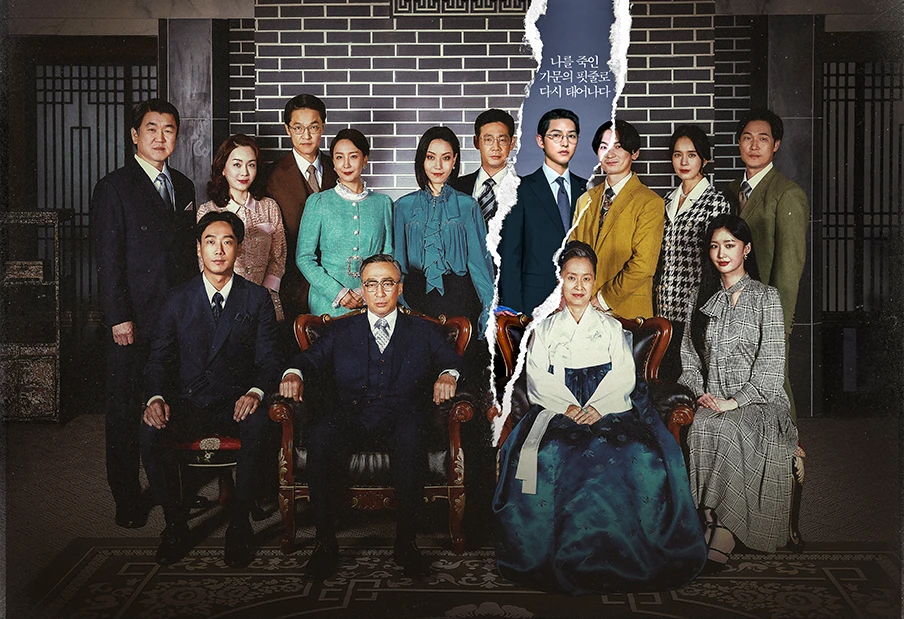
“Grandfather made me president, so I control the group”
A controlling family may influence an appointment, but an office belongs to a particular company. A shareholder, board director, representative director, executive, and founder's grandchild hold different kinds of power. A listed affiliate also has shareholders, formal resolutions, and market disclosures that a drama can compress into one command.
“My secretary can order every affiliate around”
Groups coordinate, but affiliates remain distinct companies. The OECD's study of Korean company-group boards examines the tension between group control and the duties of each affiliate board. A headquarters aide may carry influence; that does not automatically make the person every affiliate employee's legal superior.
“A marriage merges two empires”
Marriage may create a social alliance or change private succession planning. It does not merge corporations. Shares must move, contracts and valuations are needed, boards or shareholders may have to act, and disclosure or competition review may apply. The wedding plot is a visual shortcut for an alliance, not a merger procedure.
“The heir can spend company money or fire anyone”
Company property belongs to the company. Hiring and dismissal authority comes from a role within a specific employer. Transactions that could benefit a controlling family are exactly why related-party approvals and disclosures exist. A character's social power may be credible; unlimited legal authority is not.
Five questions for checking any chaebol scene
- Which affiliate is involved? A department store, hotel, construction company, and holding company do not become one corporation because they share a group name.
- What is the character's actual role? Family member, shareholder, board director, and executive describe different sources of influence.
- Is the company listed? A listed company faces shareholder processes, market disclosures, and outside scrutiny that a script may omit.
- Is this family property or corporate property? A private residence may belong to a family member; an affiliate's bank account and office building do not.
- Has the script compressed time? Succession, acquisition, merger, and leadership changes normally require documents, valuations, approvals, filings, and negotiation.
For a real listed company, the Financial Supervisory Service's English DART system can help locate company profiles, major-shareholder information, and disclosures. Its official disclaimer matters: English disclosures are voluntary, have no legal effect, and may not match the Korean filing. Use the original Korean filing for a consequential decision rather than treating the English interface as a complete legal record.
The simplest way to read the trope
Think of the chaebol heir as a human shortcut for a corporate network. The real foundation is family influence across affiliates and the genuine tension among ownership, control, governance, and succession. The fantasy is clean personal command: one inheritance, romance, wedding, or boardroom speech instantly deciding an entire group.
That distinction does not make the stories meaningless. The trope can dramatize real Korean debates about concentrated wealth, inherited opportunity, governance, and family pressure. It captures the anxiety and fascination while simplifying the machinery.
Watch the family conflict as drama. When the plot makes a claim about ownership, an affiliate, or a real company, check the exact corporate entity and its filing instead of assuming “the chaebol” is one company with one private owner.
Sources and image credits
- KFTC: Large Business Group Regulations — Official current definition, annual designation, restriction, and disclosure framework; rechecked August 12, 2026.
- Delivery Spot Yeouido office image — Published article asset derived from the credited Unsplash photograph.
- OECD Economic Surveys: Korea 2018 — Historical analysis of ownership, control, and governance in Korean business groups.
- OECD Corporate Governance Factbook 2025: Korea — Current country note on shareholder rights, boards, disclosures, related-party transactions, and recent reforms; rechecked August 12, 2026.
- Delivery Spot Queen of Tears family poster — Published article asset credited to CJ ENM / tvN.
- Delivery Spot Reborn Rich family poster — Published article asset credited to JTBC.
- OECD: Duties and Responsibilities of Boards in Company Groups — Korea case study on group control and affiliate-board duties.
- Financial Supervisory Service: English DART — Official disclosure search; its disclaimer says English disclosures are voluntary and users should consult Korean originals for specifics.
- Queen of Tears on Netflix Tudum — Original source credit for the featured image. Photo: Netflix.
- tvN Queen of Tears poster gallery — Original source for the Queens family poster. Photo: CJ ENM / tvN.
- JTBC Reborn Rich program page — Original source for the Sunyang family poster. Photo: JTBC.
- Yeouido office buildings on Unsplash — Photograph by KS KYUNG, original source for the office image, used under the Unsplash License.
- Delivery Spot cover image — Published cover asset credited to Netflix through Tudum.
Last updated


