
Gwangjang vs Namdaemun vs Mangwon: Which Seoul Market Fits You?
Choose Gwangjang for market food, Namdaemun for broad shopping, or Mangwon for neighborhood groceries and takeaway—with current hours and seller-level limits.

Choose the market by the job you want it to do: Gwangjang for a concentrated food experience, Namdaemun for broad shopping, or Mangwon for groceries and takeaway in a compact neighborhood arcade. None is the universal “best market,” and visiting all three in one day adds transit without improving the decision.
The hours below are official planning ranges checked on August 12, 2026. Every market contains independent businesses, so a listed market range never guarantees that one named stall will be open, accept your card, or have the dish or size you want.
Decide in 30 seconds
- Pick Gwangjang if the meal is the main event and you want famous market dishes in one visually busy aisle.
- Pick Namdaemun if you want to compare clothes, bags, accessories, kitchenware, household goods, and food across many lanes and buildings.
- Pick Mangwon if you want side dishes, produce, snacks, and takeaway food in a smaller arcade that fits naturally with Mangwon-dong or the Hangang.
- Skip all three for a specific purchase unless you have confirmed the exact shop, item, price, and opening day. A market name is not an inventory promise.
Bring a card and a modest amount of small-denomination won. Confirm the price, portion, and payment method before food is cooked or goods are packed.
Gwangjang: food first, with an earlier non-food clock
Gwangjang is the clearest first-market choice when you picture griddles, stools, bindaetteok, gimbap, tteokbokki, eomuk, and a dense covered aisle. The current Visit Seoul Gwangjang listing, edited May 4, 2026, lists the general market at 09:00–18:00 and the specialized shopping street at 10:00–19:00, both closed Sundays. It lists the food alley daily at 09:00–23:00. Treat those as section ranges, not one timetable for every vendor.
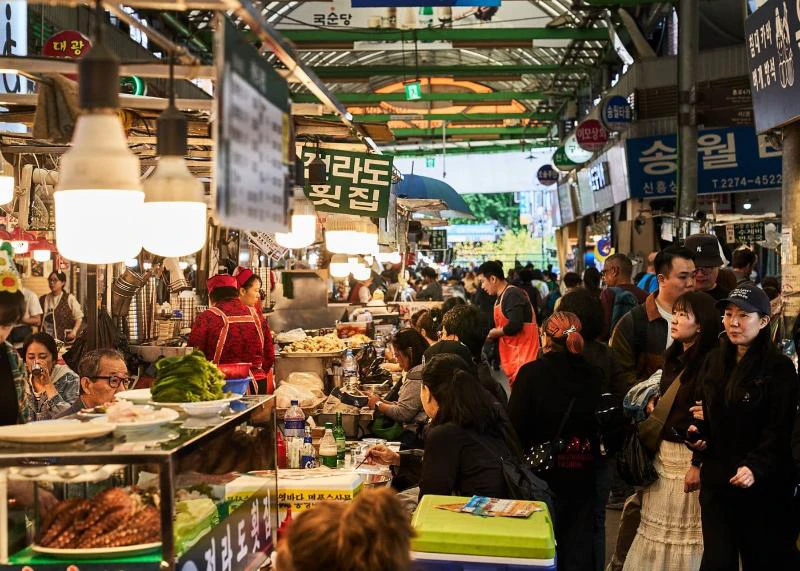
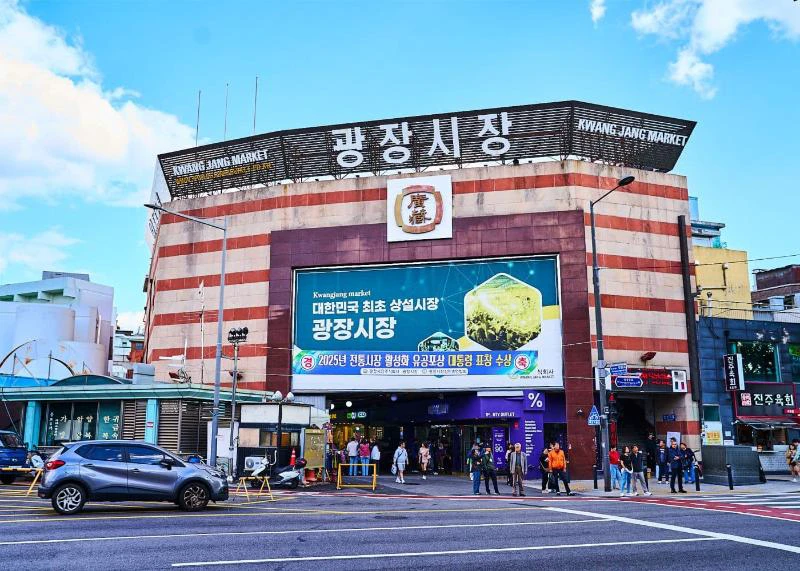
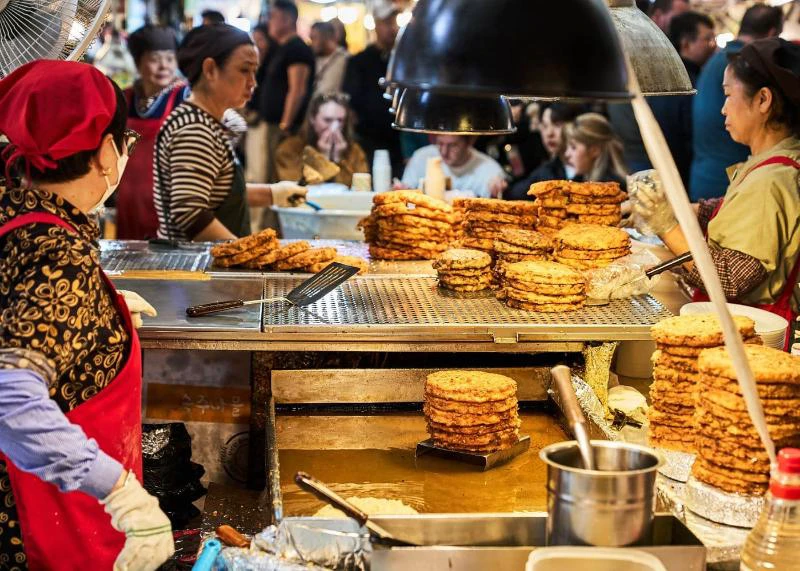
Choose it when you can tolerate close seating and concentrated visitor traffic. In a traveler comparison of these markets, some people preferred Gwangjang for food variety while others described crowding or tourist-oriented prices. That thread is anecdotal, not a market audit. The useful action is to read the displayed menu, ask the total before agreeing, and order one item first instead of accepting an unpriced spread.
If textiles, hanbok, or vintage browsing matter, arrive well before the evening food period because the non-food sections follow an earlier clock. If you only want a calm grocery shop, Mangwon is usually the better category match.
- Maps: Google Maps · Naver Map
Namdaemun: shopping first, then choose a food alley
Namdaemun works when browsing and comparison shopping occupy most of the visit. Its outdoor lanes and buildings cover clothes, children’s goods, bags, accessories, kitchenware, household items, specialty products, and food. The advantage is range; the cost is that the market is harder to read than one covered arcade.
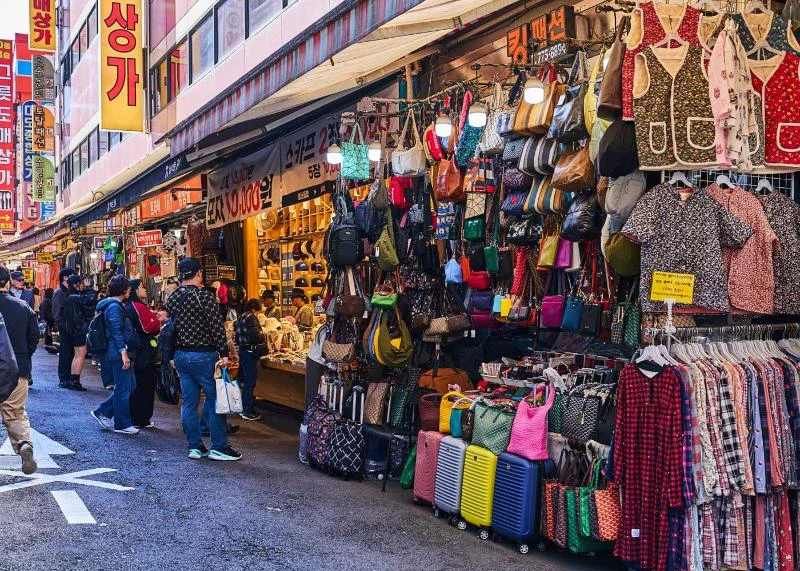
The current Visit Seoul Namdaemun listing, edited May 5, 2026, describes a weekday market range of 00:00–23:00, says hours vary by stall, and lists Sunday as the holiday. Do not read 00:00–23:00 as a promise that visitor-facing shops operate continuously. Wholesale categories, buildings, restaurants, and street stalls keep different schedules. Use the official Namdaemun Market site for the relevant category, then confirm a specific shop if it is the reason for your trip.
Go in daytime for the easiest broad retail comparison. Save the Korean shop name, building, floor, and a storefront photo before moving on; “the shop near Gate 3” is difficult to reconstruct later. Before paying, check size, included pieces, exchange terms, and whether the quoted amount is the total. For food, pick a named alley or dish rather than expecting every lane to behave like a food market.
The same traveler thread includes personal preferences for Namdaemun’s mix of food and non-food lanes. Use that only as a taste signal. It does not establish quiet conditions, local pricing, or quality at every seller.
- Maps: Google Maps · Naver Map
Mangwon: compact groceries, snacks, and takeaway
Mangwon is the strongest fit when you want a smaller neighborhood market rather than a landmark-scale shopping district. Its arcade concentrates prepared side dishes, produce, meat, snacks, and takeaway food. It combines easily with Mangwon-dong cafés or food for the nearby Hangang, provided you pack it securely and follow park waste rules.
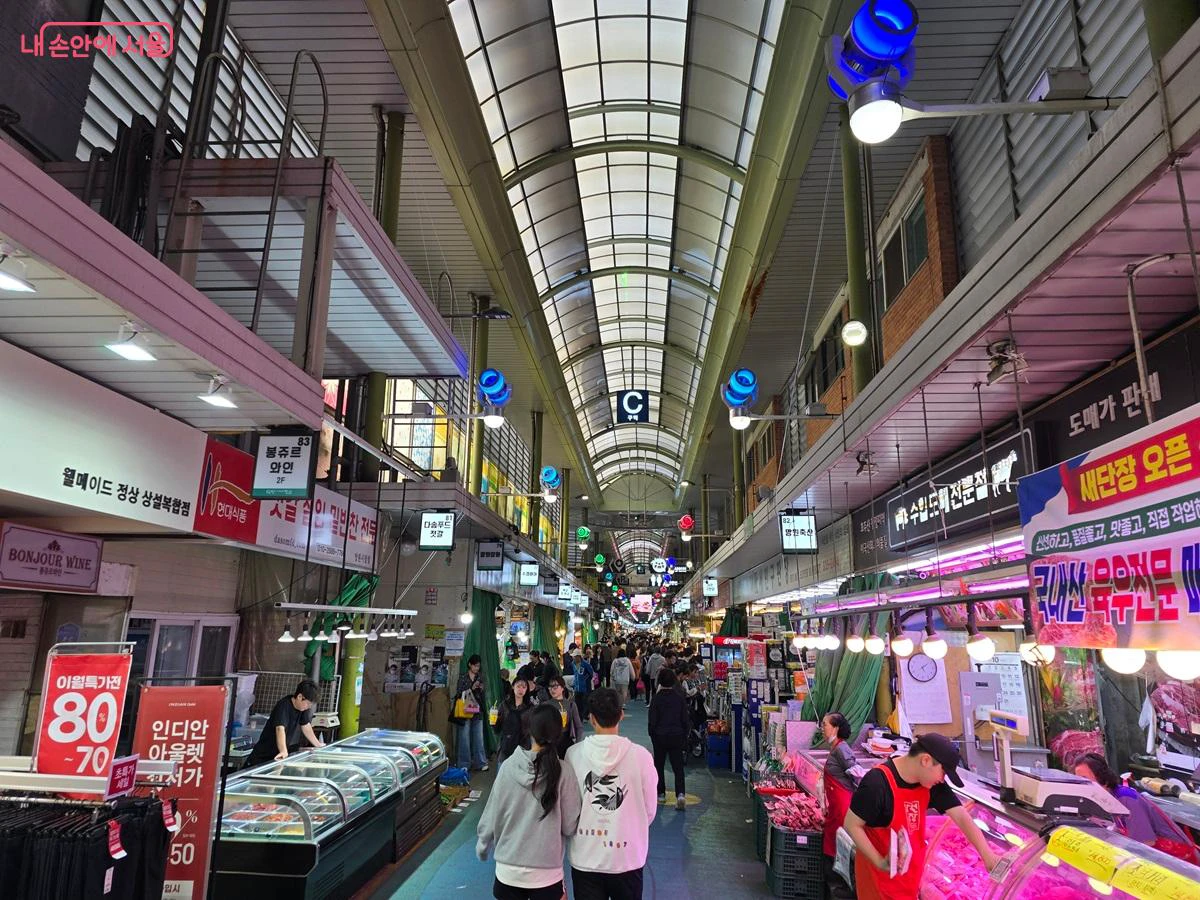
The current Visit Seoul Mangwon listing, edited May 4, 2026, lists daily 10:00–21:00 and explicitly says hours vary by store. Mangwon Station Exit 2 is the simple approach. A later traveler discussion describes one uncrowded weekday-morning visit; that is one experience, not a crowd forecast. The narrow arcade can still fill at meal times and on weekends.
Choose Mangwon when groceries and a few small portions sound better than one famous food aisle. Bring a reusable bag or compact waste bag if you are buying several takeaway items. Confirm whether food needs refrigeration before carrying it through the rest of the day.
- Maps: Google Maps · Naver Map
Pay and order without a surprise
The Korea Tourism Organization’s shopping guidance says major credit cards are accepted at most stores in Korea, while some traditional-market and street businesses may accept only cash. That means payment varies by seller even inside one market.
Use this sequence:
- Read the displayed price and unit: one piece, one plate, 100 g, or one bundle are not interchangeable.
- Point to the exact item and confirm the quantity.
- Ask 얼마예요? (eolmayeyo?, “How much is it?”) and 카드 돼요? (kadeu dwaeyo?, “Can I pay by card?”).
- For weighed goods, ask to see the final weight and total before packing.
- If the total or terms remain unclear, decline politely before preparation begins.
Dietary preference and food allergy are different risk levels. Broth, fish sauce, shrimp paste, premade fillings, and shared oil may not be visible. If an ingredient or cross-contact would cause a serious reaction, do not treat a busy stall’s uncertain answer as confirmation; choose a place that can verify the recipe and preparation.
The one-market answer
- First trip, food is the priority: Gwangjang, before the peak meal rush.
- Shopping list is longer than the snack list: Namdaemun, daytime and not Sunday, after checking the relevant category.
- Picnic food, side dishes, or neighborhood browsing: Mangwon, with store-level hours still checked.
- You dislike crowds or need precise allergy control: choose a quieter, clearly documented restaurant or shop instead of forcing a famous market visit.
Pick one main purpose, set a spending ceiling, carry both card and a little cash, and leave room to walk away. That produces a better market visit than trying to collect all three names in one day.
Sources and asset credits
- Visit Seoul — Gwangjang Market — Current section hours, Sunday closures, address, and official market context; edited May 4, 2026
- Gwangjang food-aisle asset — Delivery Spot stored Seoul Tourism Organization asset
- Gwangjang entrance asset — Delivery Spot stored Seoul Tourism Organization asset
- Gwangjang bindaetteok asset — Delivery Spot stored Seoul Tourism Organization asset
- Traveler market comparison — Anecdotal preference and crowd/price signal only
- Gwangjang Google Maps search — Frozen navigation link; verify live route
- Gwangjang Naver Map entry — Korean map reference; live listing has priority
- Namdaemun shopping-lane asset — Delivery Spot stored Seoul Tourism Organization asset
- Visit Seoul — Namdaemun Market — Current market-wide range, store-level variation, Sunday holiday, and official context; edited May 5, 2026
- Namdaemun Market official site — Category and building information; check the live notice for a specific destination
- Namdaemun Google Maps search — Frozen navigation link; verify live route
- Namdaemun Naver Map entry — Korean map reference; live listing has priority
- Mangwon arcade asset — Delivery Spot stored Kim Dae-jin/Seoul MediaHub asset
- Visit Seoul — Mangwon Market — Current daily planning range, store-level variation, address, and transit; edited May 4, 2026
- Traveler Mangwon discussion — Single traveler timing experience only, not a crowd guarantee
- Mangwon Google Maps search — Frozen navigation link; verify live route
- Mangwon Naver Map entry — Korean map reference; live listing has priority
- Korea Tourism Organization shopping guidance — General card acceptance and traditional-market cash exception
- Seoul MediaHub Mangwon feature — Source chain for the stored Mangwon image
- Cover image file — Delivery Spot stored Seoul Tourism Organization asset
Last updated


