
Soju, Makgeolli, Yakju or Bokbunja-ju: Your First Korean Drink
Choose a first Korean drink by flavor and actual strength: makgeolli for a cloudy sweet-tart sip, green-bottle soju for the familiar restaurant ritual, yakju for aromatic rice wine, or bokbunja-ju for berry fruit wine.
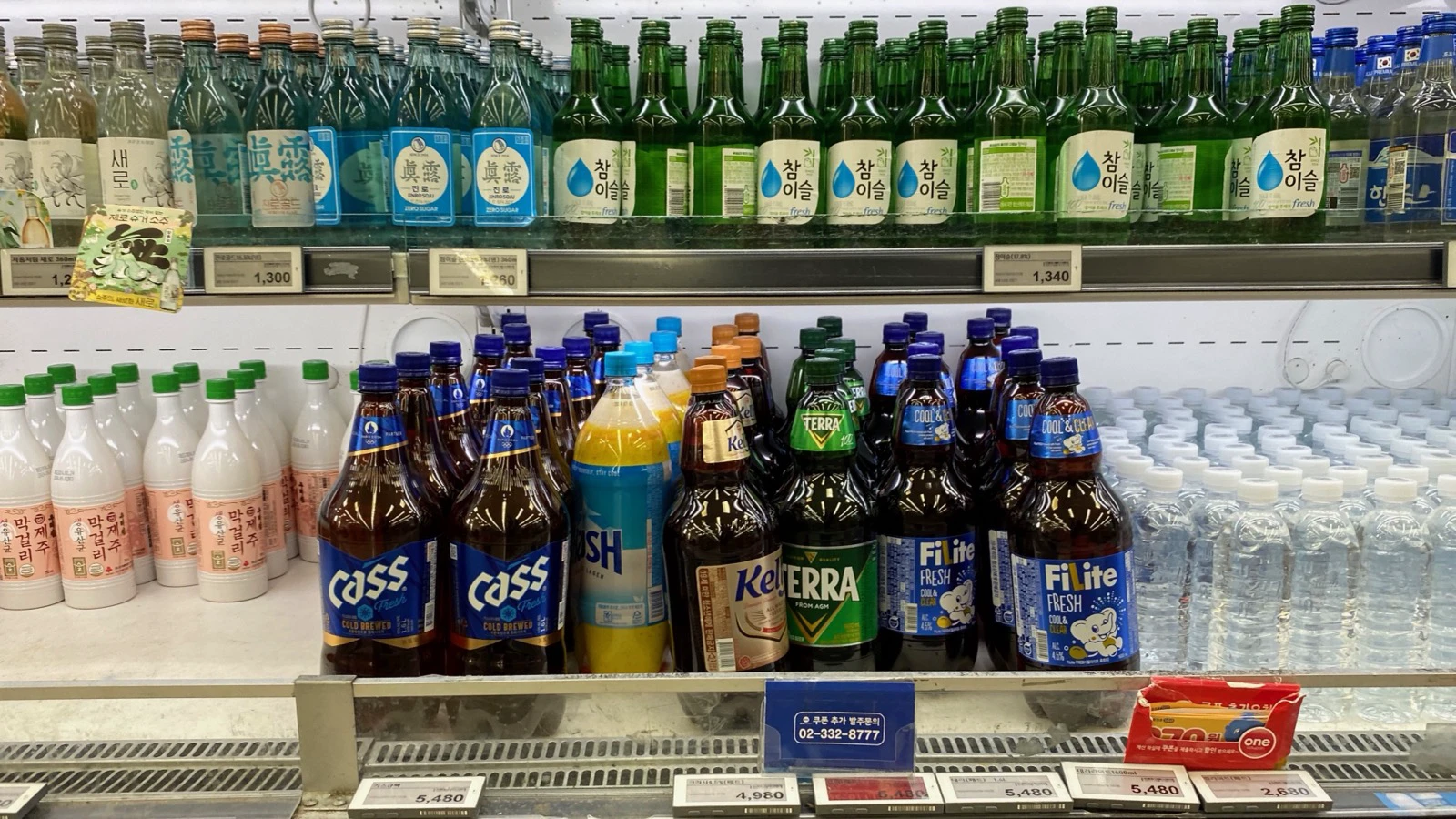
If you want the gentlest introduction, start with a chilled makgeolli around 5–8% ABV and share it with pajeon. Choose green-bottle soju for the familiar Korean restaurant ritual, yakju for a clear and aromatic rice wine, or bokbunja-ju for a sweet-tart berry drink—but read the bottle, because strength and sweetness vary by producer.
The four names do not describe a ladder from weak to strong or cheap to premium. They describe different ways of making and drinking alcohol, and the bottle in front of you is more useful than a stereotype about the category.
Pick by the flavor you already like
- Makgeolli if you like lightly sparkling cider, sour beer or creamy drinks. Expect a cloudy, soft-bodied, often sweet-tart sip; start with pajeon, kimchi-jeon or spicy food.
- Green-bottle soju if you like clean spirits or a simple table drink. Expect light sweetness and a direct alcohol bite; start with samgyeopsal, grilled meat, stew or fried chicken.
- Yakju if you like sake, dry white wine or aromatic rice drinks. It can be dry, savory, fruity or sweet; start with jeon, grilled fish, bossam or galbi, depending on the bottle.
- Bokbunja-ju if you like berry wine, sangria or sweeter red fruit flavors. Expect sweet-tart fruit and a rounder finish; start with grilled eel or meat, fruit, cheese, or a small after-dinner glass.
These are starting points, not pairing laws. A dry makgeolli can taste less sweet than a sweet yakju, and a traditional distilled soju can be far stronger than the familiar green bottle.
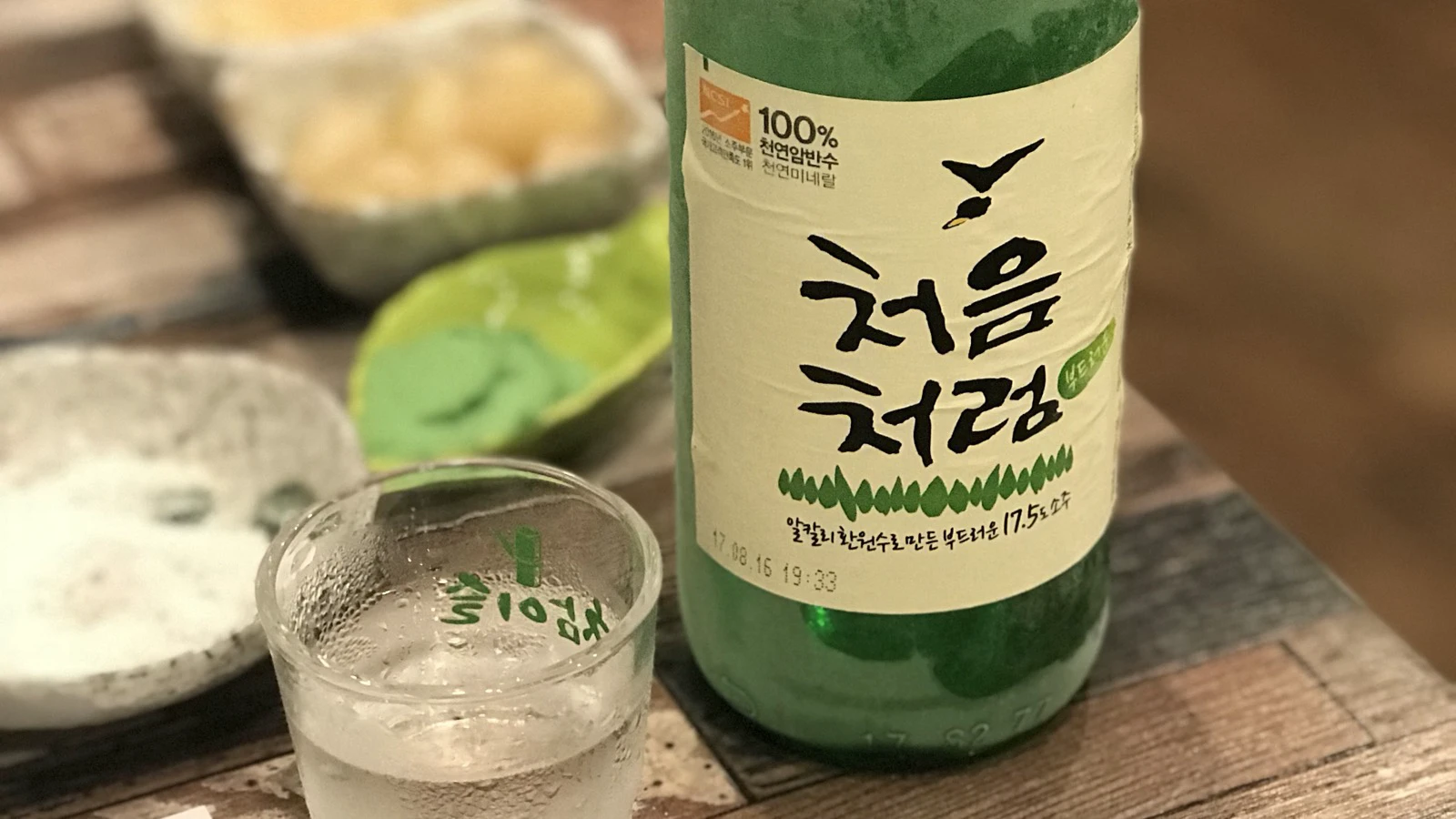
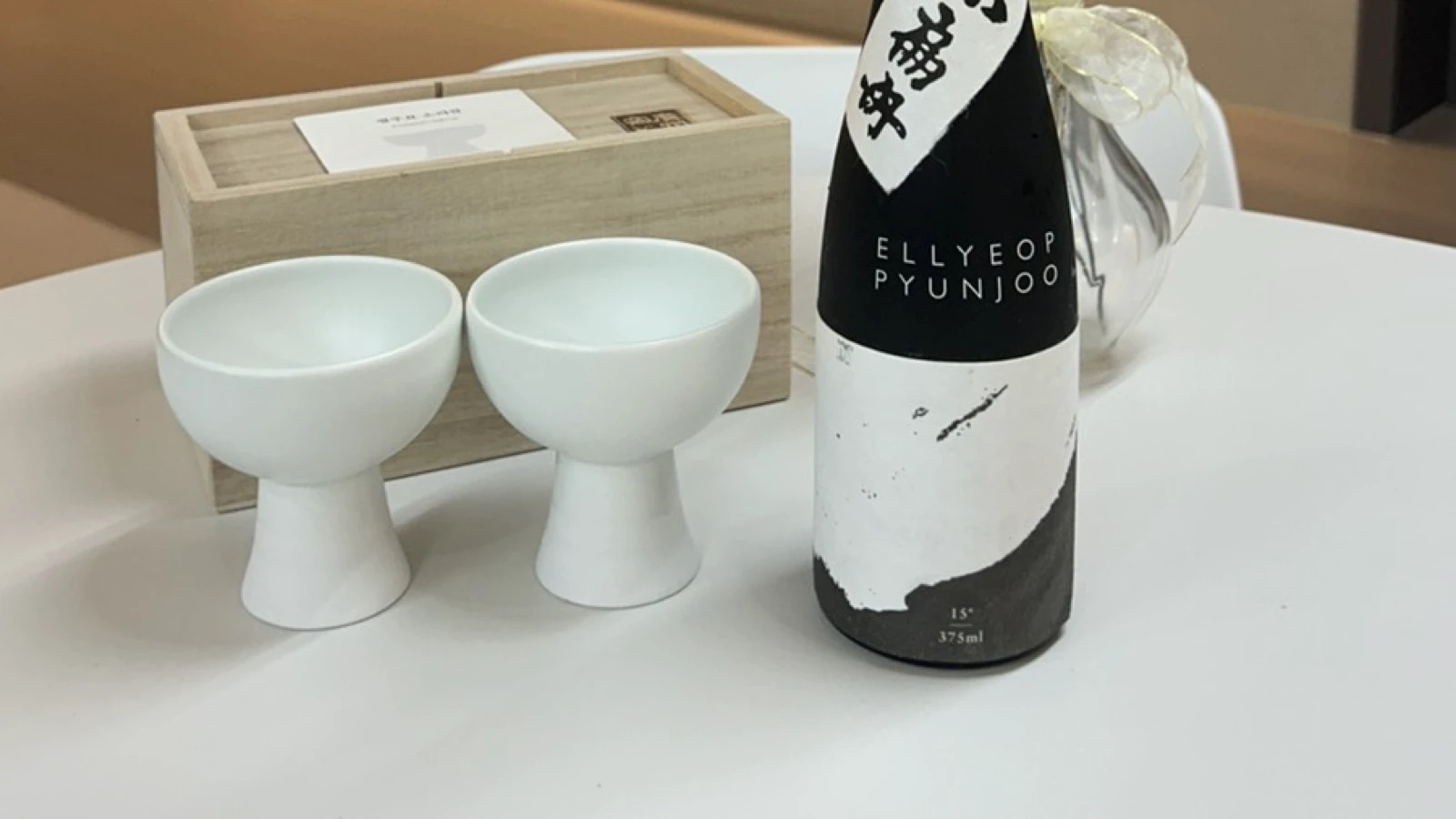
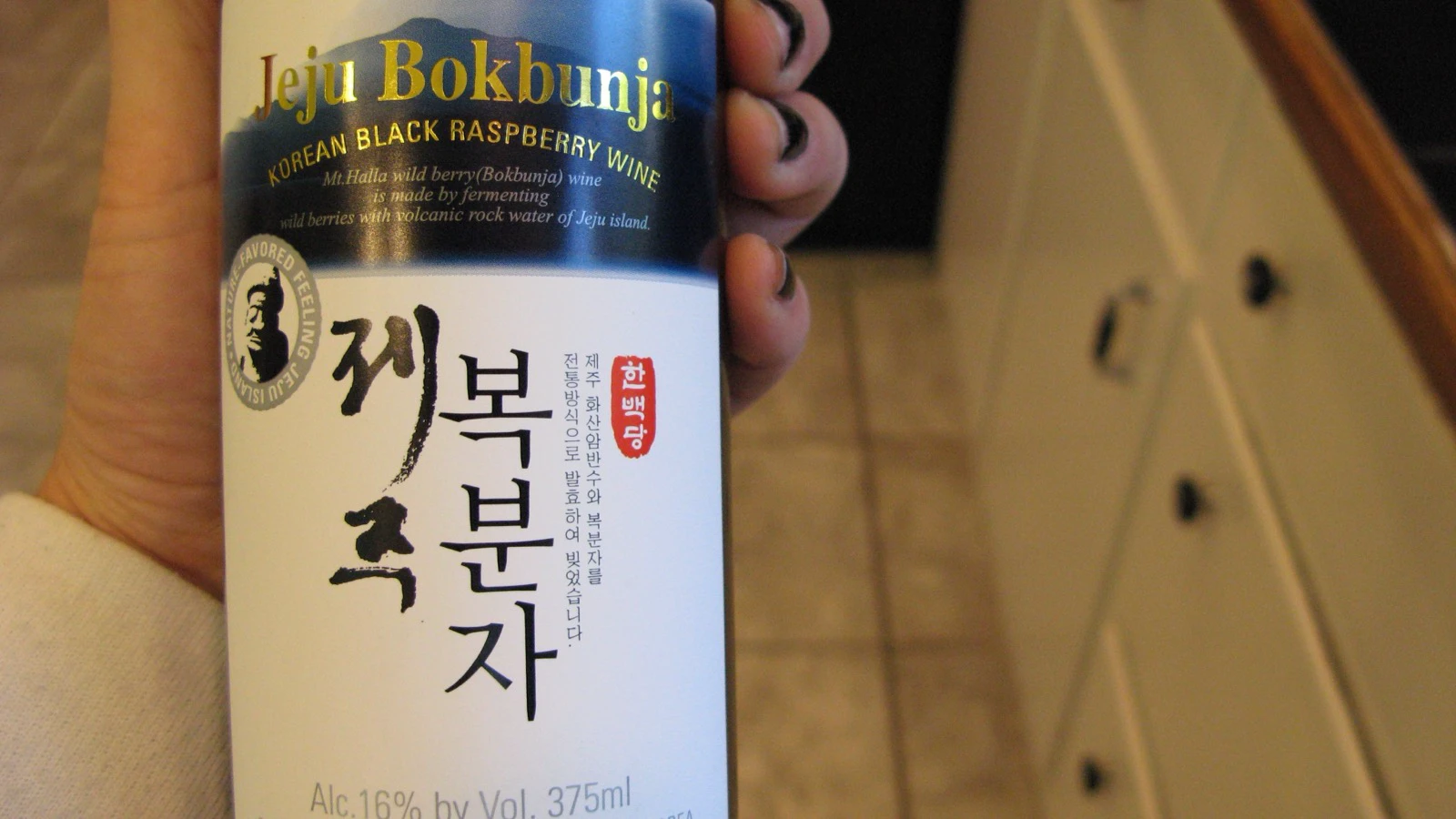
The slides show three real bottles, not universal specifications. The soju and bokbunja labels are older examples, while the yakju is one 15% product; always use the ABV and serving guidance on the bottle you are buying.
Makgeolli: the easiest first sip for many people
Makgeolli is the opaque, coarsely filtered member of Korea's fermented rice-drink family. The official Sool Gallery category guide distinguishes it from the clear liquid separated as yakju. Mainstream bottles often sit around 5–8% ABV, although premium and traditional versions can reach double digits.
Expect rice softness, lactic tang and sometimes carbonation. Sweetness varies enormously. A cold bottle with pajeon is a forgiving first order because the savory, oily pancake balances acidity and fizz, but kimchi-jeon and spicy dishes work for the same reason.
Do not judge it by the low percentage alone. Makgeolli is usually sold in a larger bottle than soju, so a shared bottle can still add up. Keep it cold, follow the label before mixing sediment, and pour slowly if it is lively.
Green-bottle soju: choose it for the table ritual
The common restaurant soju in a green bottle is usually a diluted style in the mid-teens ABV. Exact strength changes by brand, market and reformulation: for example, Chamisul Fresh in Korea changed from 16% to 15.7% in June 2026, while export or older pages and bottles may show a different number. The label you are holding is the final answer.
Its appeal is less about a complex aroma than its clean, mildly sweet profile and the way it sits beside grilled pork, stew or fried food. Order it when you want the recognizable Korean shared-table experience and already tolerate spirits. You may sip it; there is no requirement to empty every glass as a shot or match anyone else's pace.
Do not confuse this with traditional distilled soju. The Sool Gallery's current product listings include distilled bottles at 25% and 41%, so the word soju alone does not predict strength. Ask whether a menu means green-bottle diluted soju or a craft distilled bottle before ordering.
Yakju: the best bridge for wine or sake drinkers
Yakju is the clear or translucent rice liquor separated from fermented mash. It is not medicinal wine despite the syllable yak; in this category name, you should expect a refined fermented rice drink rather than a health product.
Many bottles land around wine strength. Official Sool Gallery tasting lineups include yakju around 12–16%, with descriptions ranging from floral and fruity to acidic, crisp and dry. Serve it in a small glass and taste before choosing the food: a bright dry bottle can suit grilled fish or jeon, while a richer or sweeter one can stand up to bossam or galbi.
Choose yakju when you care more about aroma and a slow sip than carbonation or drinking games. It is also the category most likely to reward asking the server, “Is this dry or sweet?”
Bokbunja-ju: berry fruit wine, not flavored soju
Bokbunja is Korean black raspberry, and bokbunja-ju belongs to the fruit-wine side of Korean alcohol. It is commonly ruby to deep purple, fruit-forward and sweet-tart, often at a low-to-mid-teens ABV. That makes it approachable for someone who dislikes the burn of plain soju, but sweetness does not make it weak.
Treat it like fruit wine: pour a small glass, notice whether the bottle is dry or dessert-like, and pair accordingly. The Sool Gallery has paired bokbunja wine with hamo, while grilled eel and meat are familiar savory matches; a sweeter bottle can work better after the meal with fruit or cheese.
Bokbunja-flavored soju is a different product. If you want fermented berry wine, look for 복분자주 and check the category and ABV rather than relying on a purple label.
How to order one first round
For two or more drinkers, the lowest-risk comparison is one shared bottle with food, not four bottles at once. Choose the category that matches your usual taste, pour a small first serving, and decide whether you actually want a refill.
Useful questions are short:
- 이거 달아요? (Igeo darayo?) — Is this sweet?
- 도수가 몇 도예요? (Dosuga myeot do-yeyo?) — What is the alcohol percentage?
- 드라이한 약주 있어요? (Deuraihan yakju isseoyo?) — Do you have a dry yakju?
- 한 병만 주세요. (Han byeongman juseyo.) — Just one bottle, please.
Travelers on Reddit repeatedly ask whether beginners should choose plain or flavored soju, while another discussion shows the recurring confusion between diluted and traditional distilled soju. Those experiences point to the same practical rule: choose by the exact bottle, not by one English word on a menu.
If your priority is easy and lightly fizzy, order makgeolli. If it is the classic barbecue-table experience, order green-bottle soju. If it is aroma and slow sipping, order yakju. If it is berry fruit and a sweeter finish, order bokbunja-ju. Whichever you choose, eat, alternate with water, stop when you want, and never drive after drinking.
Photo credits
- Korean retail alcohol shelf: Sgroey / Wikimedia Commons, CC BY-SA 4.0; cropped and resized for publication.
- Green-bottle soju and glass: gteddy / Wikimedia Commons, CC0; cropped and resized for publication.
- Ellyeop Pyunju yakju and cups: 이야뿅 (sangah0627) / Naver Blog; used with written operator permission and cropped for publication.
- Bokbunja wine bottle: Christine Zilka / Wikimedia Commons, CC BY 2.0; cropped and resized for publication.
Sources and image credits
- Sool Gallery category guide — Checked for guide details or image attribution.
- changed from 16% to 15.7% in June 2026 — Checked for guide details or image attribution.
- current product listings include distilled bottles at 25% and 41% — Checked for guide details or image attribution.
- Official Sool Gallery tasting lineups — Checked for guide details or image attribution.
- paired bokbunja wine with hamo — Checked for guide details or image attribution.
- Reddit repeatedly ask — Checked for guide details or image attribution.
- Sgroey / Wikimedia Commons — Checked for guide details or image attribution.
- gteddy / Wikimedia Commons — Checked for guide details or image attribution.
- 이야뿅 (sangah0627) / Naver Blog — Checked for guide details or image attribution.
- Christine Zilka / Wikimedia Commons — Checked for guide details or image attribution.
Last updated


