
How to Find Korean Movies with English Subtitles in Korea
Most regular screenings of Korean films in Korea do not include English subtitles, but selected sessions do. Use KOFIC's weekly list, read the language label carefully, and verify the exact showtime before paying.
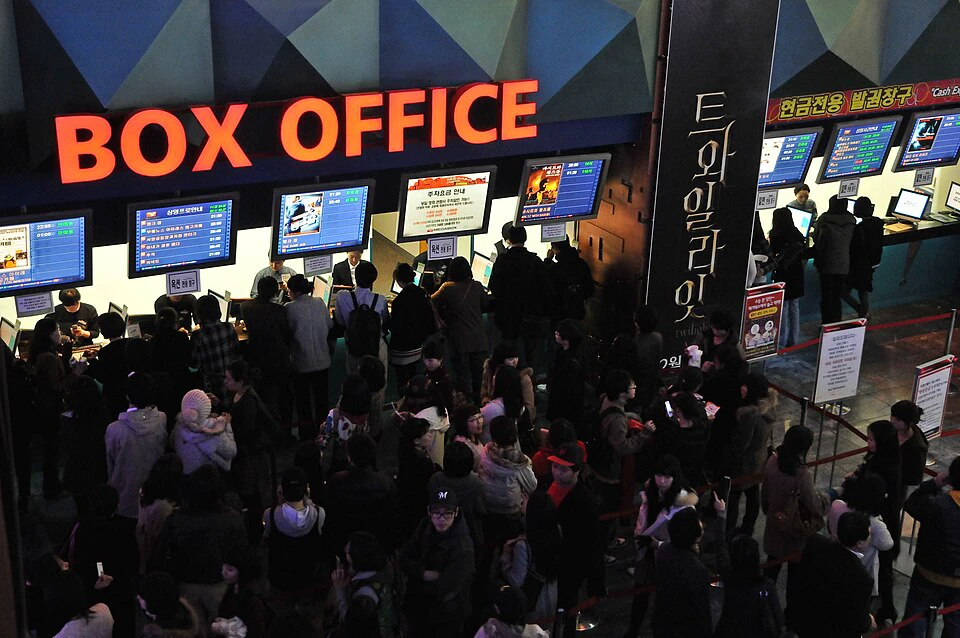
Yes, you can watch a Korean movie with English subtitles in Korea—but only at selected screenings. A normal domestic screening of a Korean-language film usually assumes the audience understands Korean, so English subtitles are not automatic. Choosing a famous multiplex, an international neighborhood, or a popular film does not change that. You need to find a session that explicitly says it has English subtitles.
The fastest reliable starting point is the Korean Film Council's Screenings with Eng. Subtitles page. It publishes a dated weekly list of films and theaters, with a Detail Schedule link for each venue. As of August 10, 2026, the page covers August 10–16 and lists four films across KUCINEMATECH, emu cinema, and Gwangju Independent Film Theater. That small, current list tells you more than an old blog naming a permanent English-subtitle cinema: availability changes by film, week, city, and session.
Use the KOFIC list before searching every cinema chain
Open KOFIC's page three to seven days before the day you want to watch. The Theater view groups films by venue; the Films view shows the week's available titles. Use whichever matches the part of your plan that is fixed. If you care about a particular film, start with Films. If you can travel only within Seoul or another city, start with Theater.
Then follow this order:
- Find the exact film title and confirm the week displayed at the top of the page.
- Click Detail Schedule for the theater. Record the date, time, and auditorium if shown.
- Open the theater's own website, official social account, or booking page and match the same session.
- Look again for an English-subtitle label before choosing the seat.
- If the language is still unclear, ask the theater before paying.
KOFIC is a discovery list, not a promise that every screening of the named film has English subtitles. A theater may show the same film in more than one version. The exact time is the unit you are buying. Take a screenshot of the KOFIC detail and the final booking screen, but keep the live listing bookmarked in case the schedule changes.
The practical Korean question is: 이 상영은 영어 자막이 나오나요? (Does this screening have English subtitles?) A shorter version is 영어 자막 상영 맞나요? (Is this the English-subtitled screening?) Show the staff the movie title, date, and time on your phone; asking only whether the theater has English subtitles is too broad.
Read the label, not the cinema logo
Several Korean words look reassuring on a booking screen but mean different things:
- 영어자막 or 영문자막 means English subtitles. This is the label you want for a Korean-language film.
- 한글자막 or 한글자막(CC) means Korean captions, not English. The Korean Association of the Deaf explains that 한글자막(CC) includes the speaker's name and sound information in Korean.
- 자막 by itself simply means subtitles. On an imported film, it usually distinguishes the original-audio subtitled version from a Korean-dubbed version; it does not prove the subtitles are English.
- 더빙 means dubbed audio. For a foreign film, that normally means Korean dubbing.
- 무자막 means no subtitles.
This creates a common trap. An English-language Hollywood film labeled 자막 is often easy for an English speaker because the dialogue remains in English and Korean subtitles appear on screen. A Korean film labeled 자막 or 한글자막 may still be entirely inaccessible if you do not understand Korean. Check the subtitle language, not merely the presence of the word subtitle.
Film festivals use their own compact language codes. A festival session may include English subtitles even when the same film's ordinary theatrical run does not, but never transfer the subtitle information from one event or date to another. Read the legend attached to that festival's current schedule.
What a Korean cinema visit looks like
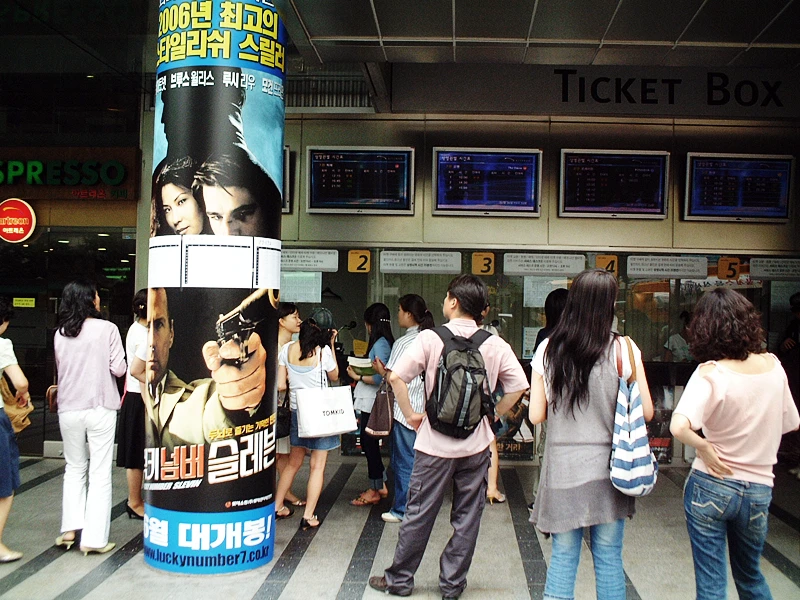
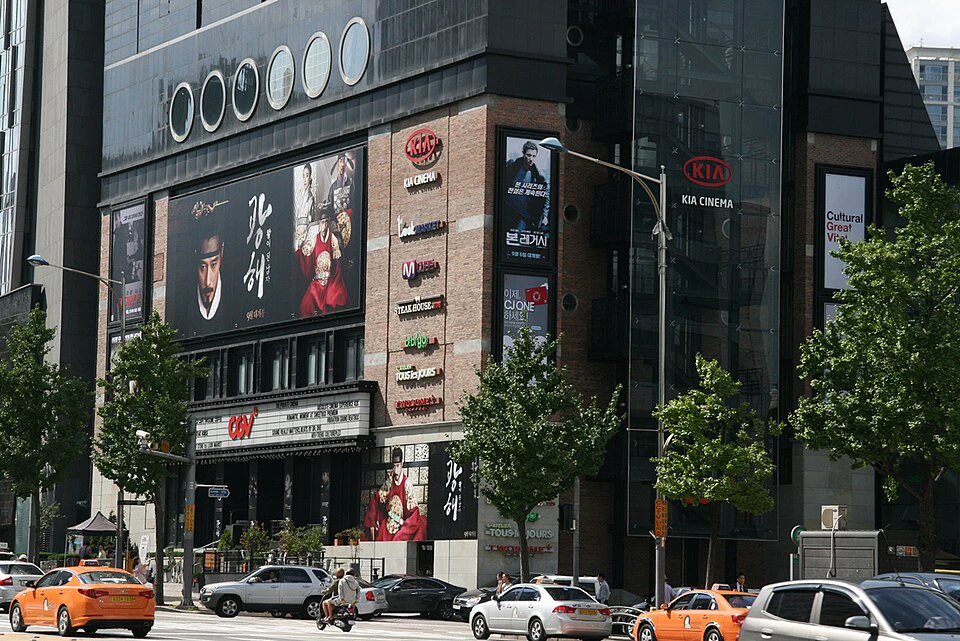
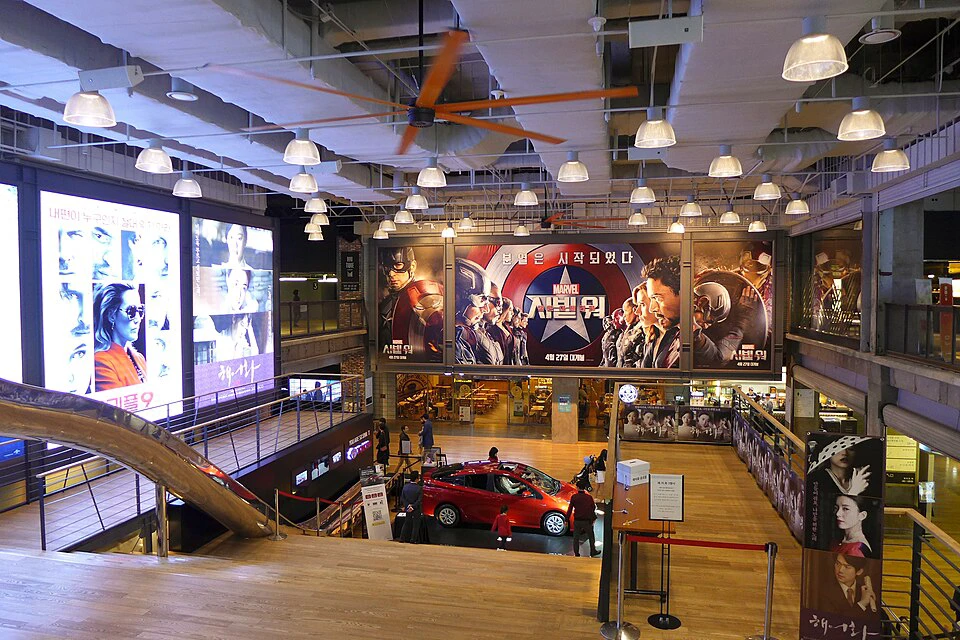
These archival photos show a traditional ticket counter, a large multiplex exterior, and a cinema lobby. They are orientation images only. They do not identify the pictured branches as current English-subtitle providers. KOFIC's live week and the exact booking session are the evidence that matters.
The large chains—CGV, Lotte Cinema, and Megabox—dominate Korea's commercial cinema landscape, but that does not mean every branch carries an English-subtitled Korean film. KOFIC's August 10–16 list is concentrated in independent theaters rather than a broad chain rollout. Recent traveler discussions repeat the same pattern: people often find a specific session through KOFIC's page after generic searches for CGV or Lotte produce no clear answer. Reddit is useful for discovering a lead, but the official weekly listing should settle the language question.
Independent cinemas may be the only place carrying the version you need, and they often screen new independent Korean films, restored works, or festival titles that multiplexes do not keep. The tradeoff is that the booking interface may be Korean-only and the screening may run once or twice. Give yourself a wider travel radius and keep one backup film.
The new K-Cinema app is promising, but verify what is live
A newer option appeared in 2026. K-Cinema describes a multilingual booking service for Korean films with English, Chinese, Vietnamese, Thai, and Korean subtitle options. Its website promotes subtitled screenings at roughly 40 CGV, Lotte Cinema, and Megabox locations, and its official download page links to both iOS and Android apps.
However, the current Apple App Store listing describes the expansion to about 40 partner cinemas as planned and labels example language-based schedules as coming soon. The app itself exists, but the marketing pages mix available booking features with rollout plans. Do not book a hotel near a claimed partner location or travel across the city based only on the network total. Open the app, choose English, and proceed only when it displays a specific film, theater, date, time, available seats, and English-subtitle session.
That standard protects you from a broader misunderstanding: an app can translate its menus without adding subtitles to the movie. K-Cinema separately describes booking-screen translation and multilingual movie subtitles, so verify that the showtime is in the latter category. A translated seat-selection screen is not proof that the film itself has English subtitles.
A booking screen checklist
Before payment, make sure all six items agree:
- Title: use the Korean title as well as the English title; translations can differ.
- Date: KOFIC's week must include your actual cinema date.
- Time: match the exact session, not another screening of the same film that day.
- Theater: confirm the branch name and city, especially when chains have similar branch names.
- Language: look for 영어자막, 영문자막, or an explicit English-subtitle statement.
- Version: check 2D, premium format, accessibility caption, dubbed, or festival labels rather than assuming all versions share subtitles.
If the official theater page omits the language even though KOFIC lists the screening, contact the theater. Paste this message with the details filled in:
[영화 제목] [날짜] [시간] 상영은 한국어 대사에 영어 자막이 나오는 상영인가요?
It means: For the [title] screening on [date] at [time], is the Korean dialogue shown with English subtitles? A written reply is easier to revisit than a vague phone conversation. Do not ask staff to infer your session from the title alone.
At the venue, arrive 20 to 30 minutes early if you must collect a ticket or navigate a Korean-only kiosk. Keep the booking number and payment card available. Before entering, compare the auditorium and time on the ticket against your screenshot. If staff tell you the subtitle version has changed, resolve it before the trailers start; the difference may not be obvious once you are seated.
If nothing appears for your dates
A blank result does not mean you searched incorrectly. English-subtitled Korean screenings can genuinely be scarce, especially outside Seoul, during a quiet release week, or after a film's opening run. Widen the date range if your trip allows, check KOFIC again after its weekly update, and look at independent cinemas and current festivals. Do not rely on a years-old list of branches: the film and session are more stable search keys than the venue name.
You can also reverse the plan. Instead of choosing a blockbuster first, choose from the films currently listed with English subtitles. KOFIC's Films view gives the week's title set, which is often the simplest route for a flexible movie fan. Read the synopsis, pick the most interesting option, then build that evening around the available theater.
If no suitable theatrical session exists, wait for a legal streaming or home-video release that explicitly includes English subtitles. A machine-translation app listening during the movie is not a reliable substitute and may disturb other viewers; filming the screen or recording the soundtrack can also violate cinema rules and copyright law.
Use three checks every time: Korean film + exact session + explicit English-subtitle label. A theater's brand, an English booking interface, or the generic word 자막 cannot replace them.
Sources and image credits
- Korean Film Council Screenings with Eng. Subtitles — Dated weekly discovery list, theater and film views, and detail schedules; August 10–16, 2026 example checked.
- Korean Association of the Deaf caption guide — Meaning of 한글자막(CC), including Korean speaker names and sound information.
- Reddit discussion on English-subtitled theaters — Anecdotal example of travelers finding an exact session through KOFIC; not a live schedule.
- K-Cinema — Multilingual booking and subtitle-service claims that still require exact-session verification.
- K-Cinema Apple App Store listing — Current app description distinguishing live features from planned partner-cinema and language-schedule expansion.
- KOFIC Films view — Current week's title-first discovery option.
- Doo Ho Kim, Megabox Cineplex Seoul — Featured box-office image.
- CC BY-SA 2.0 — License for the featured box-office and Sinchon ticket-box images.
- d'n'c, Sinchon movie-theater ticket box — Ticket-counter slider image.
- CC BY-SA 2.0 — License for the Sinchon ticket-box image.
- Michaela den, CGV Cheongdam Cine City — Multiplex-exterior slider image.
- CC BY-SA 3.0 — License for the CGV exterior image.
- Wpcpey, COEX Mall Megabox lobby — Cinema-lobby slider image.
- CC BY-SA 4.0 — License for the COEX lobby image.
- Delivery Spot featured image file — Megabox box-office image used as the cover.
Last updated


