
Do You Need a 10-Step Korean Skincare Routine?
No. Build a practical routine around gentle cleansing, moisturizer, and daytime sunscreen, then add one product only when it has a clear purpose.
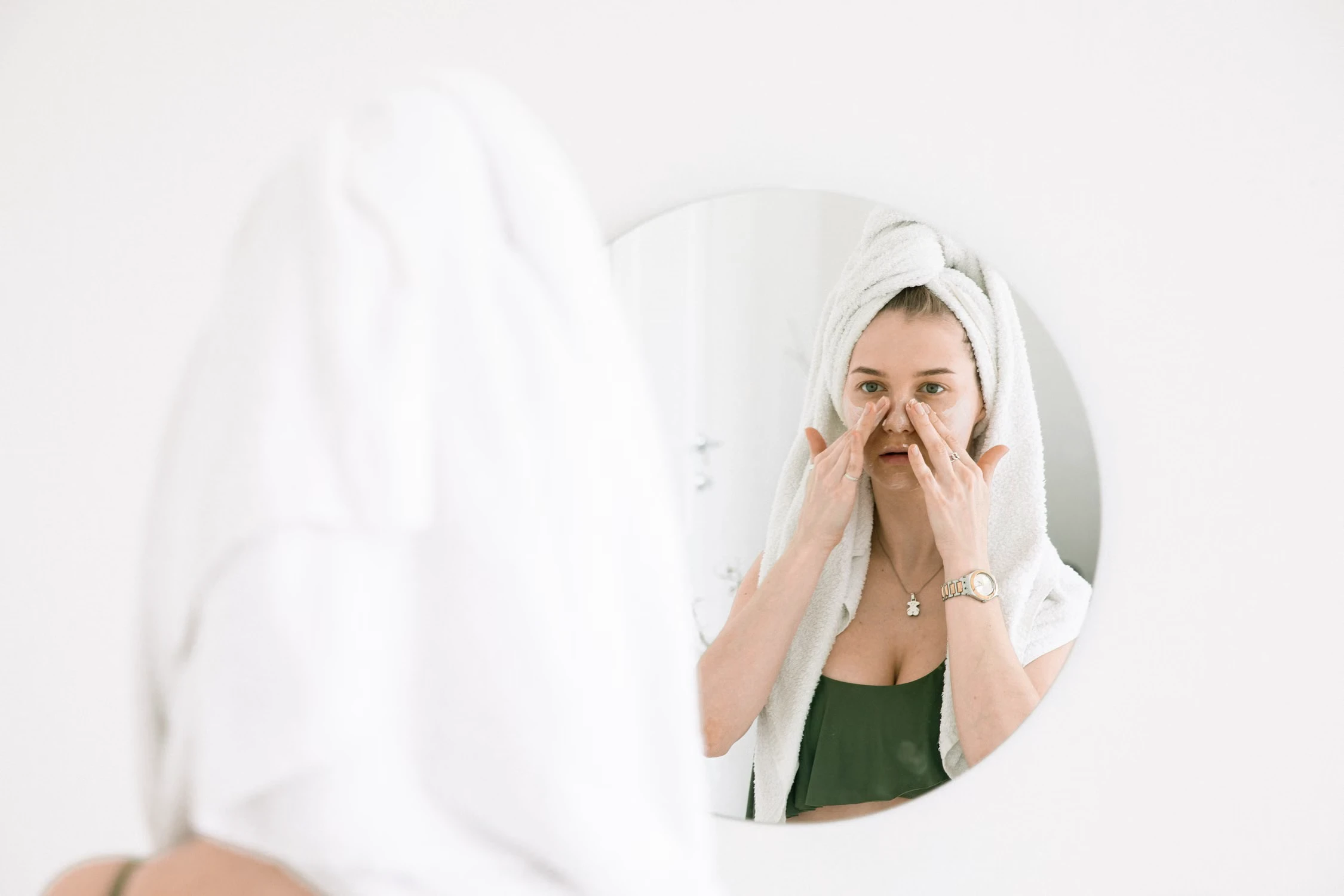
No—you do not need ten products, ten layers, or ten fixed steps to have an effective Korean skincare routine. For most people, the useful base is much shorter: cleanse gently, moisturize as needed, and protect exposed skin from the sun. Add something else only when it has a clear job and your skin tolerates it.
The familiar “10-step routine” is best read as a menu of product categories, not a medical standard and not a rule followed by everyone in Korea. Toner, essence, ampoule, serum, sheet mask, eye cream, exfoliant, and two separate cleansers can all be optional. More steps can mean more cost, more time, and more chances for irritation without guaranteeing better skin.
Reduce the shelf to three jobs
- Clean without over-stripping. Remove dirt, sweat, makeup, and the day’s sunscreen without leaving skin tight, hot, or sore. The American Academy of Dermatology (AAD) recommends a gentle cleanser and advises limiting face washing to twice daily and after sweating.
- Hold water in the skin. A comfortable moisturizer helps reduce water loss. Choose the texture by how your skin actually feels: a lotion or gel may suit humid weather or oilier skin; a cream or ointment may suit dry skin or cold weather.
- Protect from ultraviolet exposure. During the day, use broad-spectrum, water-resistant sunscreen with SPF 30 or higher on exposed skin, together with shade and protective clothing when practical. Follow the label for amount and reapplication.

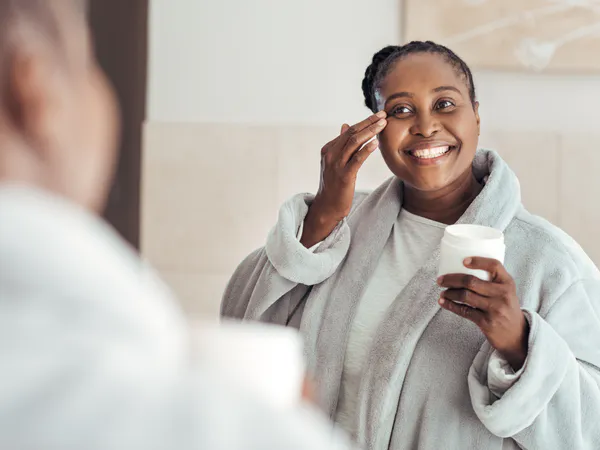

These jobs matter more than the number printed in a routine graphic. The AAD’s simple three-step framework likewise centers on cleansing, moisturizing, and sun protection. It also notes that several different products can irritate skin as well as strain a budget.
A routine you can actually repeat
Morning
- Rinse with water or use a gentle cleanser if you wake up oily, sweaty, or with product residue. A morning cleanse is not a competition for the longest foam time.
- Use moisturizer if your skin feels more comfortable with it. If a moisturizing sunscreen is enough for you, a separate cream is not compulsory.
- Finish with broad-spectrum, water-resistant SPF 30+ sunscreen when exposed to daylight. Apply it to uncovered skin and reapply according to the label, especially after swimming, sweating, or towel drying.
Evening
- Remove makeup and sunscreen. An oil cleanser or balm can help with heavy makeup or water-resistant sunscreen, but “double cleansing” is not automatically better for every face. If one gentle cleanser removes the day without residue or tightness, a second wash may only add irritation.
- Apply moisturizer while the skin is still slightly damp if that feels comfortable.
If you use a prescription or over-the-counter treatment, follow its own directions or your clinician’s instructions. General layering rules do not override a medicine label. The AAD’s product-order guidance gives the broad sequence as cleansing, treatment, then moisturizer and/or sunscreen, followed by makeup.
Decide whether an optional step has earned a place
A toner or essence may add light hydration. A serum or ampoule may deliver a targeted ingredient. A sheet mask can be an occasional comfort ritual. Eye cream may offer a texture you prefer, but it is not automatically necessary if a suitable facial moisturizer works around your eye area.
Exfoliants, retinoids, acne treatments, and products for pigmentation deserve more caution. They are active choices, not decorative steps. Choose one concern and one appropriate product rather than stacking multiple acids, retinoids, pads, and “brightening” serums. Follow the label, and do not treat burning, swelling, or persistent stinging as evidence that skincare is working.
The AAD cautions that too many products—especially more than one anti-aging product—may irritate skin. DermNet’s cleanser overview similarly notes that combining an acne cleanser with a leave-on acne treatment can cause excessive dryness and irritation. “Gentle” and “active” are properties of the whole routine, not just the marketing word on one bottle.
Add one new product, then keep the rest still
Start with the shortest routine your skin already tolerates. Add only one product at a time and record the date. This is not because every new cosmetic is dangerous; it is because a clean trial lets you tell whether the product helped, did nothing, or caused a problem.
Before broad use, follow a small-area test that matches the product directions. The AAD’s at-home testing guide recommends a quarter-sized test area on the underside of the arm or bend of the elbow, using the normal amount twice daily for seven to ten days. A rinse-off product should stay on only for its directed time. Wash it off and stop if redness, itching, or swelling appears.
Passing a home test reduces uncertainty; it does not guarantee that every part of the face will tolerate the product or predict clogged pores. Introduce the product on its own and watch what happens. Recurrent reactions, a severe rash, or uncertainty about an ingredient may require a dermatologist and medical patch testing rather than more home experiments.
Beginner discussions repeatedly show why this pace matters. In one Korean skincare discussion and another Korean beauty discussion, users describe concerns about cost, complexity, sensitivity, and not knowing which purchase caused a change. Those posts are experience signals, not medical evidence; the practical lesson is to avoid changing five variables at once.
Use symptoms—not a step count—to edit the routine
Skin feels comfortable and stable: keep the routine. You do not need to add a product because a diagram has an empty slot.
Tight, flaky, or sore after cleansing: shorten or simplify cleansing, use lukewarm rather than hot water, and consider a more protective moisturizer. Pause the newest optional product while irritation settles.
Sticky, pilling, or makeup sliding: remove a redundant hydrating layer or choose a lighter texture. Pilling is often a compatibility or application problem, not proof that you need another product.
Oily and tight at the same time: do not automatically wash more aggressively. Over-cleansing can add irritation. Try fewer layers and one gentle cleanse before buying a stronger foam.
Persistent painful acne, recurrent rash, facial swelling, or worsening symptoms: stop shopping for a routine fix and seek qualified medical care. A guide cannot diagnose acne, eczema, rosacea, or contact dermatitis, and a longer K-beauty routine cannot replace treatment.
The best routine is not the one with the most Korean product names. It is the shortest routine you can repeat comfortably, with sunscreen you will actually use and optional products that each answer a real need.
Information and links were checked on August 12, 2026.
Sources and image credits
- American Academy of Dermatology: Skin care on a budget — Three-step cleansing, moisturizing, and sun-protection framework; rechecked August 12, 2026.
- American Academy of Dermatology: Product application order — General order for cleansing, treatment, moisturizer or sunscreen, and makeup.
- American Academy of Dermatology: How to test skin care products — Small-area test method, duration, and reaction signs.
- DermNet: Soaps and cleansers — Cleanser types and the irritation risk of overlapping acne products.
- KATRIN BOLOVTSOVA via Pexels: featured image — Credit for the published cover image.
- Miriam Alonso via Pexels: cleansing image — Credit for the first slider image.
- Engoo Daily News: moisturizer image — Source credit for the second slider image.
- Kindel Media via Pexels: sunscreen image — Credit for the third slider image.
- U.S. FDA: Sunscreen—how to help protect your skin from the sun — Official label-based application and reapplication context.
- Published cover image asset — Delivery Spot cover file credited to KATRIN BOLOVTSOVA above.
Last updated


