
Do Koreans Ask Your Age When You First Meet? The Context Matters
Age may come up to settle speech levels in an ongoing social group, but it is not required. Start polite, protect privacy and change only by agreement.
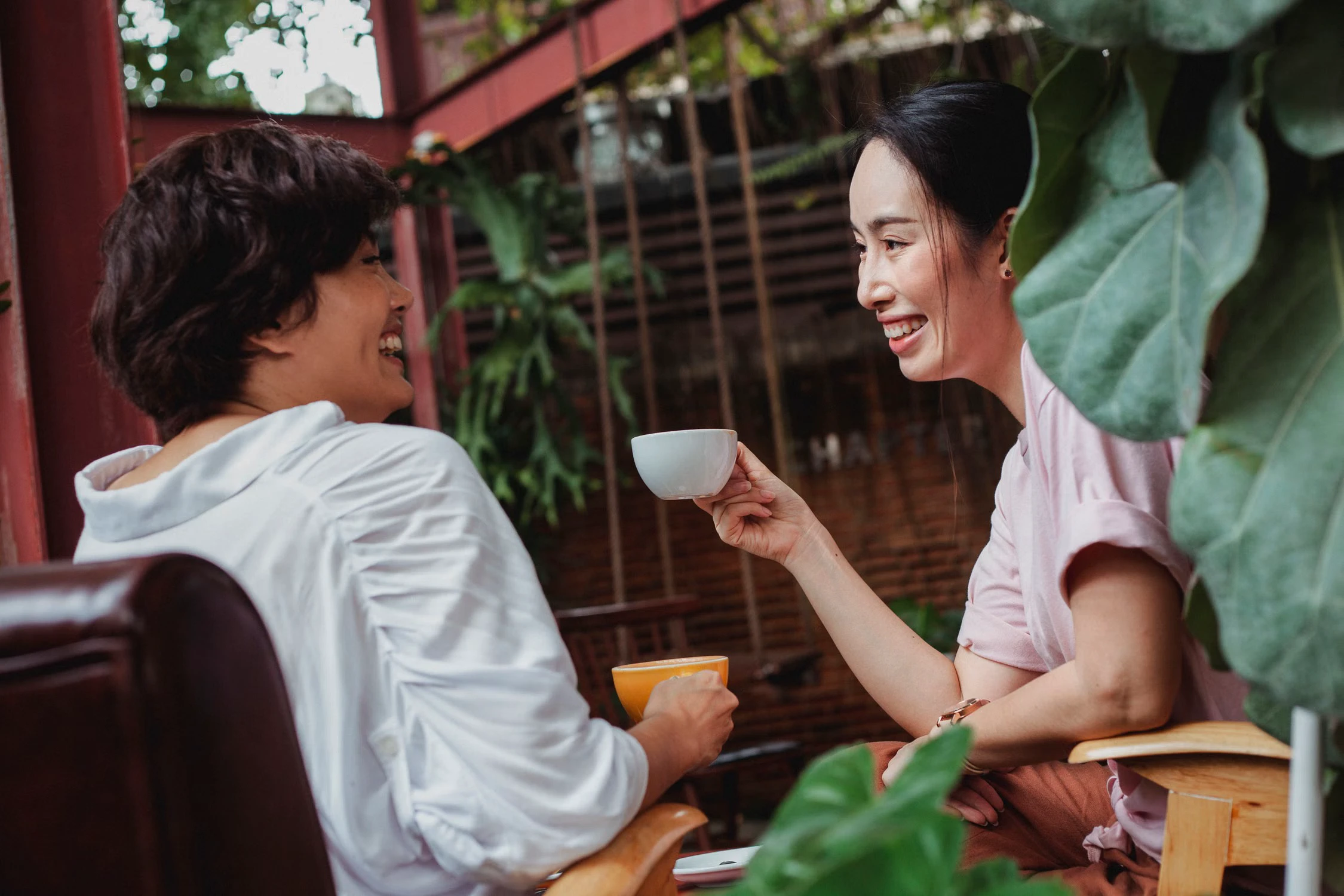
Yes, age or birth year can come up early when Korean adults expect to keep meeting and need to settle forms of address. It is not a required first-meeting question, and it is much less useful in a service encounter, international group or clearly professional relationship. Until the relationship is clear, polite Korean works without knowing anyone's number.
The practical rule for a visitor is simple: start with 존댓말 (jondaetmal) and -요 (-yo) endings. Knowing that someone is younger does not give automatic permission to use 반말 (banmal).
The question solves a language choice, not a guessing game
Korean speakers choose sentence endings, titles and relationship words according to more than age. Role, intimacy, workplace rank, setting and the other person's preference all matter. Age or birth year can help a new social group identify same-age peers and decide whether words such as oppa, eonni, hyung or noona could eventually fit.
That is why the question often means “How should we speak to each other?” rather than “How old do you look?” Its practical purpose does not cancel privacy. You may answer, give a broad range, or keep the number private.
A 2026 National Institute of Korean Language online answer is often misread as a rule about age. It actually discusses forms with 님 (nim) and says honorific etiquette cannot be decided from dictionary meaning alone; the speakers' relationship, language habits and context must be considered. It supports the wider point that address is contextual, not a direct rule for asking ages.
Where age is more likely to come up
The question is more likely in a group that expects an ongoing peer relationship:
- a university club, hobby group or introduction through friends
- a dinner or drinking group whose members seem close in age
- a date or social introduction where both people are defining the relationship
- an informal team without clear titles
Instead of 몇 살이에요? (Myeot sar-ieyo?, “How old are you?”), an adult may ask 몇 년생이에요? (Myeot nyeonsaeng-ieyo?, “What year were you born?”). Birth year avoids ambiguity about whether a person is giving international age or using an older counting habit, and it quickly shows whether two adults are same-year peers.
The Korea Herald cultural explainer, published in 2022, describes both the familiar pattern and a generational shift: asking early remains recognizable, but younger adults are less likely to make it automatic. Treat it as reported social context, not a rule for every Korean or every meeting.
Where nobody needs the number
In a shop, restaurant, tour or brief encounter, polite speech already solves the interaction. Coworkers can use job titles or a name plus an agreed form. A multilingual group may simply stay in polite Korean or English. When the professional role is clear, rank and responsibility can matter more than birth year.
Some people also keep age private because it can trigger unwanted comments about appearance, marriage, career or seniority. A culturally familiar question can still feel intrusive in a particular relationship.
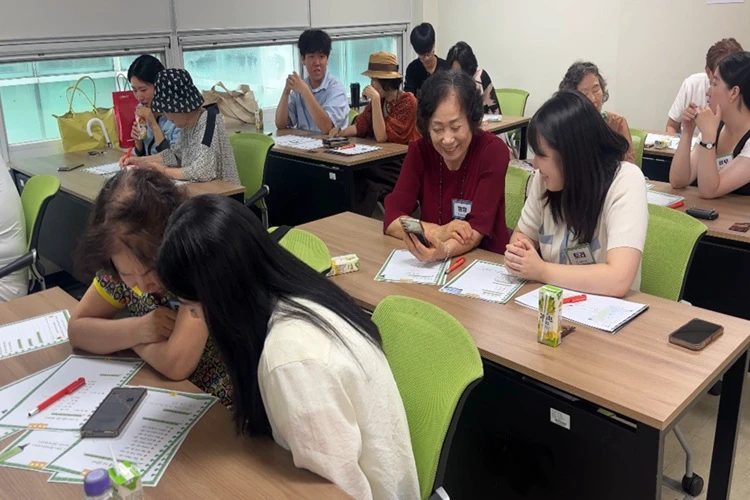
The image comes from a Seoul Metropolitan Government club-program page. It identifies the event and photo context; it does not prove what the participants asked one another.
A Reddit discussion about Korean age-question etiquette shows varied individual experiences. Some commenters found the question routine, while others rarely heard it in English-speaking workplaces. Use it as anecdotal range, never as current etiquette authority.
Why dramas make one year look decisive
A drama has minutes to define a relationship. One birth-year line can identify who is older, set up a speech-level change and justify a kinship-style term. It is efficient storytelling.
Real relationships are less tidy. Two adults can know each other's birth years and remain in jondaetmal for weeks. Same-age adults do not become instant friends. A younger manager may still outrank an older employee, and a workplace can keep titles regardless of age.
For the relationship terms themselves, read Oppa, Noona, Hyung and Sunbae: What They Actually Signal.

The café photos are by Sam Lion on Pexels. A relaxed conversation does not reveal whether the speakers shared exact ages or needed to.
Age does not grant banmal
This is the most important correction. If a new acquaintance says they are younger, do not immediately remove polite endings or call them 너 (neo, “you”). A sudden switch can sound dismissive. Stay polite until the relationship changes by mutual agreement.
Useful lines are:
- 말 놓을까요? Mal noeulkkayo? — Shall we speak casually?
- 편하게 말씀하세요. Pyeonhage malsseumhaseyo. — Please speak comfortably.
- 저는 존댓말이 더 편해요. Jeoneun jondaetmari deo pyeonhaeyo. — I am more comfortable with polite speech.
The second line can be ambiguous: “comfortably” may mean the other person may relax, not that both sides have automatically agreed to banmal. When it matters, confirm what each person prefers.
A BBC Travel feature on age and Korean speech, published in 2021, similarly emphasizes age together with status, intimacy and public versus private setting. It is useful explanatory reporting, not a current government rule.
The 2023 legal-age reform did not rewrite social speech
Since June 28, 2023, international age is the general standard in Korean civil and administrative law. The Ministry of Government Legislation's official age-standardization page explains calculation from the date of birth rather than adding a year every January.
That reform standardized legal and administrative calculations. It did not order friends to stop asking birth year, nor did it decide when banmal is appropriate. Some laws still use a year-based threshold for specific purposes. In ordinary conversation, giving a birth year remains a convenient way to avoid calculation ambiguity; a visitor does not need to work out the former “Korean age.”
Four ways to answer without making it awkward
- Answer directly: Give your birth year or international age if comfortable.
- Give a range: “I'm in my early thirties” may be enough outside a close peer group.
- State a boundary: “I keep my exact age private, but I'm happy to keep speaking politely.”
- Clarify the purpose: “Are you asking so we know how to address each other?”
If you need to ask, first decide whether the information changes anything. 실례지만 몇 년생이세요? (Sillyejiman myeot nyeonsaeng-iseyo?, “Excuse me, may I ask what year you were born?”) is softer than a blunt question, but no one is obliged to answer. Do not follow the reply with comments about how young or old the person looks.
For most short visits, you can skip the calculation entirely. Use polite endings, follow the title or name form the person offers, and wait for an explicit suggestion before changing speech level. Korean politeness has a safe default, and it works at every age.
Sources and image credits
- National Institute of Korean Language online answer — contextual nature of honorific address; the answer concerns nim, not age-question rules; rechecked August 12, 2026.
- Korea Herald age-question explainer — 2022 reported cultural context and generational variation.
- Seoul workshop image asset — Delivery Spot crop from the credited Seoul Metropolitan Government material.
- Seoul Metropolitan Government club-program page — event and image-source context; rechecked August 12, 2026.
- r/korea age-question discussion — individual experiences only, not etiquette authority.
- First café image asset — Delivery Spot crop from the credited Pexels photo.
- Second café image asset — Delivery Spot crop from the credited Pexels photo.
- Sam Lion café photo on Pexels — original source for the two café crops.
- BBC Travel feature on age and Korean speech — 2021 explanatory reporting; not a government standard.
- Ministry of Government Legislation age-standardization page — official legal and administrative age framework; rechecked August 12, 2026.
- Cover image asset — two women talking over coffee; Delivery Spot crop from the credited Pexels image set.
Last updated


