
Do Korean Apartment Brands Signal Social Status?
Apartment names such as Raemian, Xi and Hillstate can carry status in Korea, but the logo usually bundles location, age, scale and amenities rather than replacing them.
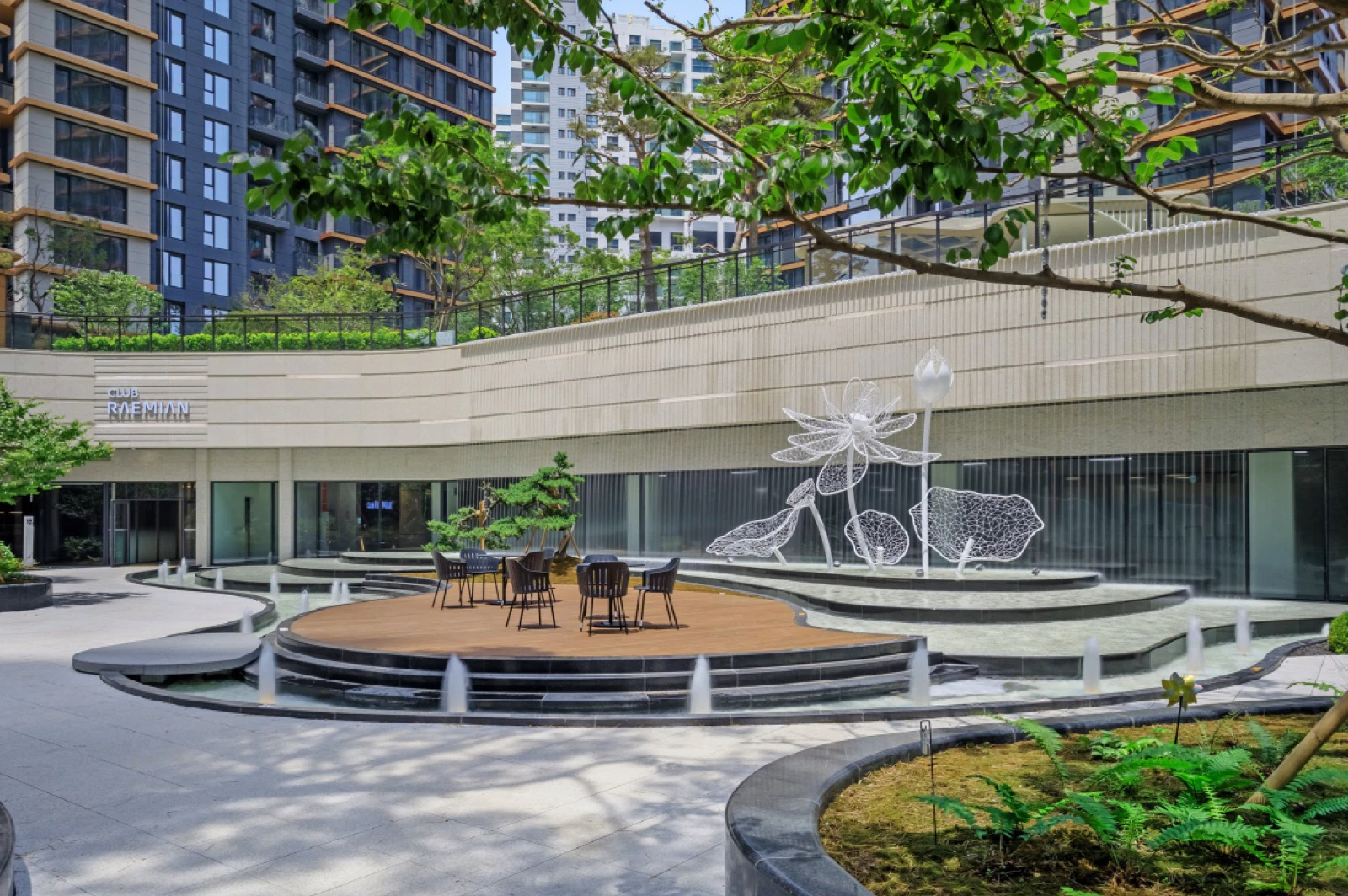
Yes—an apartment brand can work as a quick social signal in Korea. But it is closer to a label on a whole housing package than a car badge with a fixed rank. The same brand can cover complexes with very different addresses, ages, school access, maintenance records and recent sale prices.
First, what does the name on the tower mean?
Names such as Raemian, Xi, Hillstate and Prugio are residential brands used by construction companies. They do not mean that Samsung, GS, Hyundai or Daewoo employees live in the building. That basic point still confuses some newcomers, as a Reddit discussion about corporate names on Korean high-rises shows.
The brand can tell you who developed or built the complex and what product family it was marketed under. In everyday conversation, it may also compress several assumptions: a recognizable builder, a larger compound, newer shared facilities, a managed landscape, parking, security and a more polished entrance. Those assumptions need checking, but they explain why a name can feel more meaningful than a logo alone.
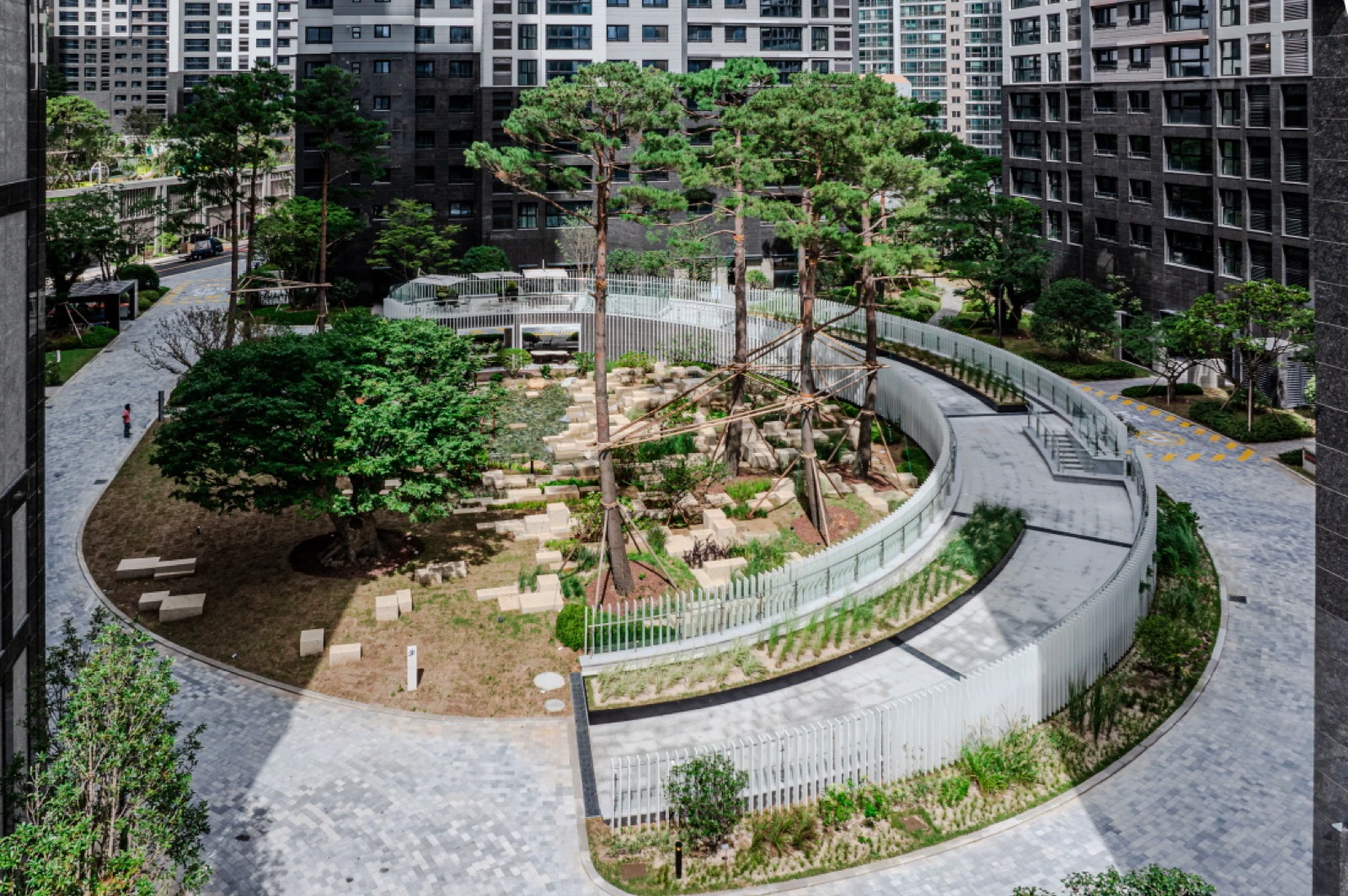
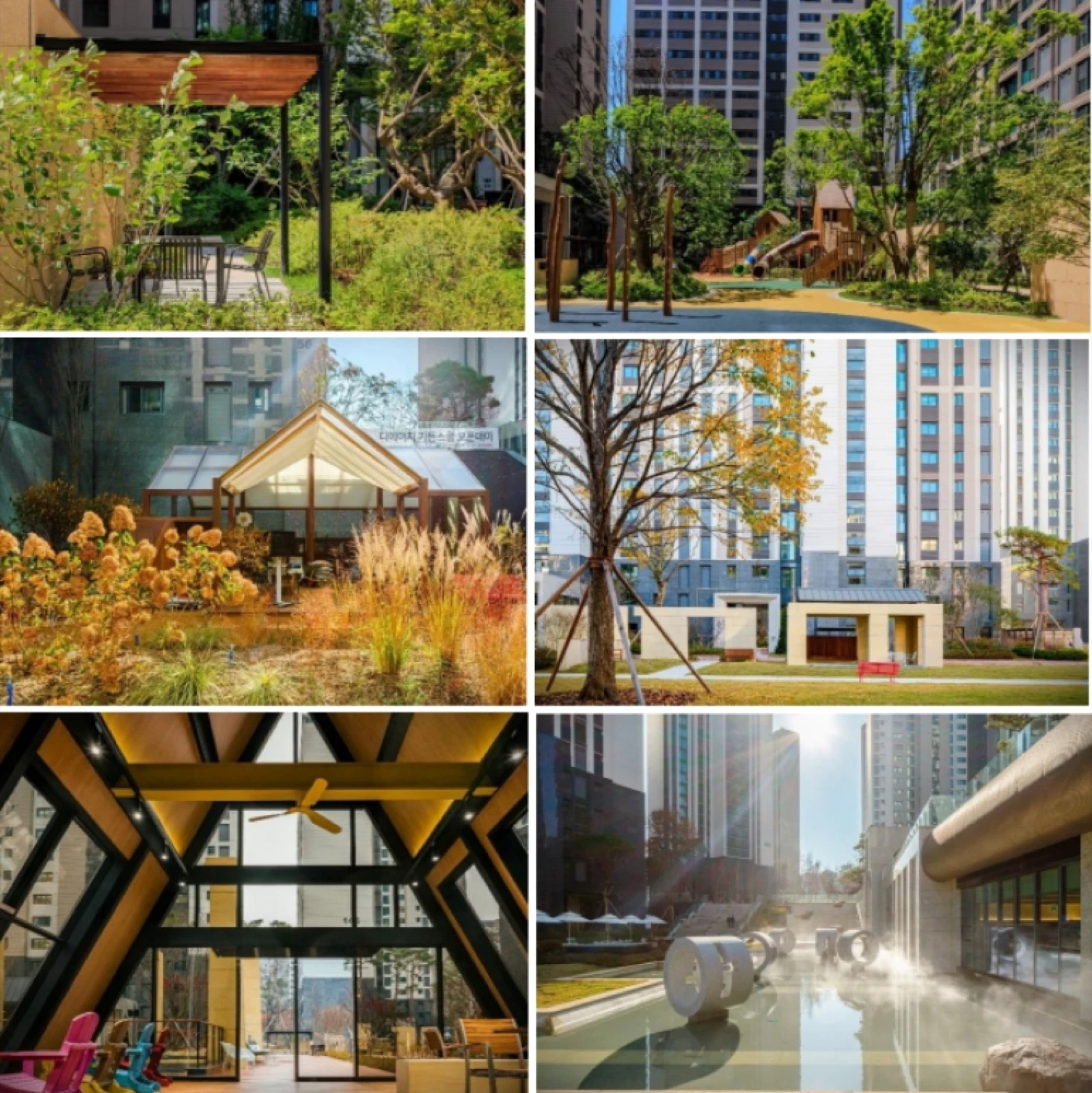
These two official project views show what brand marketing often bundles together: towers, gardens, paths, play areas and shared spaces. They are examples of design investment, not a ranking of the two brands or proof that every complex has the same standard.
There is a measurable premium, but it is not a universal markup
A 2025 study in the Journal of the Korean Regional Science Association used Seoul metropolitan apartment transactions from June 2024 through May 2025 with an XGBoost and SHAP model. It estimated an average 3.8% positive contribution for branded apartments, while non-branded apartments showed a 2.1% negative contribution—a relative gap of more than five percentage points in that model. The authors also found that the estimated brand effect tended to be stronger for newer and larger complexes. Read the study and its methodology.
Those numbers are not a promise that adding a famous name raises any home by 3.8%. The study measures associations within one region, period and model after accounting for other variables. It does not turn every branded complex into a better purchase, and it should not be used as a shortcut around a building-level comparison.
One especially useful finding is that the estimated premium was stronger in parts of northern Seoul and some Gyeonggi areas than in Gangnam. That is plausible because a Gangnam address already carries a powerful location signal; elsewhere, a major brand may provide more extra information about the development. This is an interpretation of the pattern, not a rule for predicting the next sale.
Address, school access and age often speak louder
If two listings have different brands, compare the address before the logo. Walking time to a useful subway line, the slope between the gate and station, nearby daily shopping, noise exposure and redevelopment around the block can outweigh a brand difference. Within one complex, unit size, floor, direction, view and renovation condition can move the price and the lived experience substantially.
School reputation adds another layer to an address image, especially for family buyers. A branded complex may advertise nearby schools, but the brand itself does not assign a child to one. Confirm the current assignment for the exact address with the relevant education authority; after that, Korea's official Schoolinfo portal is a useful place to compare disclosed information about the schools you have verified. Do not treat a real-estate listing's phrase "good school district" as the final check.
Age is just as important. A ten-year-old premium-brand complex can have generous grounds and mature trees but also approaching repair cycles. A newer, lesser-known complex may offer better insulation, parking ratios or unit layouts. Conversely, a very new project can still have small rooms or an inconvenient location. Completion year is a starting point, not a verdict.
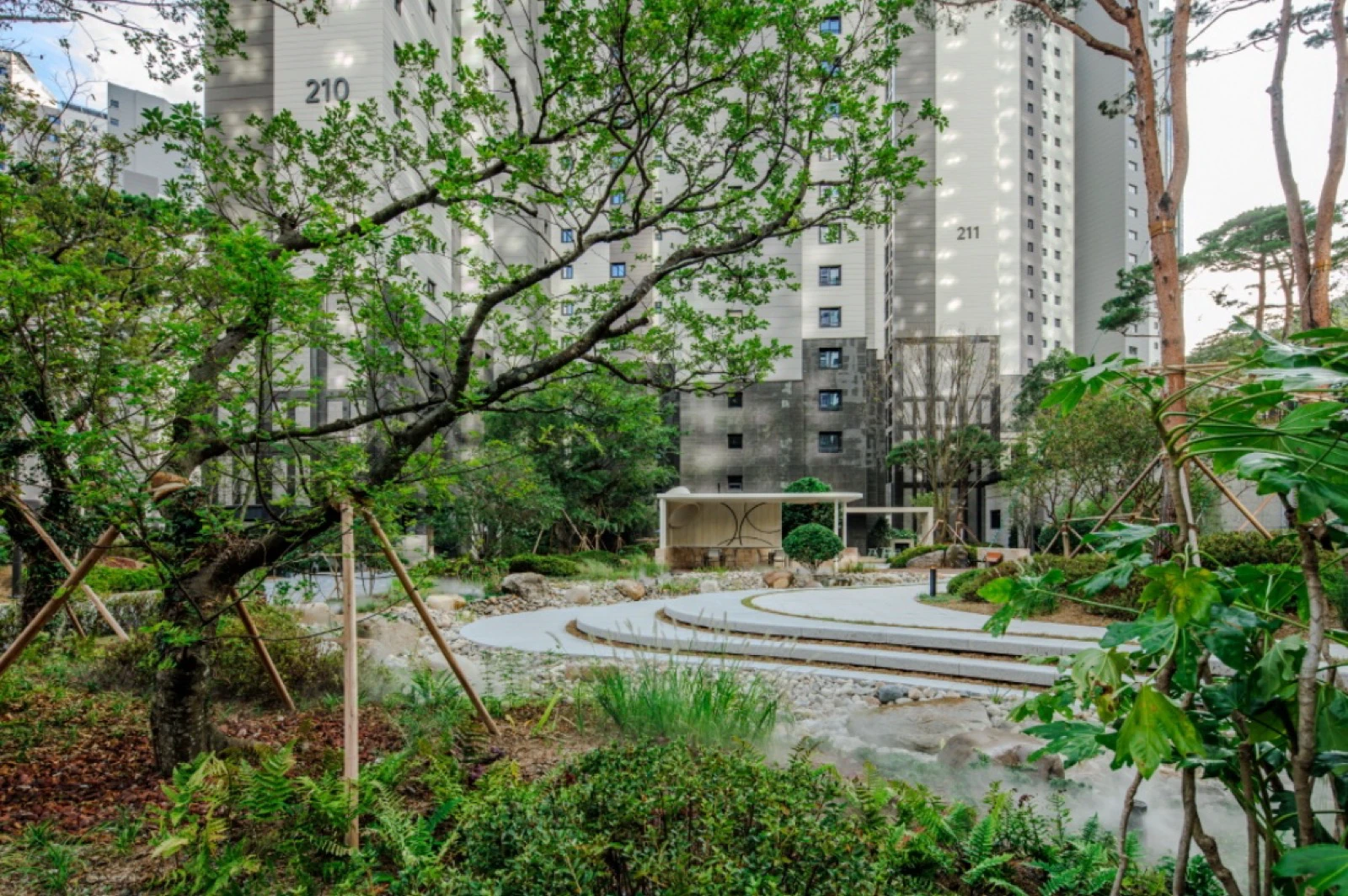
A landscaped common area can be real value to residents, yet it also creates maintenance work. The practical question is not only whether the garden photographs well, but how the complex funds, cleans and repairs its shared spaces over time.
Why the brand can feel like status
Housing is unusually visible in Korea. An apartment name can appear in an address, delivery instructions, school-parent conversations and online profiles. That makes it easy for the name, neighborhood and unit size to become shorthand for household position. A Reddit thread about class comparison in Korea includes an anecdote about someone emphasizing a coveted Xi complex; it is useful evidence that this language exists, not a representative survey of Korean attitudes.
Do not infer a person's wealth from the logo on their building. Residents may rent, hold a large mortgage, live in a family-owned unit or have bought before prices changed. People also differ widely in how much they care about apartment hierarchy. The socially legible part is the shorthand; the household finances behind it remain private and unknowable.
High-end sub-brands make the hierarchy more explicit. Builders may position one name for mainstream premium apartments and another for flagship developments. Even then, the actual complex matters. The Hyundai E&C project imagery discovered through Naver, for example, highlights landscaped common areas and design awards on the company's own newsroom page. That supports a claim about what the builder designed and promoted—not an independent claim that residents are wealthier or happier.
A five-minute comparison that beats brand guessing
Before choosing between two Korean apartments, run the same checks in the same order:
- Match recent actual trades. Use the Ministry of Land, Infrastructure and Transport's real transaction price disclosure system. Compare the same complex, a similar exclusive floor area and nearby transaction dates. Check floor and contract date rather than relying on one headline price.
- Check the complex, not only the unit. Korea's official K-apt system publishes apartment-complex and management information. Look at completion year, household count and management-cost context, then inspect notices and major repair issues available for the property.
- Confirm school information precisely. Verify the assigned school for the exact address, then use Schoolinfo for disclosed school data. Nearby on a map does not necessarily mean assigned.
- Walk the daily route. Time the gate-to-station trip, including hills, crossings and the distance from your building to the complex entrance. A large compound can add several minutes after a map says you have arrived.
- Price the shared package. Ask what the management fee covers, whether community facilities require separate payment, how parking works and whether major repairs are planned. Amenities have value only if you will use them and the complex can maintain them.
For renters, this process is also a defense against paying for a name you do not need. If the less famous complex has the better commute, quieter unit and lower monthly cost, it may be the more comfortable home. For buyers, brand can matter to resale demand, but actual transactions and the property's fundamentals deserve the final word. Use the name as a prompt to inspect the package behind it: where the complex is, when it was built, what residents receive and what comparable homes actually traded for.
Sources and image credits
- KoreaScience study — 2024–2025 Seoul metropolitan transaction model and estimated branded-apartment contribution.
- Schoolinfo — Official school disclosure portal; school assignment still needs confirmation for the exact address.
- MOLIT real transaction price disclosure system — Official apartment transaction records.
- K-apt — Official apartment-complex and management information.
- Reddit discussion about corporate names on apartment towers — Anecdotal newcomer question used only to show the naming confusion.
- Reddit discussion about class comparison — Anecdotal example of apartment-brand status language, not a representative survey.
- Hyundai E&C Newsroom — The H Firstier I-Park amenity collage and builder presentation context.
- Samsung C&T Newsroom image — Raemian Forestige garden and walkway image, reused under the operator-confirmed permission dated August 9, 2026.
- Samsung C&T Newsroom image — Raemian Forestige rain-garden image, reused under the operator-confirmed permission dated August 9, 2026.
- Featured Samsung C&T Newsroom image — Featured apartment-complex image, reused under the operator-confirmed permission dated August 9, 2026.
Last updated


