
Can Skincare Products Really Give You Glass Skin?
Skincare can improve hydration and create a dewy finish, but pores, scars, makeup, lighting and medical treatment are different categories of result.
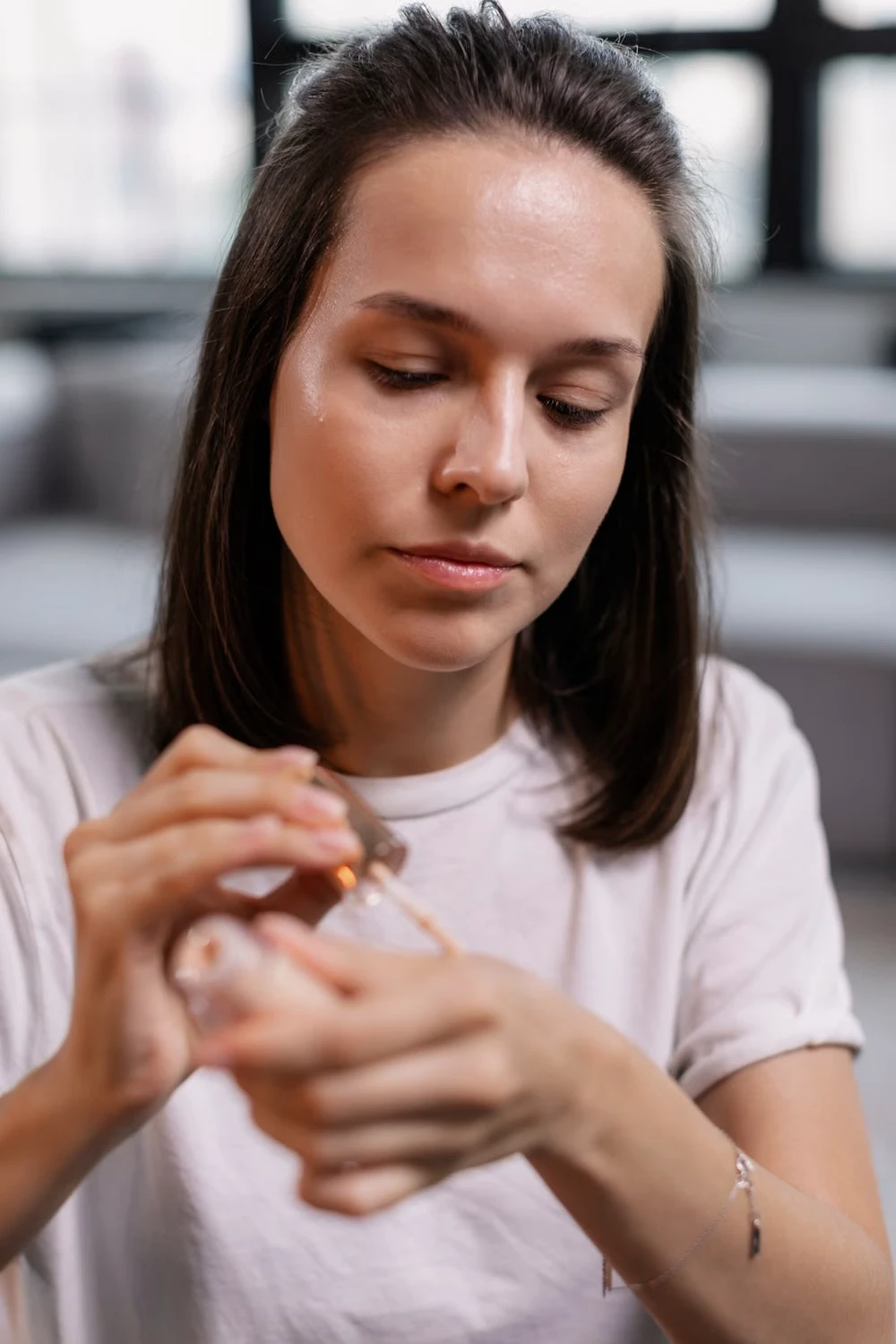
Skincare can make dry skin more comfortable, temporarily plump the outer surface, and create a dewy finish. It cannot make every face poreless, remove established scars or pigment overnight, or reproduce a filtered, professionally lit image on every skin type.
“Glass skin” is a beauty description, not a diagnosis or a measurable medical endpoint. A useful goal is calm, well-moisturized skin with a finish you enjoy. A harmful goal treats pores, lines, marks, and normal texture as defects that one shopping haul should erase.
Separate four different results
1. Hydration and barrier comfort
Moisturizers change how the outermost skin layer gains and loses water. DermNet's moisturizer overview, rechecked August 12, 2026, explains that humectants draw water into the stratum corneum, while occlusive ingredients reduce water loss. On dry skin, that can improve flexibility and make the surface look temporarily fuller.
The American Academy of Dermatology's wrinkle guidance likewise says moisturizer traps water and can make some fine lines less noticeable. “Less noticeable” is different from permanently removing a line.
2. Surface shine
A moisturizer, sunscreen, balm, face mist, or serum may leave a reflective film. That shine is real, but it describes the product finish—not proof that pores, scars, or underlying pigment have disappeared.
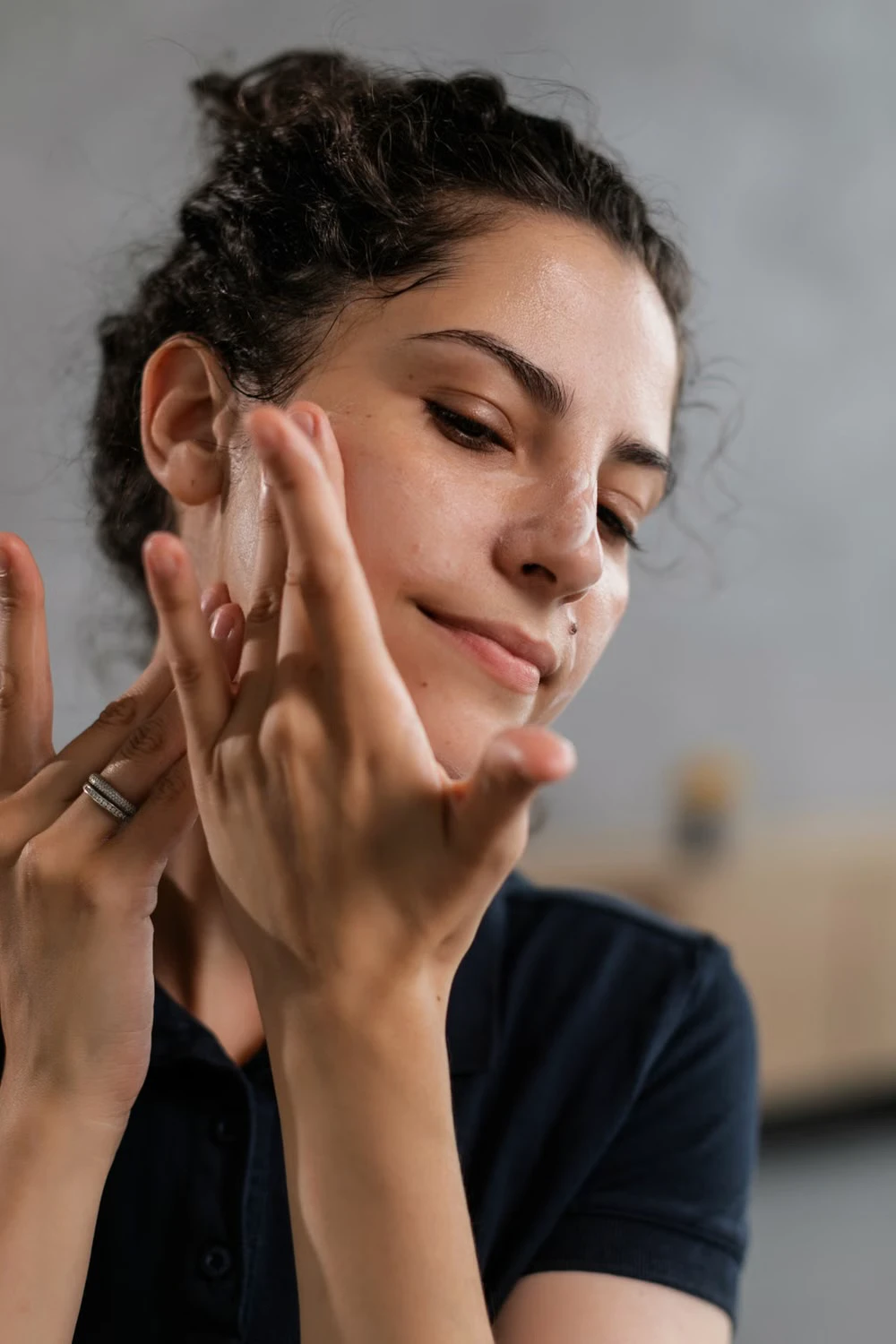

The first image shows product slip and a moist surface. The second shows how strongly directional colored light changes the way a face reads on camera. Both can produce highlights, but they are not the same change in skin.
3. Makeup and styling
A dewy sunscreen, cushion foundation, liquid highlighter, or balm can create an immediate glossy look. That may be exactly the visual result you want. Calling it makeup or finish does not make it “fake”; it simply prevents a styling effect from being sold as a permanent structural change.
4. Lighting and image processing
Broad frontal light can soften small shadows around pores and texture; side light may emphasize them. Exposure, white balance, phone processing, smoothing, and filters can widen the difference between a face in an ordinary mirror and a photo labeled “glass skin.”
Try a simple reality check before buying more products: look in ordinary daylight, then again after removing makeup and the last skincare layer. If most of the gleam disappears, the effect came mainly from surface finish, makeup, or lighting. That is a valid aesthetic result, just a different category from long-term skin change.
Build the smallest routine that meets the goal
For many people, the foundation is less dramatic than the trend:
- a gentle cleanser that does not leave persistent tightness;
- a moisturizer suited to the skin's comfort and oil level;
- a broad-spectrum, water-resistant sunscreen with SPF 30 or higher during daytime, used as directed.
A hydrating serum is optional. Add it when it improves comfort without clogging or irritation, not because a numbered “glass skin” routine says every layer is mandatory.
The AAD's review of social-media skincare trends, published in 2024 and rechecked August 12, 2026, says moisturizing and broad-spectrum, water-resistant SPF 30+ sunscreen are positive parts of glass-skin routines. It also says the look is not realistic for everyone and that too many products may contribute to clogged pores, irritation, or breakouts.
Add one new product at a time and use it as labeled. If persistent burning, swelling, hives, or worsening breakouts appear, stop the new product and seek appropriate medical advice. A long shelf of active ingredients is not evidence of a stronger routine.
What products cannot responsibly promise
Pores are normal skin openings. The AAD frames its guidance around making pores less noticeable, not eliminating them. Oil production, acne, sun exposure, age, and inherited features affect appearance, so one routine will not create the same finish on everyone.
A cosmetic also cannot reliably erase established acne scars, persistent redness, melasma, or another diagnosed condition. Specific ingredients may help a defined concern over time, but choosing several strong actives solely to chase a viral finish is a poor match between problem and treatment.
Be cautious with routines that quickly stack exfoliating acids, retinoids, vitamin C, scrubs, peels, and multiple masks. Irritation can make skin feel and look worse, and adding everything at once makes the cause hard to identify.
When treatment is a separate decision
A procedure should be chosen for a defined concern, not to buy the adjective “glass.” Acne scarring, persistent pigment, visible blood vessels, and recurrent inflammation can require different assessments. Potential treatments also have different risks, downtime, costs, and realistic limits.

A useful medical consultation starts with the concern in ordinary light and the change that would matter to you. Ask what diagnosis is being treated, what degree of improvement is realistic, how many sessions may be needed, what side effects and recovery are possible, and whether skin tone or medical history changes the risk. A clinic photograph or creator result is not a guarantee.
Seek an appropriately qualified clinician for a concern that is painful, very itchy, bleeding, rapidly changing, leaving scars, or not improving with basic care. Do not use a travel beauty appointment as a substitute for urgent or ongoing medical care.
Pregnancy and breastfeeding require a separate medication check. The AAD's current pregnancy skincare guidance advises avoiding prescription and over-the-counter retinoids during pregnancy and discussing all medications and skincare with an obstetrician and dermatologist. Do not generalize that sentence to every ingredient or to breastfeeding; ask the clinicians responsible for your care.
A realistic glass-skin goal
Aim for skin that feels comfortable, tolerates the routine, and is protected from the sun. If you like extra dew, add it intentionally with a suitable moisturizer, sunscreen, or makeup product rather than treating shine as a health measurement.
Give one change enough time to judge it and keep expectations tied to the concern being treated. A routine that looks modest on a shelf but keeps the skin calm is a better result than a glossy finish produced through irritation.
Glass skin is achievable as a styling effect and partly achievable as improved hydration. Poreless perfection is not a responsible product promise.
Sources and image credits
- Delivery Spot cover image — Published cover showing a woman applying a liquid skincare product.
- DermNet: Emollients and moisturisers — Medical overview of humectants, occlusives, and water loss; rechecked August 12, 2026.
- American Academy of Dermatology: Wrinkle remedies — Guidance on moisturizer making some fine lines less noticeable; rechecked August 12, 2026.
- American Academy of Dermatology: Large facial pores — Official framing around reducing the appearance of pores, not eliminating them; rechecked August 12, 2026.
- American Academy of Dermatology: Social-media skincare trends — 2024 dermatologist guidance on glass-skin routines, sunscreen, and over-layering risk; rechecked August 12, 2026.
- American Academy of Dermatology: Pregnancy skincare — Current ingredient-safety guidance and advice to involve an obstetrician and dermatologist; rechecked August 12, 2026.
- Featured photo — Alena Darmel via Pexels; original source for the cover.
- Moisturizer application — Alena Darmel via Pexels; original source for the first slider image.
- Colored-light portrait — Johannes Blenke via Unsplash; original source for the second slider image.
- Consultation — Anna Shvets via Pexels; original source for the consultation image.
- Delivery Spot moisturizer image — Published web asset derived from the credited Pexels source.
- Delivery Spot colored-light image — Published web asset derived from the credited Unsplash source.
- Delivery Spot consultation image — Published web asset derived from the credited Pexels source.
Last updated


